




_400x400.webp "Gehölztrends 2025: Kaiser-Linde, Vogelkirsche, Hainbuche und mehr")



 Contact
Crab apple - Malus hybrids
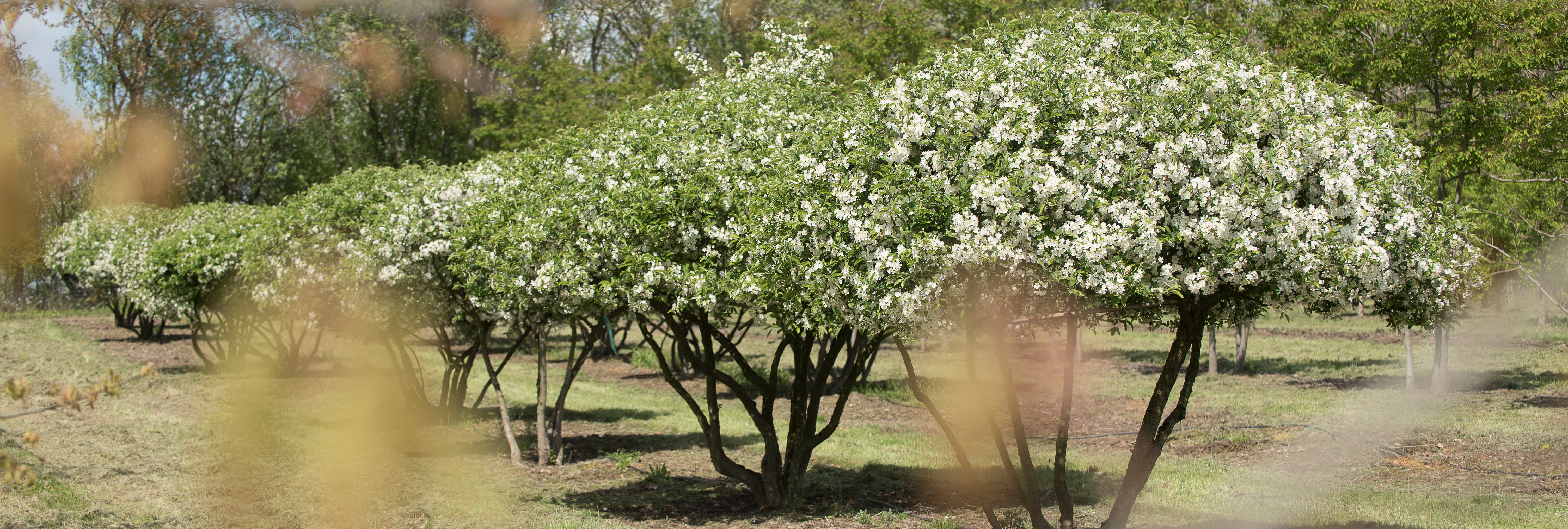
Ornamental apples are the ‘all-rounders’ among deciduous trees. While their relatives (cultivated apples) often require space and a lot of care, ornamental apples score points for their modesty and visual highlights in every season:
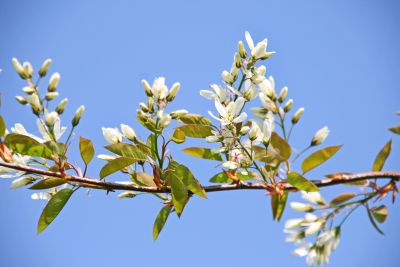
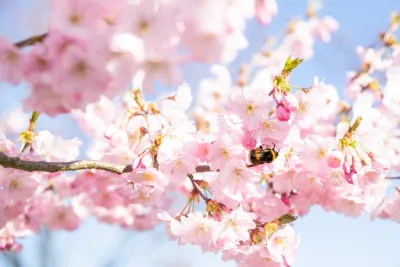
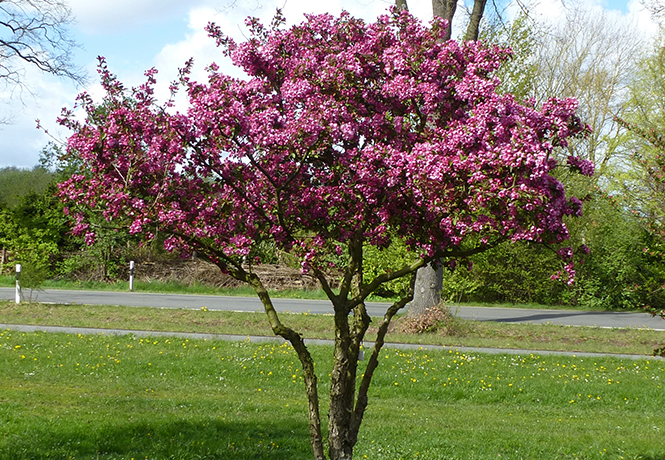
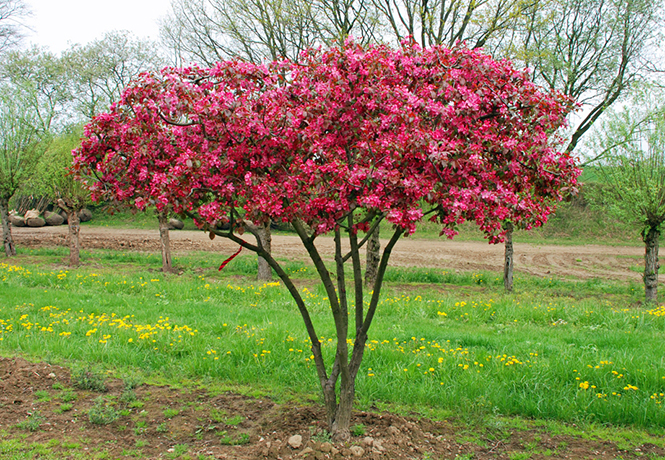
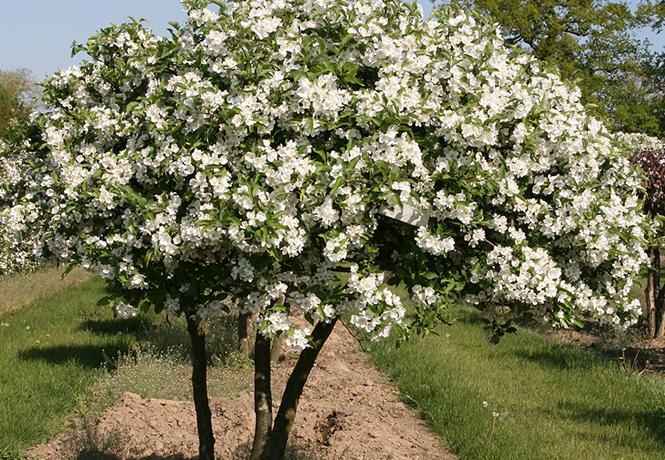
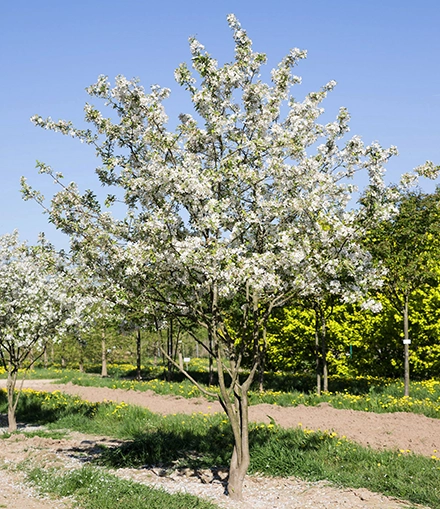
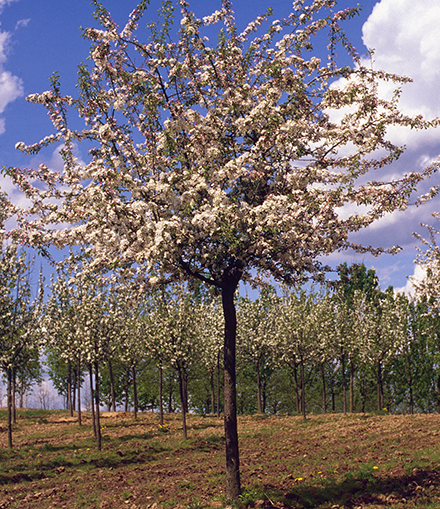
Spring: A sea of white, pink or purple flowers that magically attracts bees and bumblebees.
Summer: Dense, healthy foliage (in some varieties even decorative dark red).
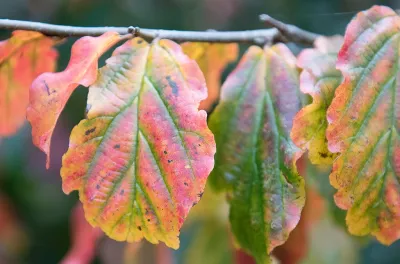
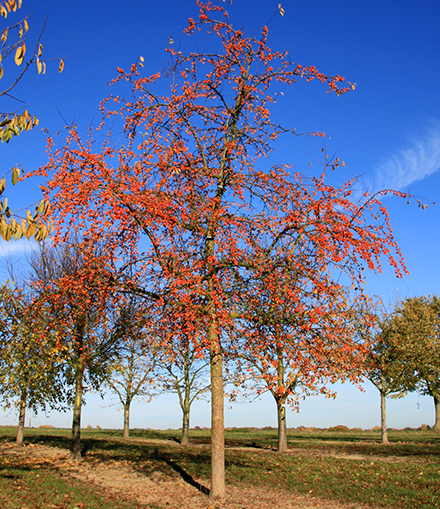
Autumn: Hundreds of small fruits in yellow, orange or red, which often remain on the tree well into winter.
Winter: An important source of food for native birds such as blackbirds and waxwings.
Ornamental apples in climate change: the perfect trees for our cities?
Summers in cities such as Berlin, Hamburg and Munich are getting hotter and the soil drier. Anyone planting a tree today is right to ask themselves: will the tree survive the next 20 years? The crab apple (Malus) is increasingly becoming the focus of attention for urban planners, local authorities and garden owners.
But is the crab apple really suited to the new urban climate? We carry out a climate check.
1. Heat tolerance and sun worshippers
Crab apples often originate from regions with fluctuating climatic conditions. They love sunny locations and usually cope better with the intense radiation in built-up areas than large-leaved park trees.
2. Resistance to drought
Once well established, the root system of the ornamental apple tree is efficient. While it naturally appreciates watering during periods of extreme drought, it does not immediately shed its leaves. It is considered moderately drought-resistant in specialist literature – a decisive advantage for urban locations.
3. Adaptation to sealed surfaces
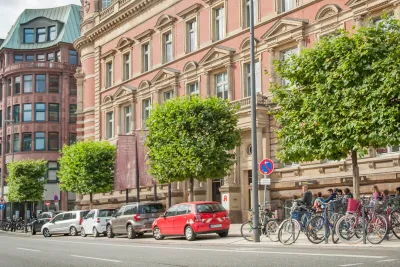
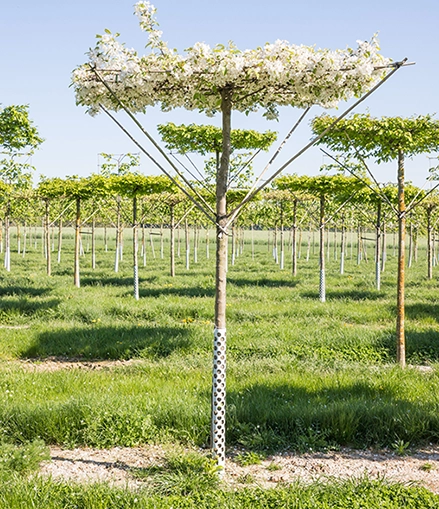
Root space is often limited in cities. Ornamental apples are naturally rather small or, through selective breeding (e.g. as standard trees), can be easily integrated into narrow streets or small courtyards without breaking up the asphalt.
4. Ecological added value despite climate stress
Today, a tree in an urban climate must do more than just look good. The crab apple is an ecological filling station: Bee pasture: In cities where wildflower meadows are lacking, the early flowering in April/May provides food for pollinators. Bird protection: The fruits are often the last resort for birds in winter when the ground is frozen. Cooling: Evaporation through the leaves noticeably lowers the ambient temperature in sealed courtyards.
Malus - Crab apple
Professional tip

„When purchasing, pay attention to the rootstock of the tree. A deep rootstock helps the tree to reach deeper water layers even in dry summers."
Leonie Neumüller, Sales, Nursery Lorenz von Ehren
Impressions
FAQ - Frequently asked questions
What types of soil do Malus hybrids prefer?
They thrive in moderately dry to moist soil, ranging from slightly acidic to alkaline, and prefer light to medium-heavy soil.
Which Malus hybrids are suitable as street trees?
Malus tschonoskii, the woolly apple, was rated ‘suitable’ in the GALK street tree test. Unfortunately, this beautiful apple is still relatively unknown and is rarely used.
Malus tschonoskii, the woolly apple, was rated ‘suitable’ in the GALK street tree test. Unfortunately, this beautiful apple is still relatively unknown and is rarely used.
Which ornamental apples are particularly recommended?
The varieties “Butterball”, “Evereste”®, “John Downie”, “Professor Sprenger”, “Red Jade”, “Red Sentinel”, “Royalty” and “Street Parade”.
Can ornamental apples tolerate road salt?
They are moderately tolerant. In the immediate vicinity of roadsides, mechanical clearing should be preferred in winter.
How much care does an ornamental apple need in the city?
Regular and sufficient watering is essential in the first two years. After that, it is largely self-sufficient.
Contact
Leonie Neumüller
Sales
phone: +49 (0) 40 7681 -0
mail: LvE(at)LvE.de