





_400x400.webp "Gehölztrends 2025: Kaiser-Linde, Vogelkirsche, Hainbuche und mehr")



 Contact
Malus domestica - Apple
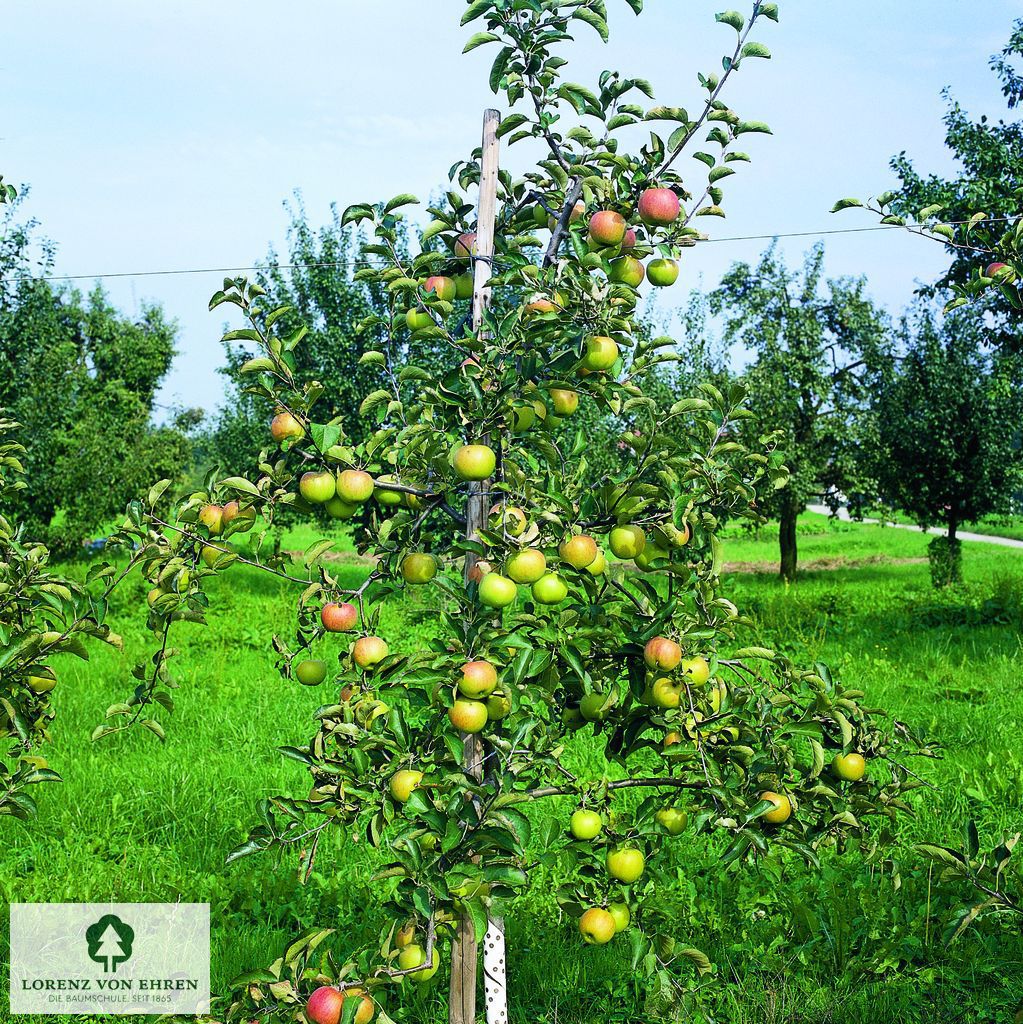
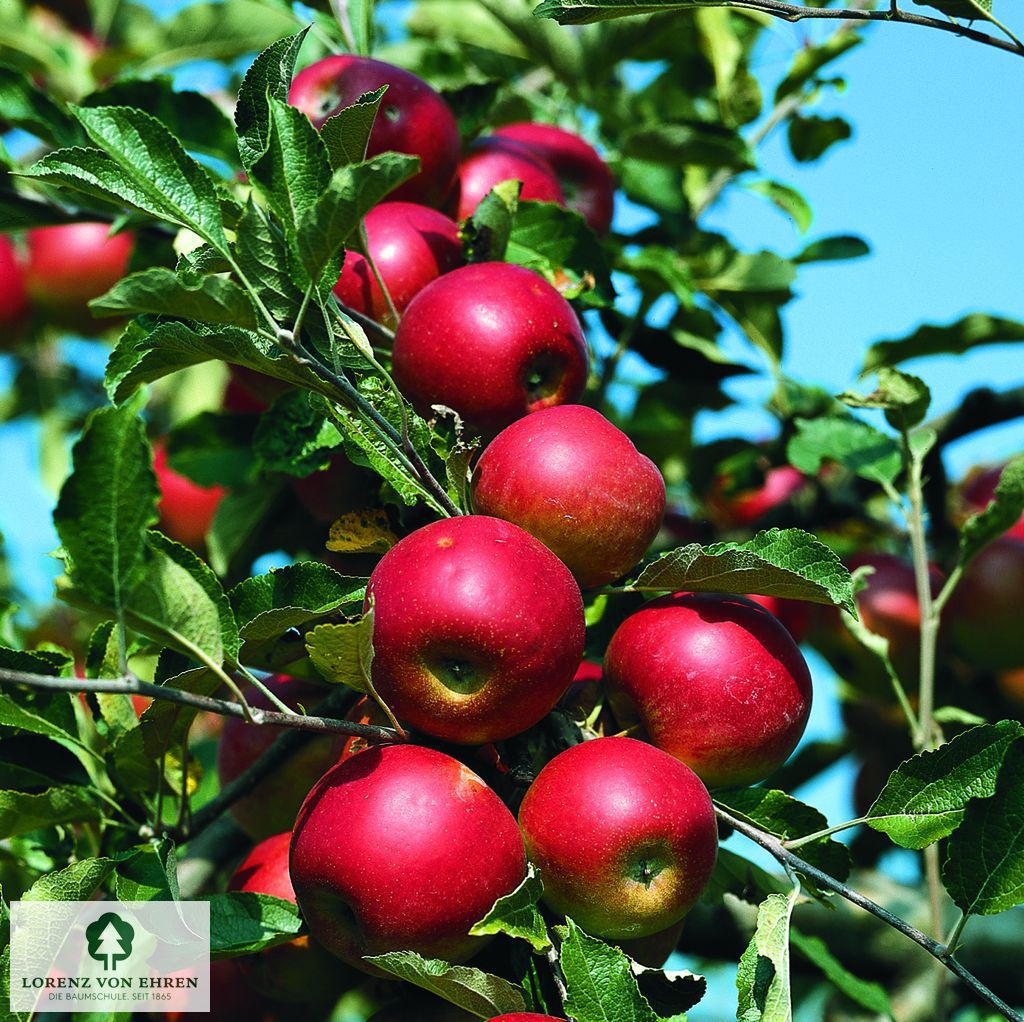
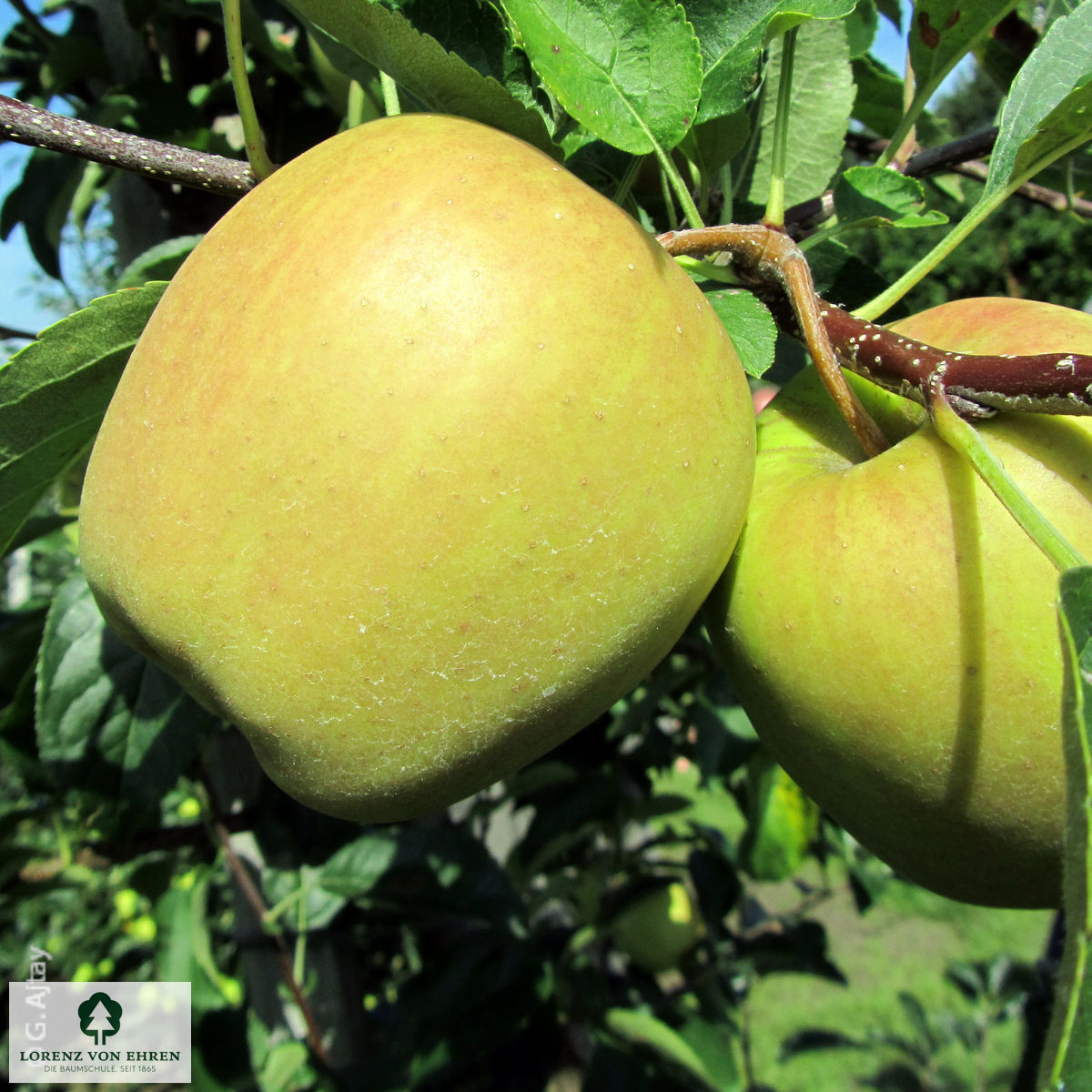
‘An apple a day keeps the doctor away’ – this saying is no coincidence, as apples are considered extremely healthy. There are many old and robust regional varieties. In addition, there are new breeds that have been specifically selected for their high resistance to fungal diseases, consistent yield and fine, balanced taste.
There are around 1,500 varieties of apple in Germany, 400 of which are commercially available. The well-known varieties from commercial orchards in particular require good, warm locations.
Early varieties are ready to eat as early as August, although not all apples are equally suitable for storage.
Most apple varieties are generally not self-fertile. Therefore, when planting apple trees, you should pay attention to the flowering time and pollen-producing varieties within bee flight range. Ornamental apples are also excellent pollen donors. In areas with a high risk of late frost, late-flowering or climatically adapted regional varieties are suitable.
XXL fruit trees
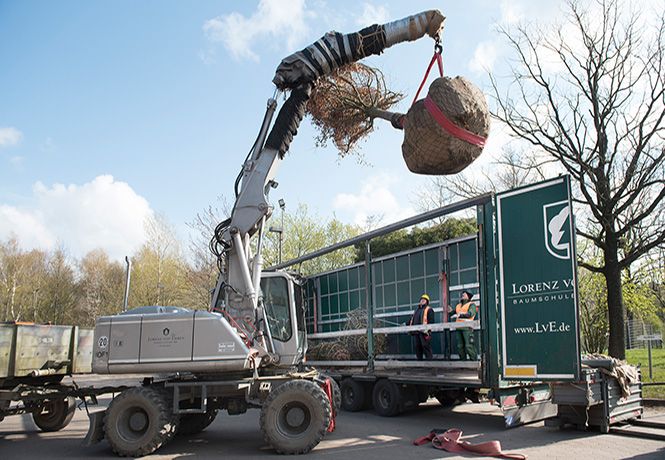
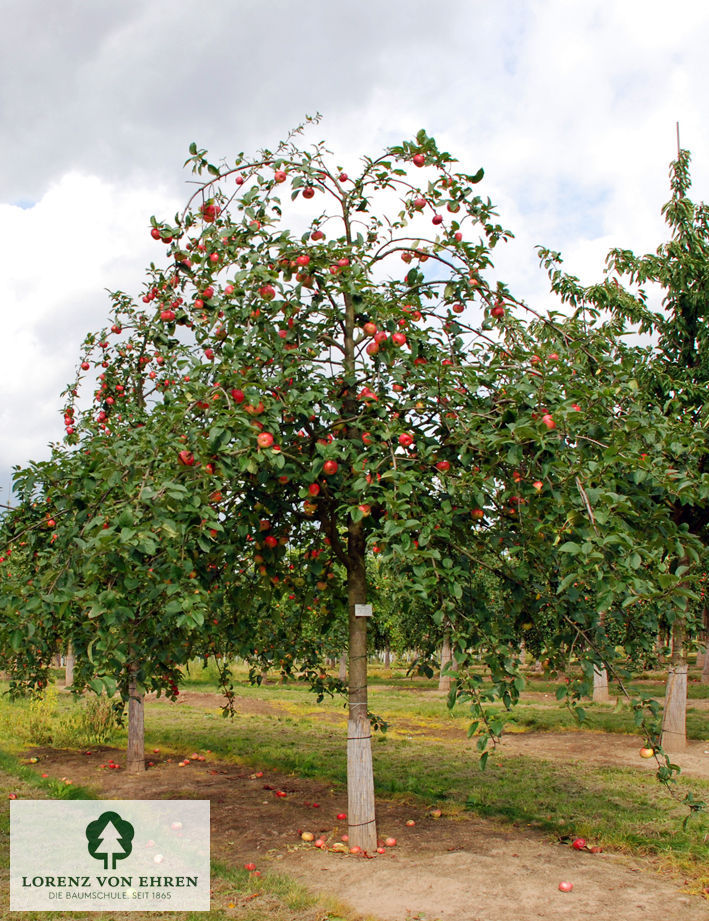
Many garden owners want to plant their fruit trees and harvest fruit immediately. However, with all fruit varieties that have been grafted onto a standard tree, you have to wait a relatively long time for a full yield, as the trees only begin to flower and bear fruit abundantly after 8–10 years.
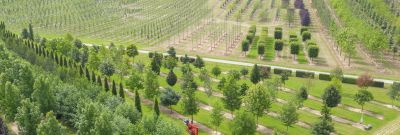
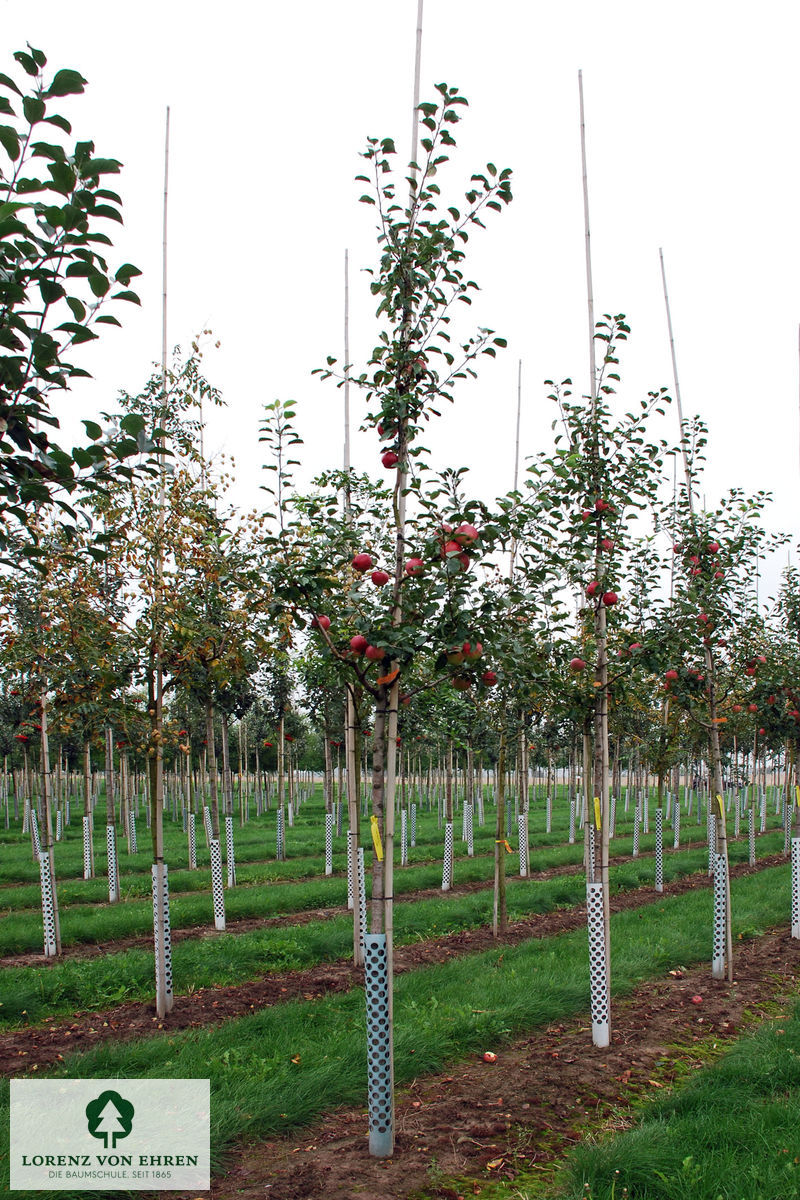
Tip: Plant solitary fruit trees or pre-grown espaliers. This way, you can avoid the waiting period and harvest in the same year you plant them. We have solitary fruit trees, some up to 50 years old, in stock at our nurseries.
Specifications:
Variety overview
- Malus domestica 'Alkmene'
- Malus domestica 'Braeburn'
- Malus domestica 'Cox's Orange Renette'
- Malus domestica 'Elstar'
- Malus domestica 'Geheimrat Dr. Oldenburg'
- Malus domestica 'Gloster 69'
- Malus domestica 'Golden Delicious'
- Malus domestica 'Goldparmäne'
- Malus domestica 'Goldrenette Freiherr von Berlepsch'
- Malus domestica 'Gravensteiner’'
- Malus domestica 'Holstein' (='Holsteiner Cox')
- Malus domestica 'Ingrid Marie'
- Malus domestica 'Jakob Fischer'
- Malus domestica 'Jakob Lebel' (='Jacques Lebel')
- Malus domestica 'Jonagold'
- Malus domestica 'Jonathan'
- Malus domestica 'Kaiser Wilhelm'
- Malus 'Landsberger Renette'
- Malus 'Ontario'
- Malus 'Pilot'
- Malus 'Pinova'
- Malus 'Reanda'®
- Malus 'Reglinidis'®
- Malus 'Rheinischer Bohnapfel'
- Malus 'Rote Sternrenette'
- Malus 'Roter Boskoop'
- Malus 'Roter James Grieve'
- Malus 'Schöner von Boskoop'
- Malus 'Topaz'®
- Malus 'Weißer Klarapfel'
- Malus 'Weißer Winterglockenapfel'
Our delicious apples






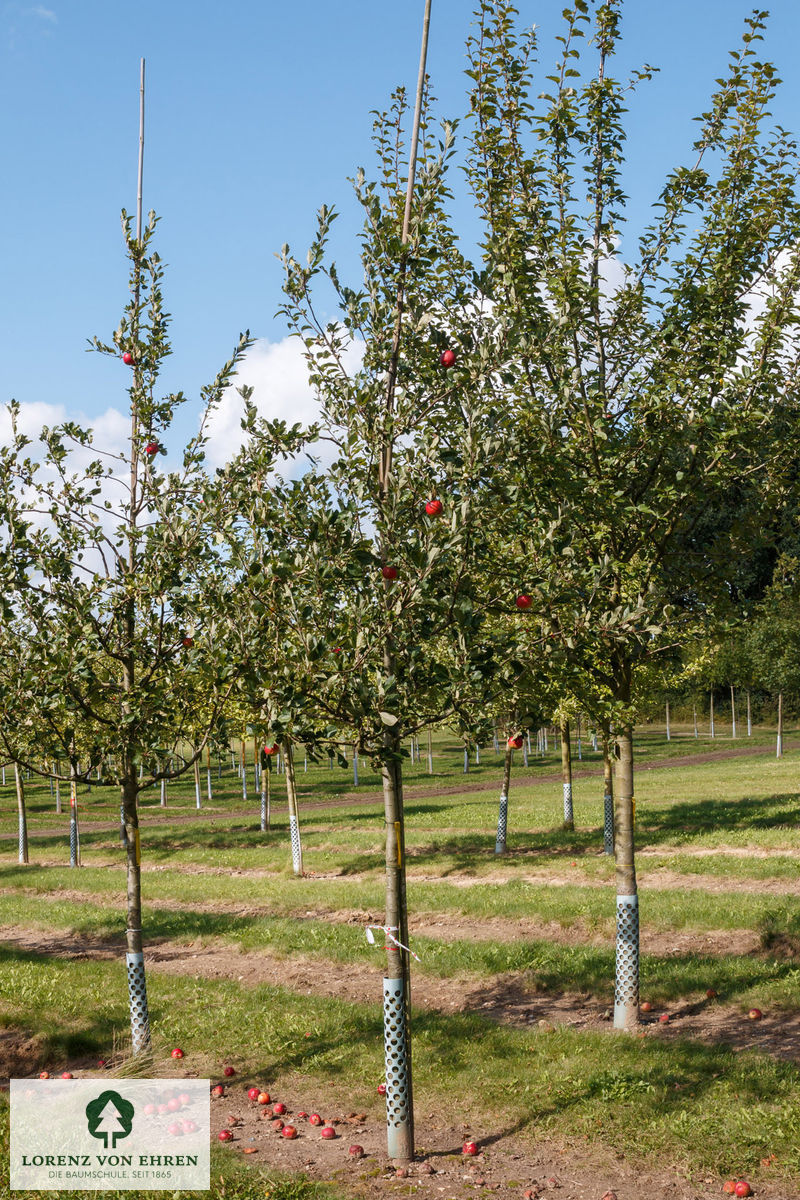
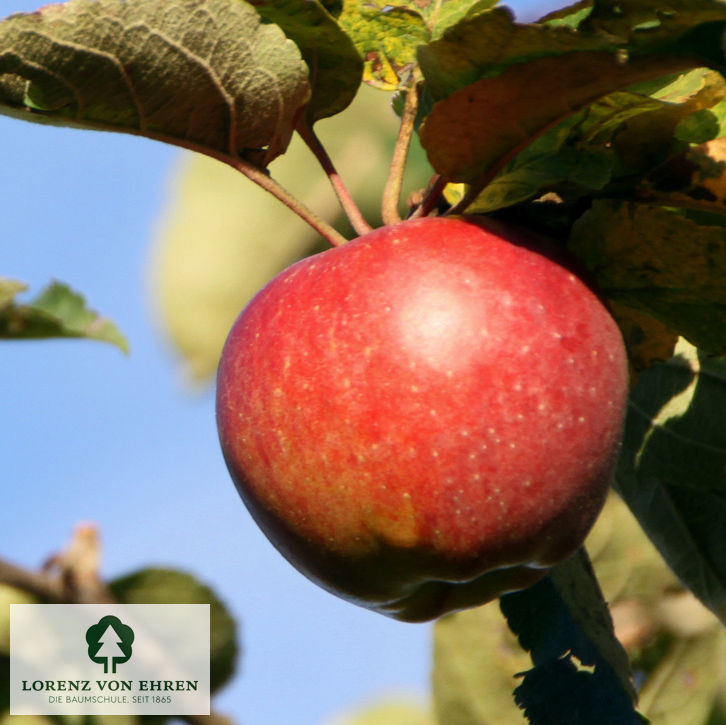
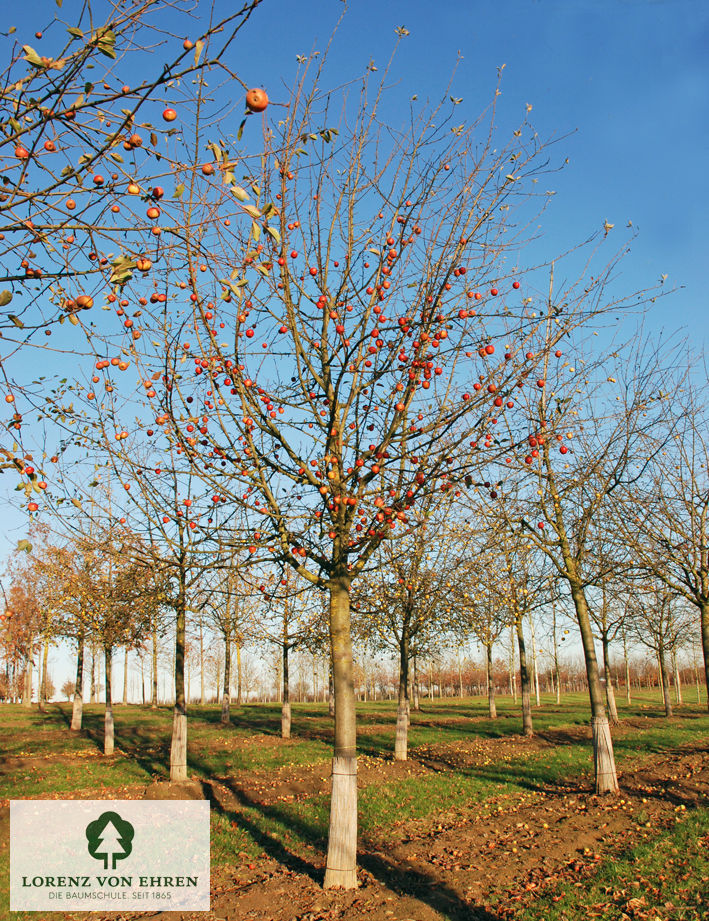
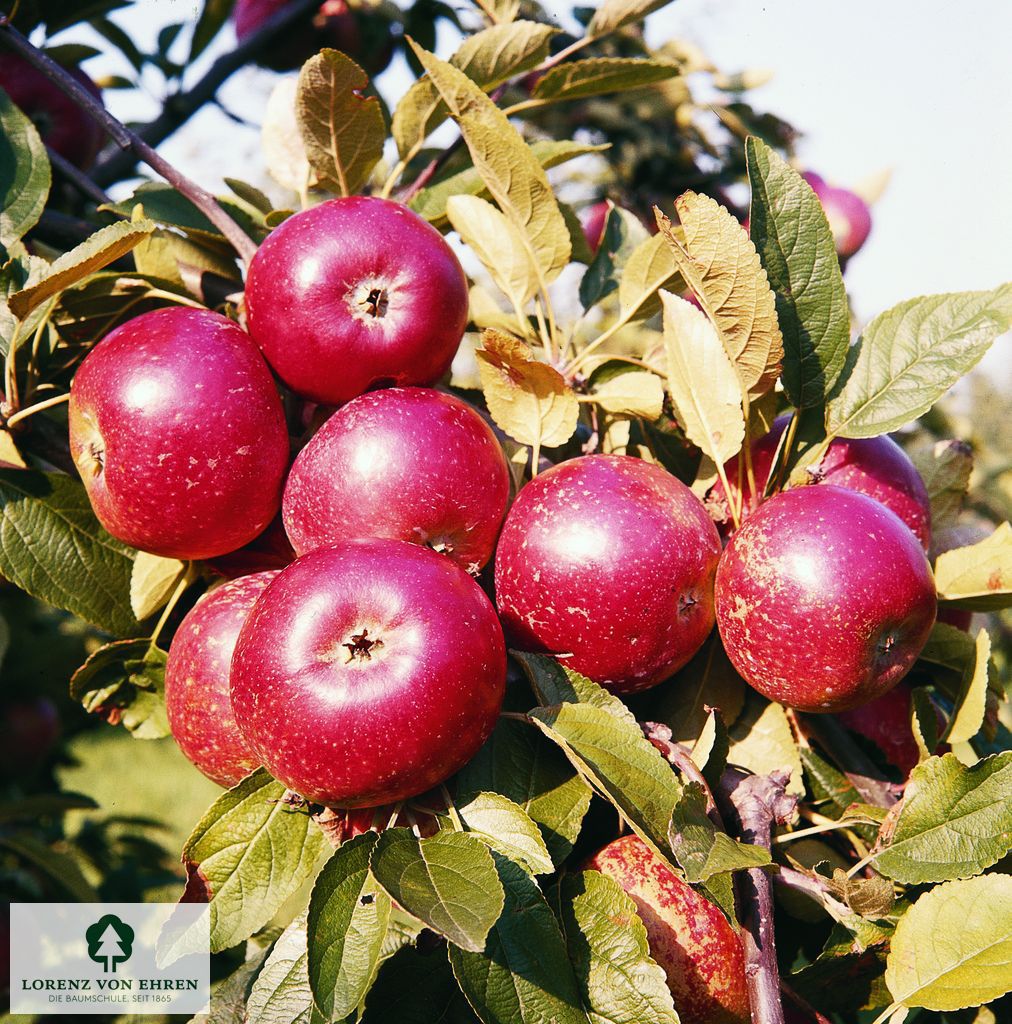
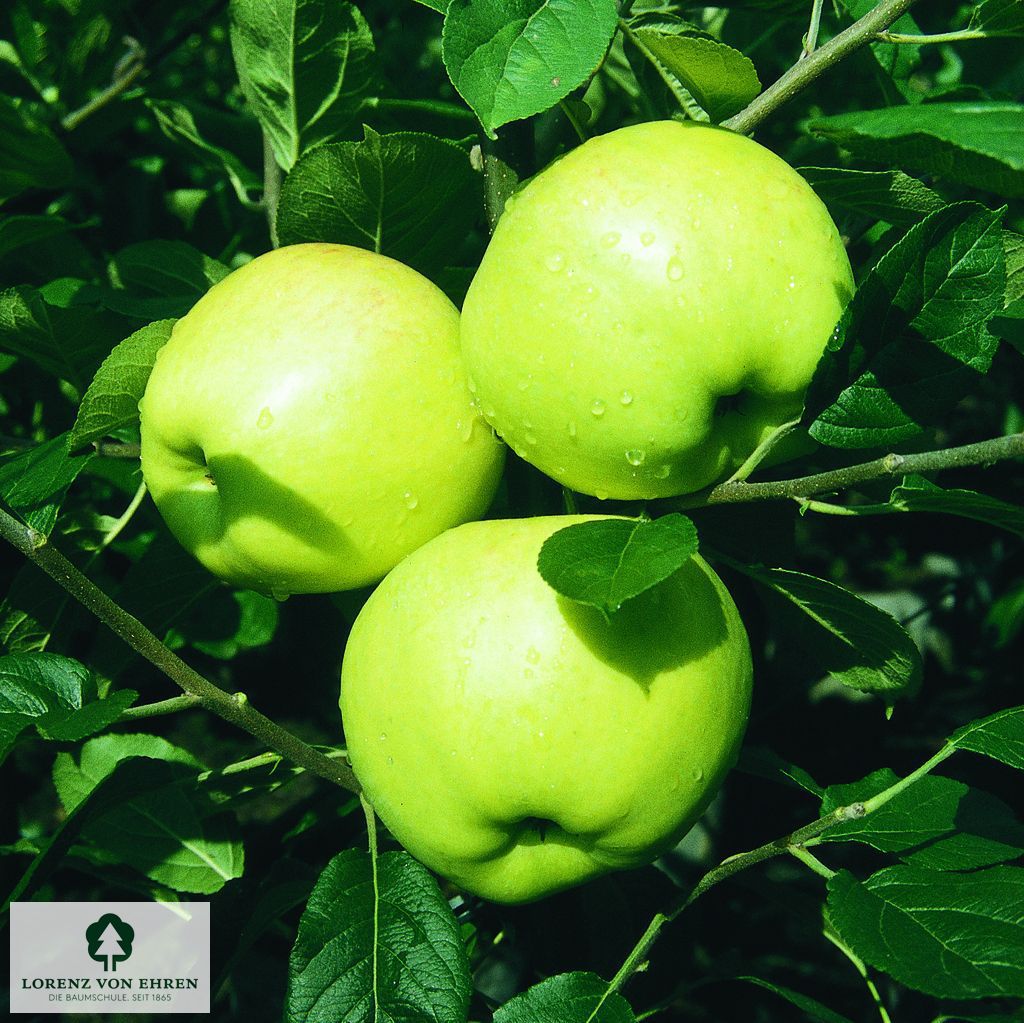
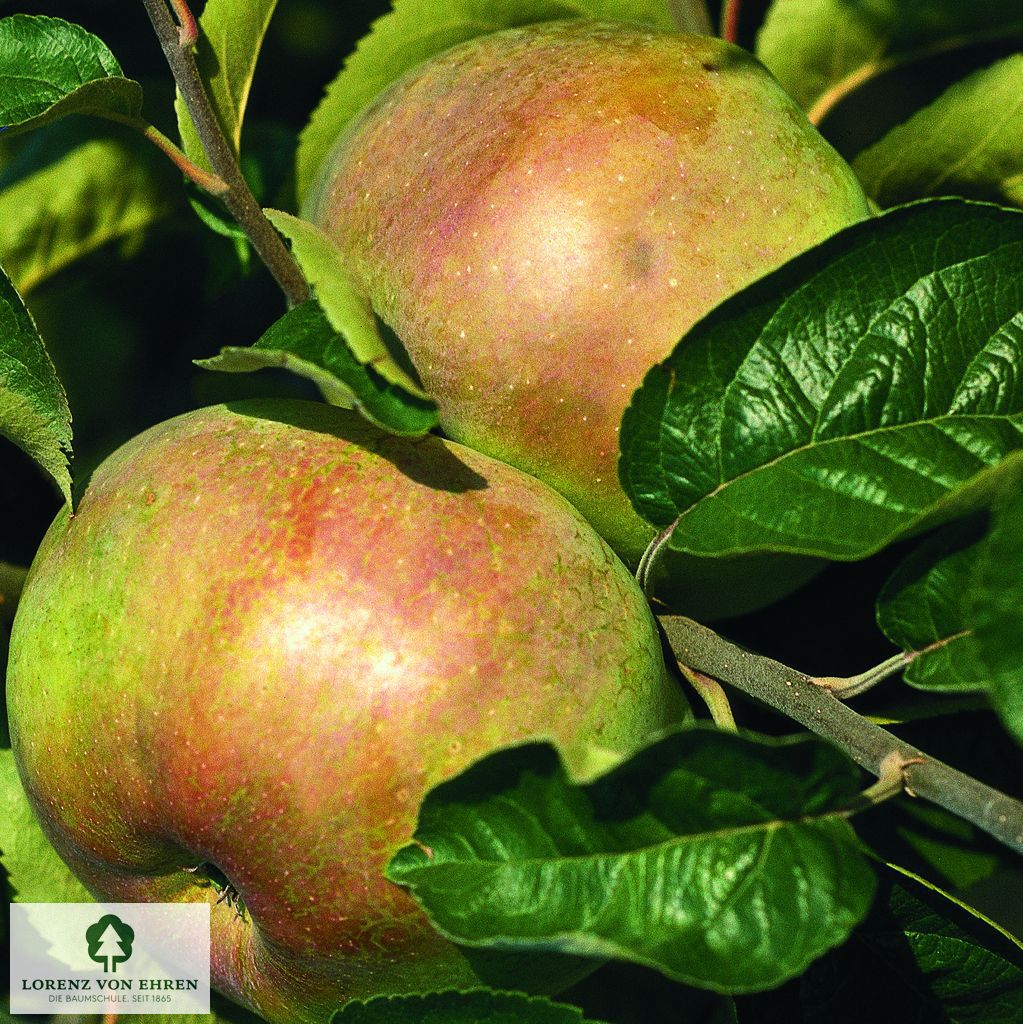

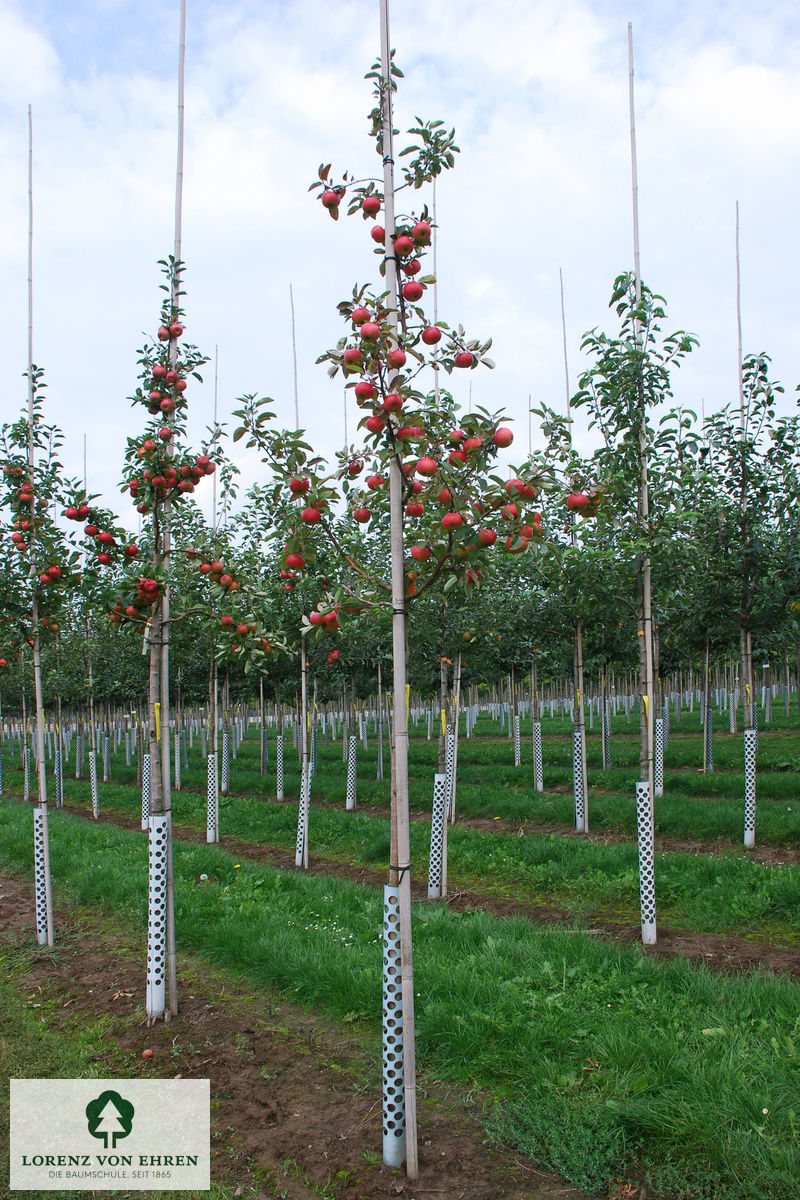
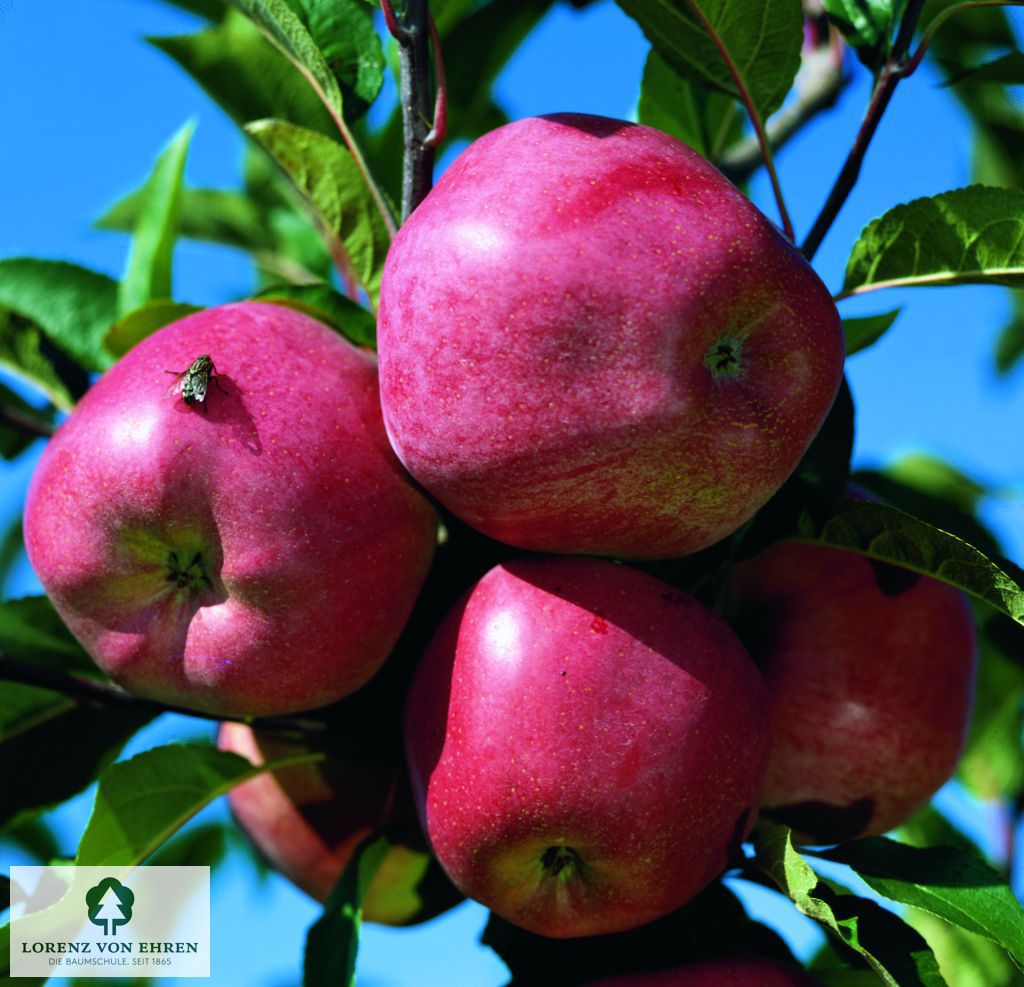
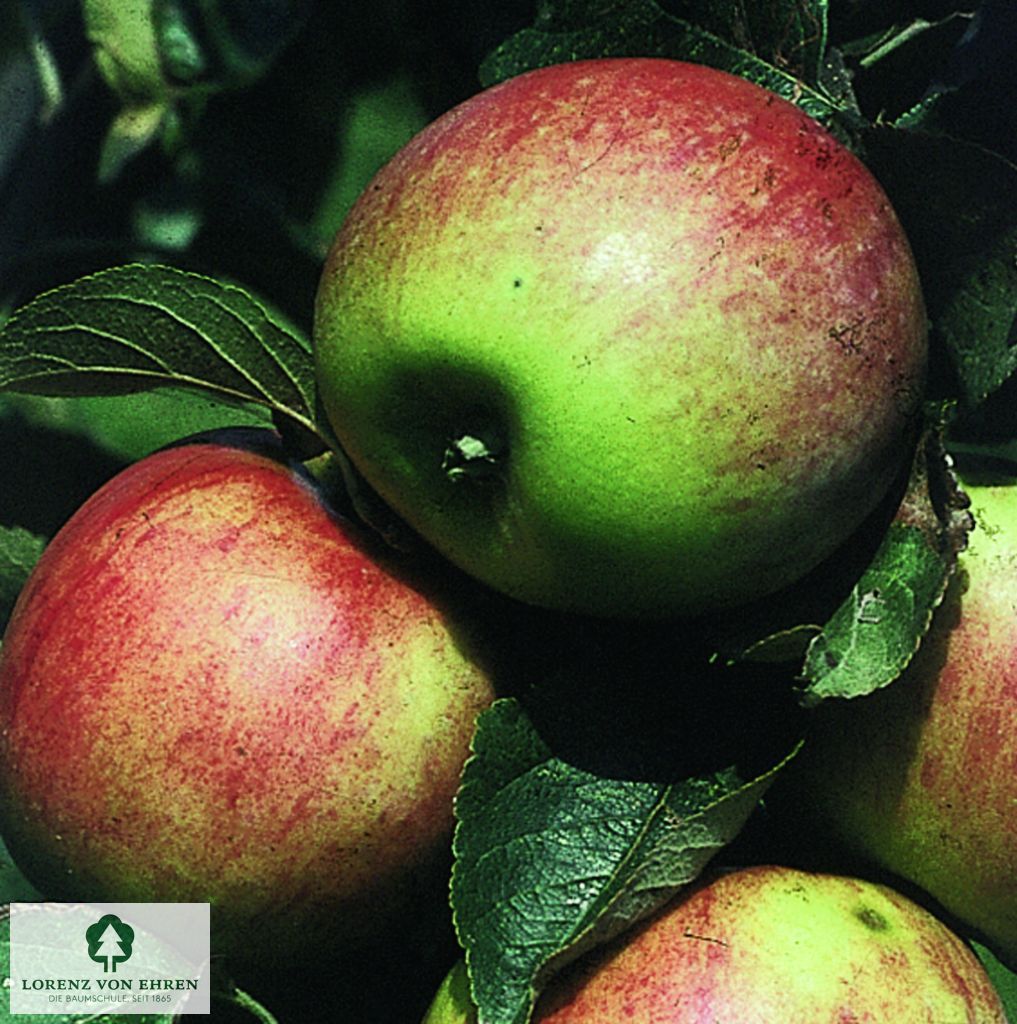
Impressions
FAQ - Frequently asked questions
Are apples self-pollinating?
Most apple varieties are generally not self-fertile. Therefore, when planting apple trees, you should pay attention to the flowering time and pollen-producing varieties within bee flight range. Ornamental apples are also excellent pollen donors.
Can apples tolerate late frosts?
In areas with a high risk of late frost, late-flowering or climatically adapted regional varieties are suitable.
Are apple trees (Malus domestica) tolerant of pruning?
Regular pruning promotes the growth and fruiting of the tree. As a rule, all dead or damaged branches are cut off in spring and the tree is thinned out.
Are there different ‘maturation periods’?
Summer apples: These apples ripen quite early and are ready for harvest from late July to early August.
Autumn apples: As the name suggests, these varieties are harvested in autumn, usually from September to November.
Winter apples: These varieties ripen the latest and are not harvested until November.
What advantages does an apple tree offer nature?
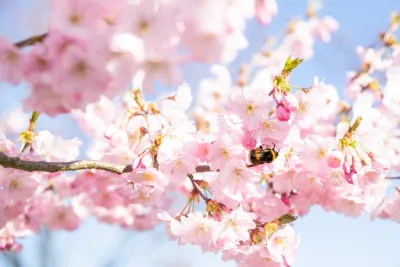
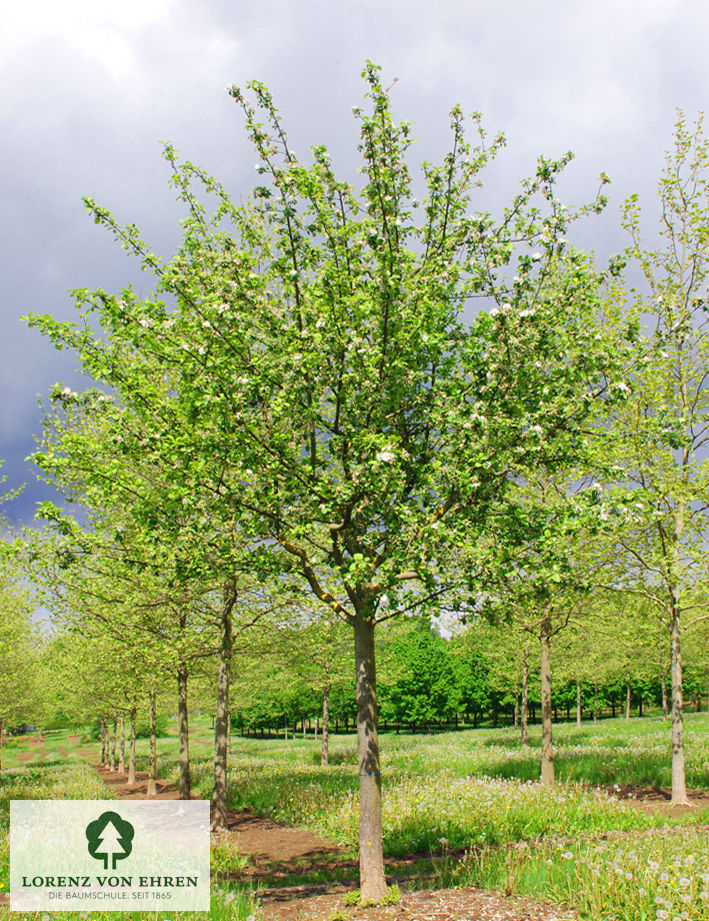
Apple blossoms are as picturesque as they are insect-friendly. Apple blossoms attract bees and other beneficial insects and pollinators for fertilisation. Garden birds also enjoy the blossoms, nesting opportunities in the sparse canopy and the odd apple left hanging. In this way, an apple tree also makes an ecologically valuable contribution to biodiversity and species diversity in the garden!