






_400x400.webp "Gehölztrends 2025: Kaiser-Linde, Vogelkirsche, Hainbuche und mehr")




 Contact
Sweet and sour cherries - Prunus avium and Prunus cerasus
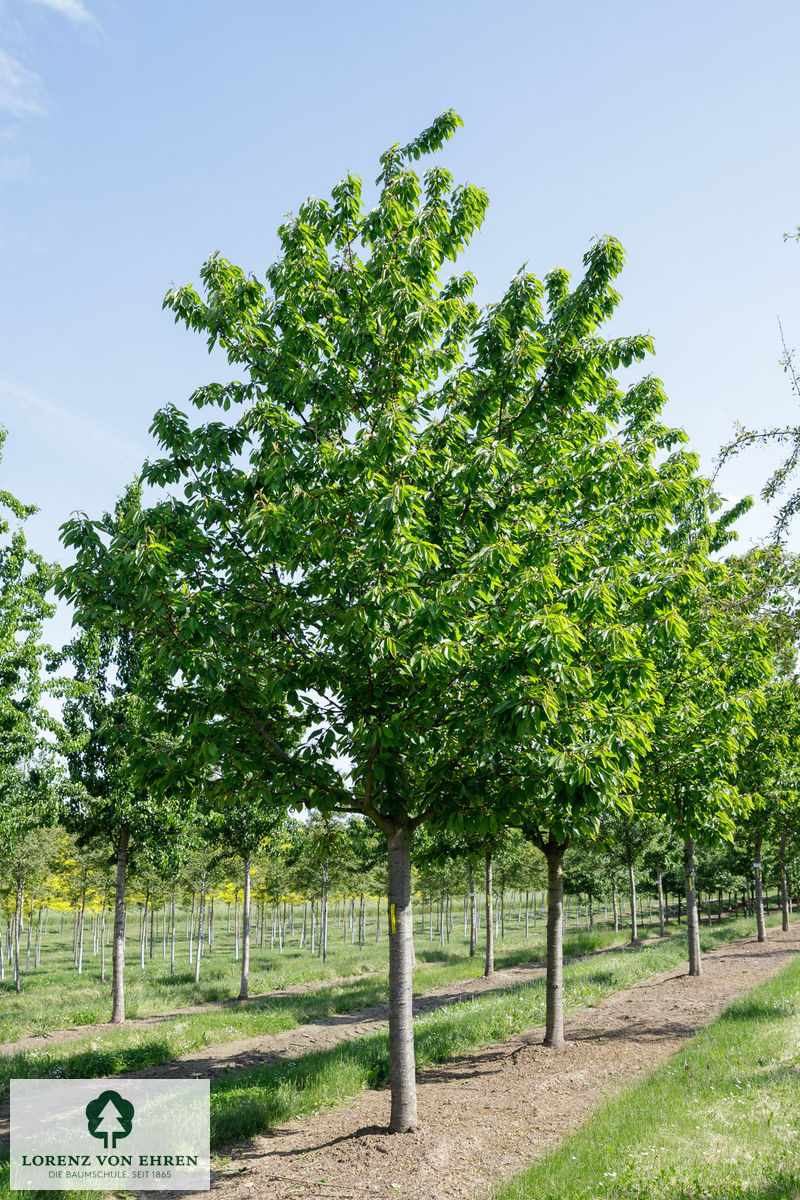
Choosing Prunus avium (sweet cherry) and Prunus cerasus (sour cherry) is a decision in favour of ecological functionality and design presence. While sweet cherry (Prunus avium) is often planted as a structuring solitary tree in spacious gardens or as ecological compensation planting due to its striking growth form and shiny ringed bark, sour cherry (Prunus cerasus) impresses with its high site tolerance and compact usability in urban private gardens.
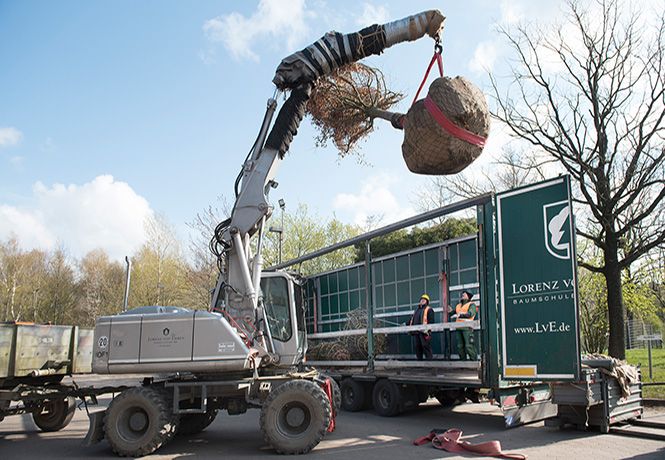
The use of large trees is a decisive quality feature here: they have an immediate spatial effect and provide shade for the immediate usability of open spaces, with a lower risk of failure and more stable statics.
XXL fruit trees
- Immediate privacy and shade
- Faster (and safer) yield
- Resistance to environmental influences
- Time savings during cultivation
Specifications - Prunus avium
Specifications - Prunus cerasus
Variety overview
Prunus avium - sweet cherry
- Prunus avium
- Prunus avium 'Burlat'
- Prunus avium 'Buettners Rote Knorpelkirsche'
- Prunus avium 'Doenissens Gelbe Knorpelkirsche'
- Prunus avium ' Grosse Schwarze Knorpelkirsche'
- Prunus avium 'Hedelfinger Riesenkirsche'
- Prunus avium 'Kassins Frühe Herzkirsche'
- Prunus avium 'Kordia'
- Prunus avium 'Plena'
- Prunus avium 'Regina'
- Prunus avium 'Schneiders Späte Knorpelkirsche'
- Prunus avium 'Tamara'
Professional tips
If you prune sweet cherries in summer, the cuts will heal better. Timing: The best time to plant is autumn or early spring.
Prunus cerasus - sour cherry
Professional tips
Sour cherries are self-pollinating. Pruning: Sour cherries are best pruned in summer, immediately after harvesting (July/August). Pruning at this time promotes wound healing, reduces the risk of disease (such as monilia) and stimulates the formation of new flower buds for the following year.
Our delicious cherries


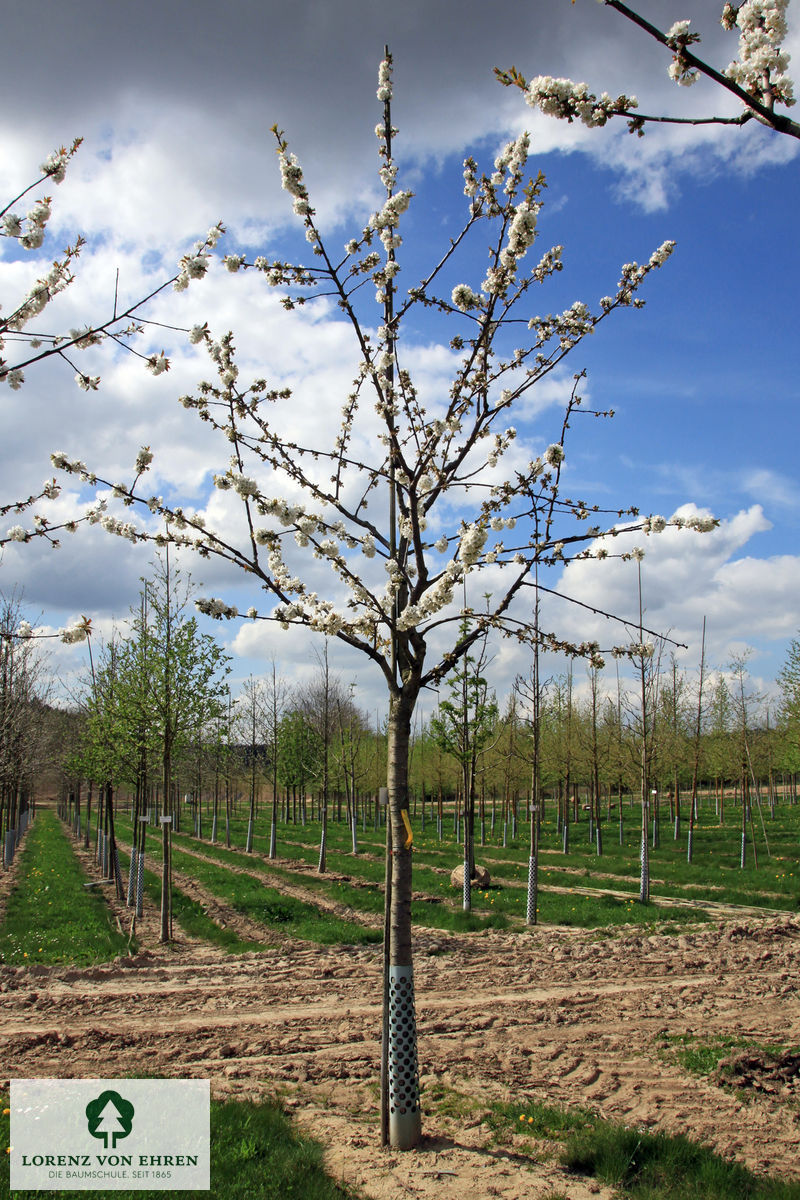
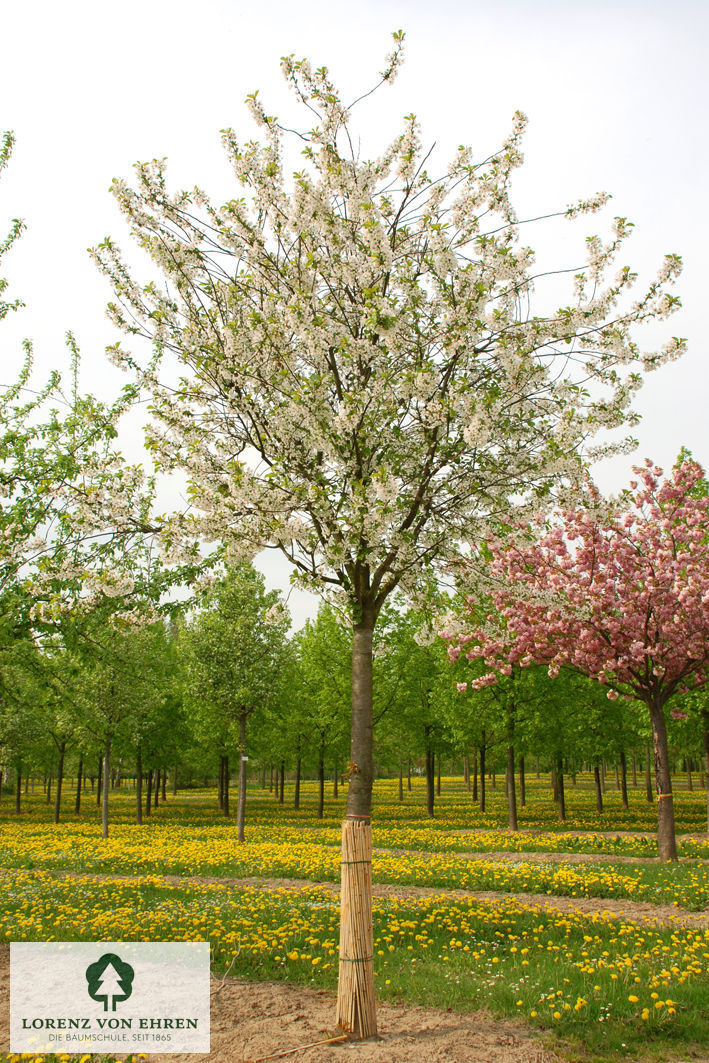

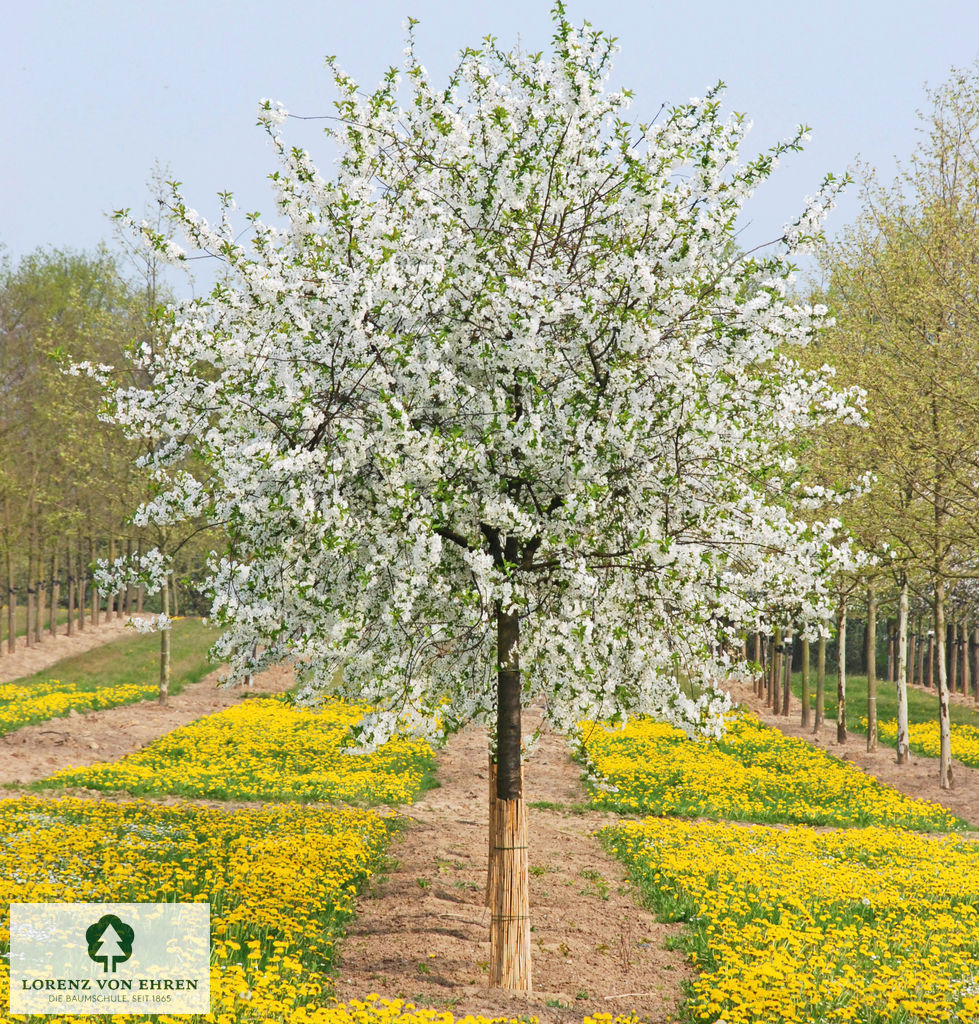
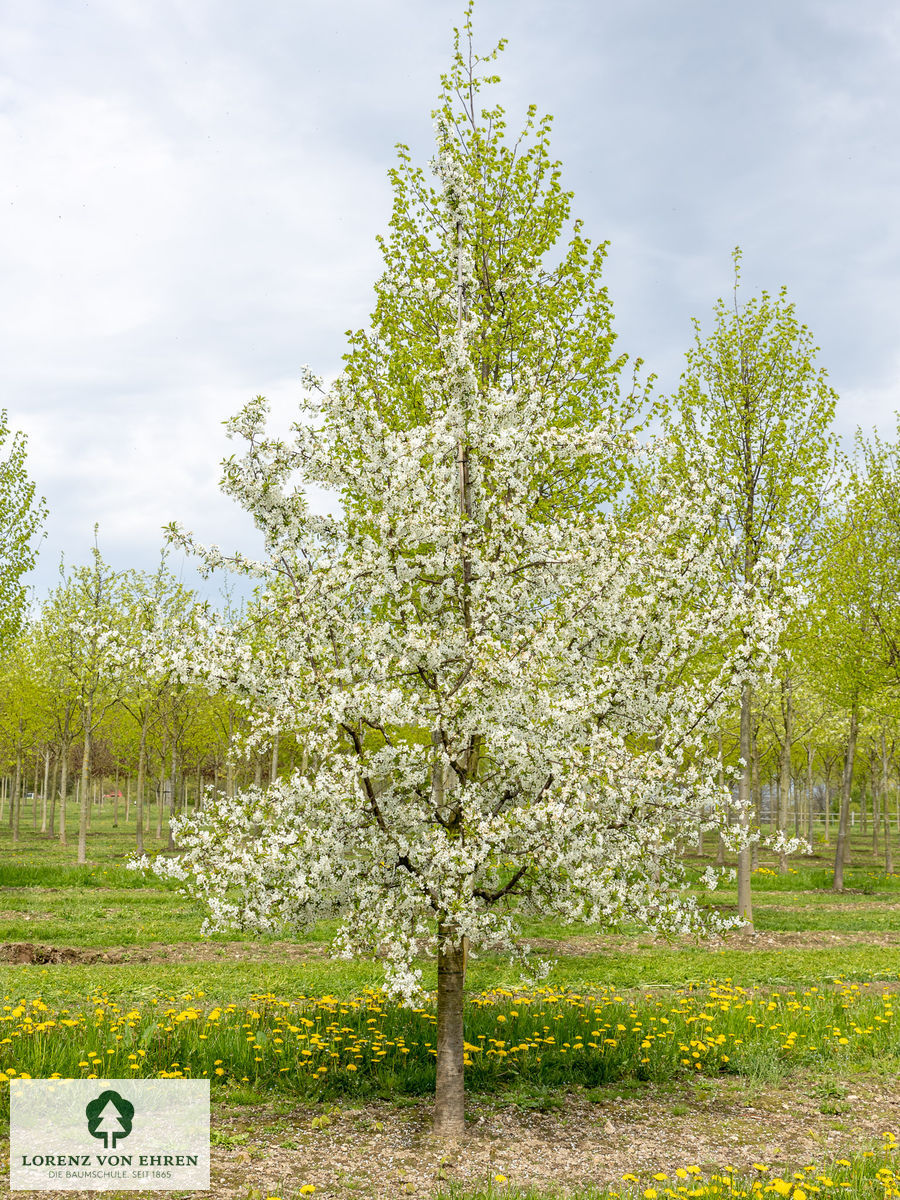
FAQ - Frequently asked questions
What is the main difference between Prunus avium and Prunus cerasus?
The sweet cherry (Prunus avium) grows much more vigorously, forms large crowns and prefers warm, sunny locations. The sour cherry (Prunus cerasus) grows more compactly, is extremely frost-hardy and copes well with partial shade.
Why should you buy cherry trees as large trees (solitary)?
Large trees from the nursery have already been professionally pruned and offer an immediate spatial effect.
Do I always need two trees for pollination?
Sweet cherries: Most varieties are self-sterile and require a suitable pollinator variety nearby. Sour cherries: Many varieties (such as “Schattenmorelle”) are self-fertile and can be planted as single trees without any problems.
Do you have to prune a cherry tree every year?
Regular pruning is important to keep the crown light and ensure fruit quality. Sweet cherries are ideally pruned immediately after harvesting in summer to minimise the risk of infection. Sour cherries often require more severe rejuvenation pruning, as they bear fruit on one-year-old wood and otherwise become ‘aged’.
What type of soil do cherry trees prefer?
Cherries hate ‘wet feet’ (waterlogging). They need deep, well-drained and nutrient-rich soil. Sweet cherries also prefer slightly calcareous soil.