






_400x400.webp "Gehölztrends 2025: Kaiser-Linde, Vogelkirsche, Hainbuche und mehr")




 Contact
Sophora / Styphnolobium - Japanese Pagoda Tree
Fabaceae
Our Sophora
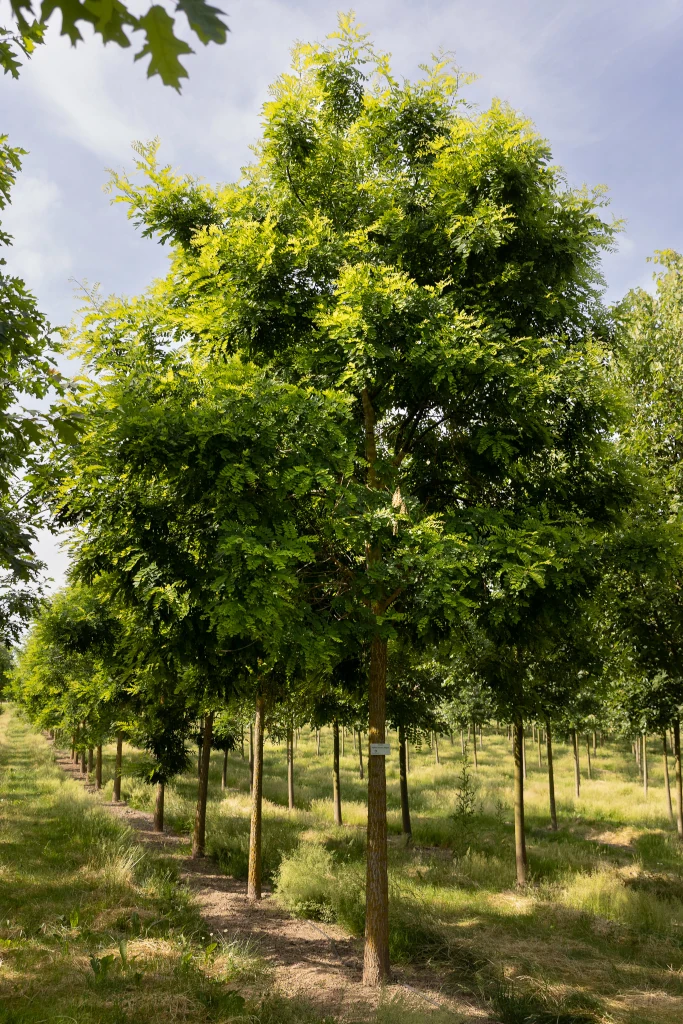
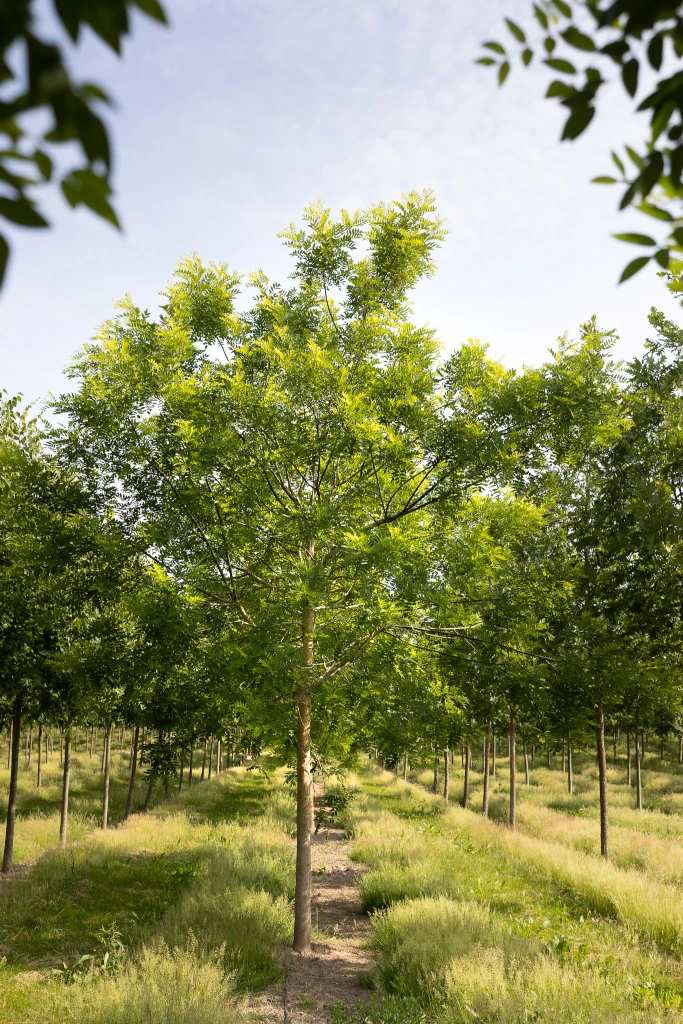
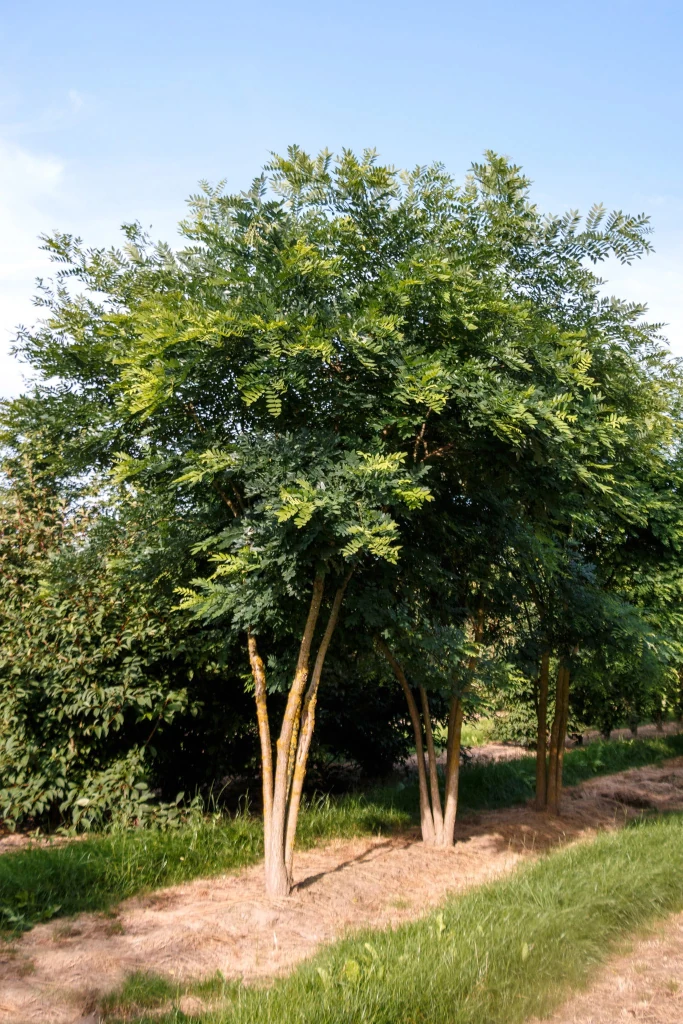
Sophora japonica, known as the string tree or pagoda tree, is a valuable plant that provides an important food source for many insects due to its late flowering period from the end of July to August. The flowers are arranged in loose panicles up to 30 cm long and vary in colour from creamy white to pale yellow. This impressive floral splendour appears in this variety at the age of 6 to 8 years. Growing to a height of 15 to 20 metres and a width of 12 to 15 metres, the string tree requires sufficient space to fully develop its majestic appearance. Its feathery, dark green leaves provide light shade and stay on the tree for a long time. The fruits are unusual pearl string-like pods, which are mainly formed in wine-growing climates.
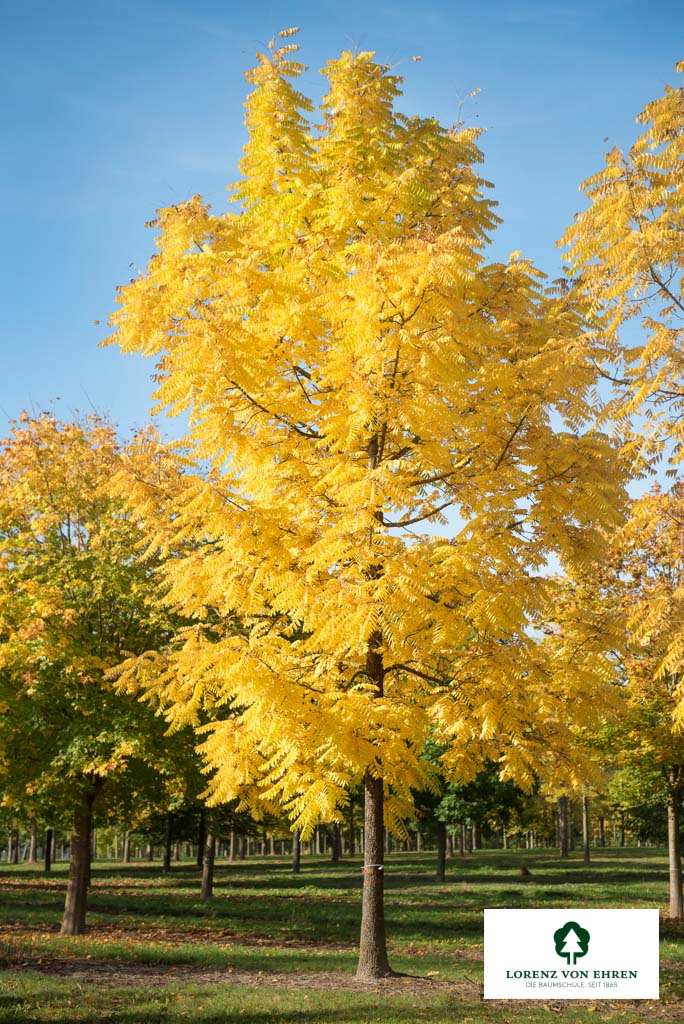
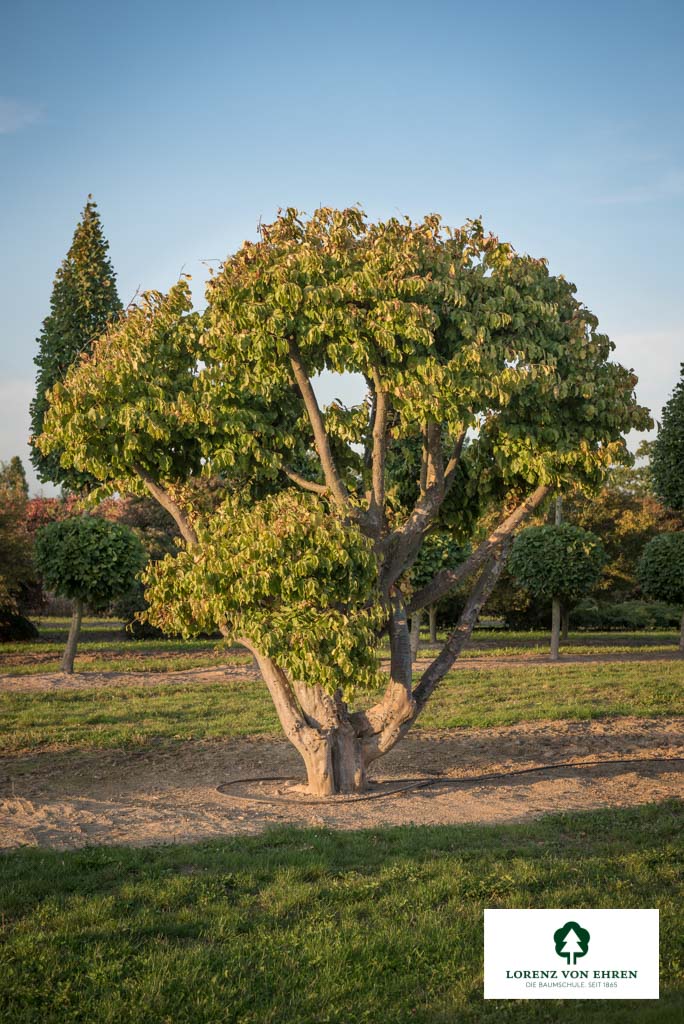
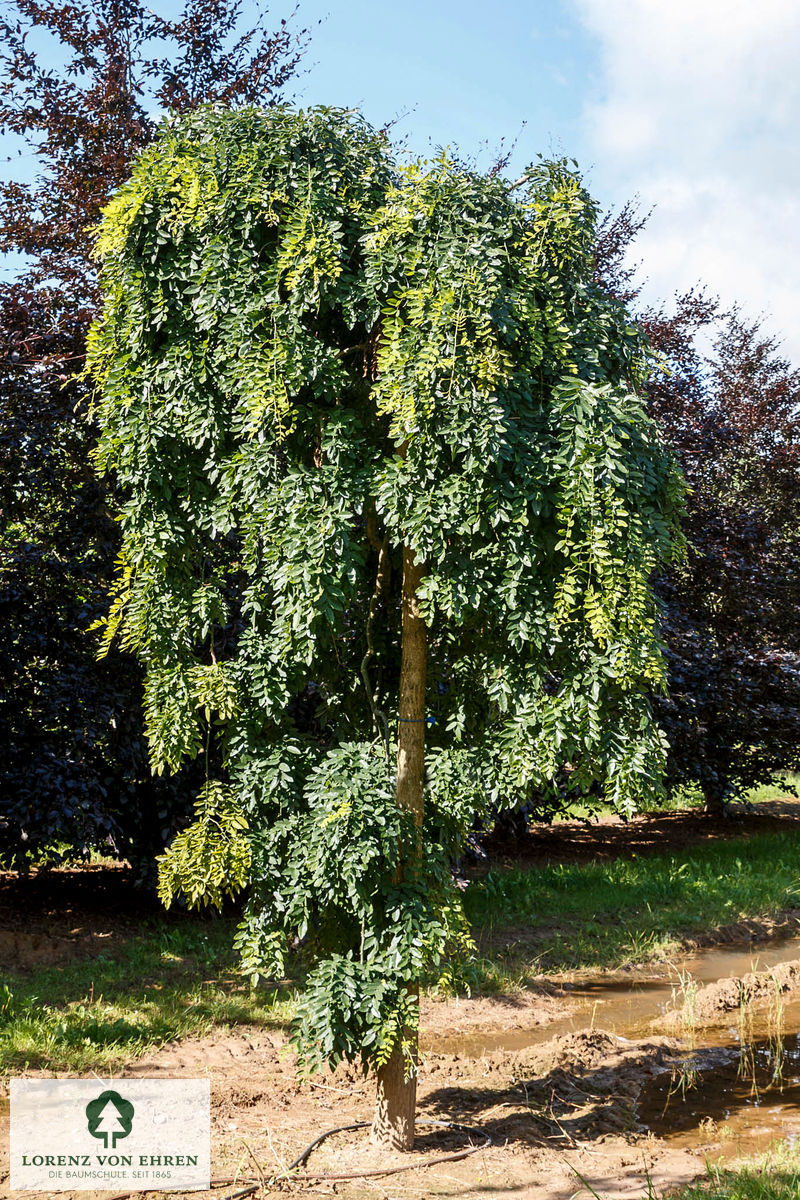
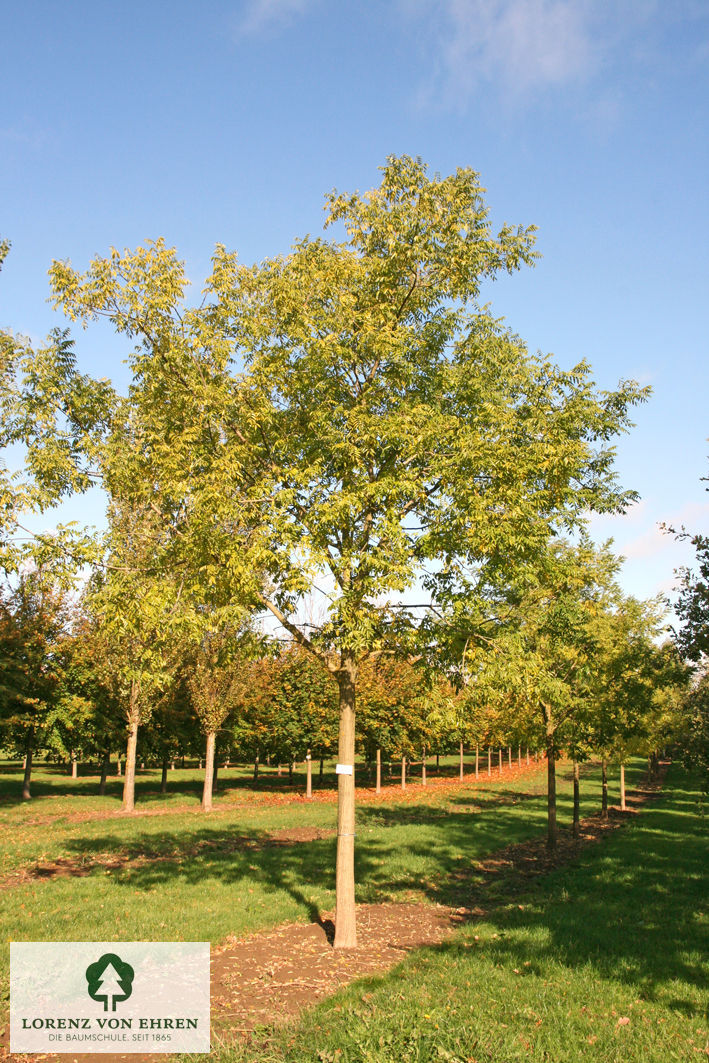
The cord tree grows into a medium-sized, sparse tree with a round, high-arched, often umbrella-shaped crown and funnel-shaped main branches. In the first five years, the tree grows slowly at a rate of 10 to 20 cm per year, then accelerates to 20 to 40 cm before slowing down again after about 20 years. The foliage is late sprouting, pinnate and matt to bluish green, with no significant autumn colouring, only occasionally pale yellow in November. The rare fruits appear in pearl-like, hanging pods from the end of September, preferably in wine-growing climates. The tree has shallow and far-reaching roots without runners, tolerates paving and some overcrowding. Sophora japonica prefers sunny locations, is heat-resistant and usually frost-hardy, although younger trees are susceptible to early frost.
Sophora japonica thrives on slightly acidic to strongly alkaline soils, preferring well-drained, sandy-loamy or loamy substrates and avoiding heavy soils. The tree is drought-resistant if it has been able to grow undisturbed and is also resistant to urban climates, industry and salt, but only tolerates wind to a limited extent. Pruning should only be carried out in autumn, as the tree bleeds heavily in spring. In climate zone 6b, Sophora japonica is frost-hardy and also bee-friendly. Synonyms for this plant are Styphnolobium japonicum. Sophora japonica is a versatile and adaptable tree that offers both aesthetic and ecological benefits, particularly due to its late flowering period and suitability for urban environments.
Choose your Sophora
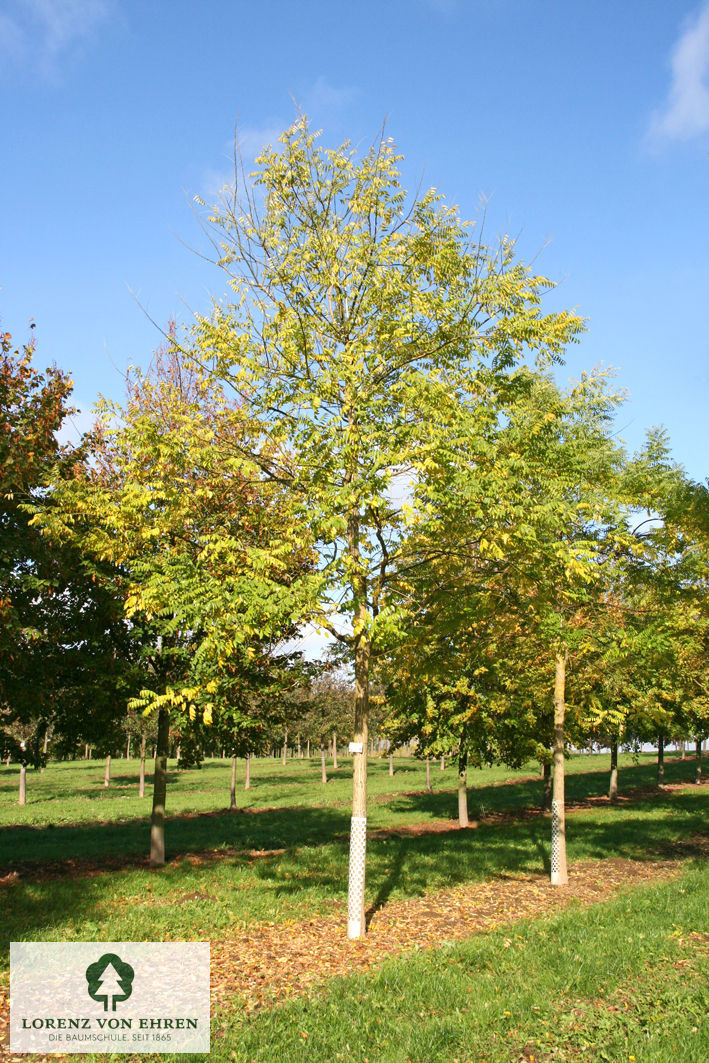


Examples from our nursery manufactory