




_400x400.webp "Gehölztrends 2025: Kaiser-Linde, Vogelkirsche, Hainbuche und mehr")



 Contact
Malus hybrids - Crab apples
The genus Malus, which is native to the northern hemisphere, comprises 30 species. This has resulted in the immense abundance of fruit varieties and ornamental forms. Only a few wild species are available, as they have a rather modest appearance compared to the ornamental apples. What the plant lover encounters in woods and field hedges as supposedly natural forms are mostly feral seedlings of fruit varieties
The exact number of hybrids cannot be stated, but estimates range from 700-800. Cultivators in the USA have been especially concerned with improving the assortment. Their profuse flowers, pleasantly sweet fragrance, various habits, and colourful autumn fruit are impressive.
Specifications:
b) Some varieties have larger fruit that are more useful. The varieties with larger fruit ripen as early as September, while their colours are usually modest.
Overview
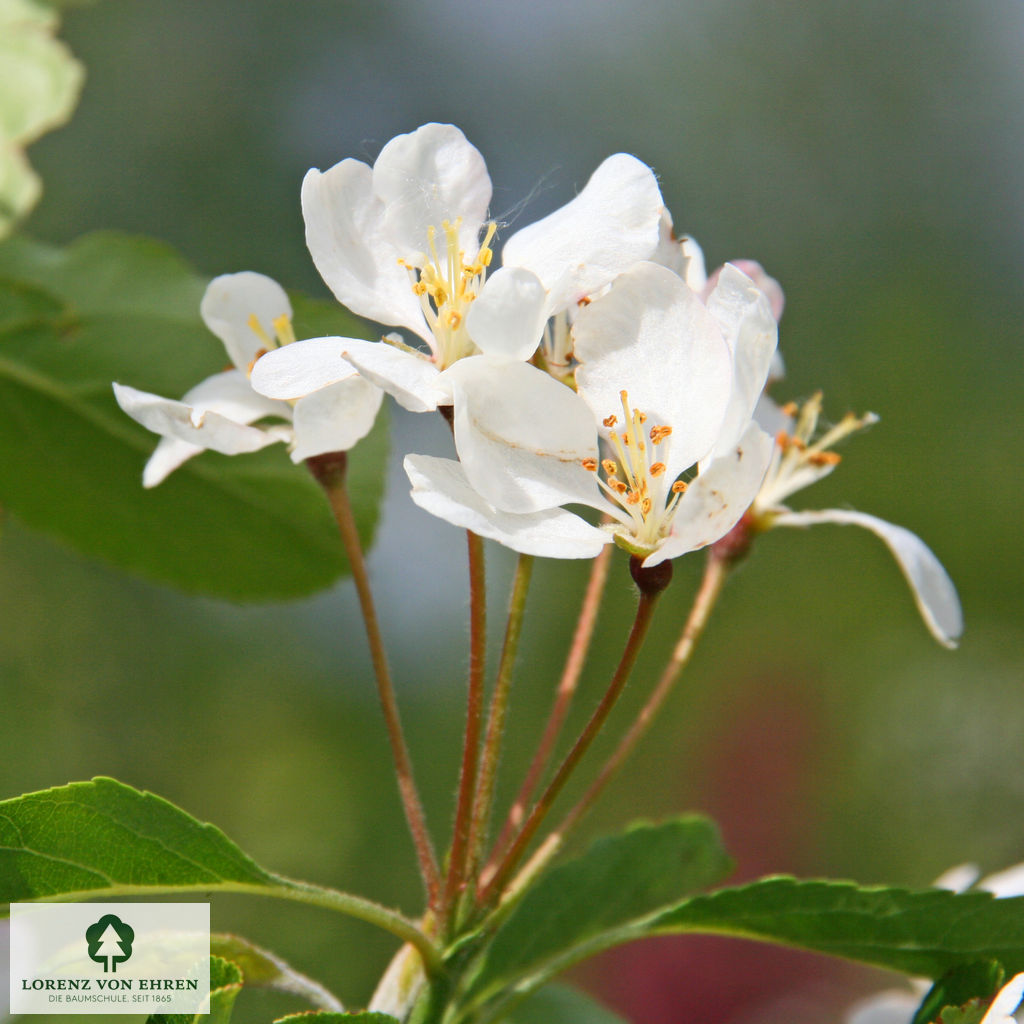
Malus hybrids with white flowers
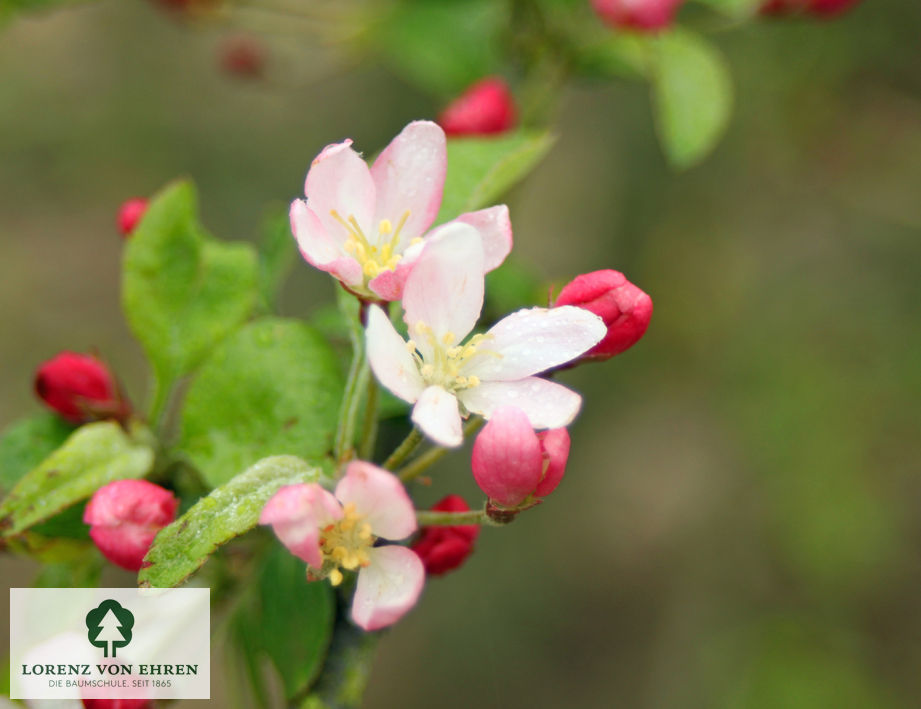
Malus hybrids with pink and red flowers
Malus species
- Malus 'Beverly'
- Malus 'Butterball'
- Malus 'Bob White'
- Malus 'Charlottae'
- Malus 'David'
- Malus 'Evereste'
- Malus 'Golden Hornet'
- Malus 'John Downie'
- Malus 'Professor Sprenger'
- Malus 'Red Jade'
- Malus 'Red Jewel'
- Malus 'Red Sentinel'
- Malus 'Striped Beauty' ('Gorgeous')
- Malus baccata 'Street Parade'
- Malus 'Tina'
- Malus toringo sargentii 'Eskilstuna'
- Malus toringo sargentii 'Sämling'
- Malus toringo sargentii 'Veredlung'
- Malus 'Wintergold'
Malus hybrids, white - flowering
| Varietys | Flowers | Fruits | Size in m / Habit | Leaves / Other |
| Baccata 'Street Parade' | dark to delicately rose buds, white, single flowers | purple-red, up to 1.5cm large | height 5-6m, width 3-4m, slender ovate, later roundish | light green shoots, later dark green, glossy, very scarb resistant |
| 'Beverly' | rose buds, flowers pure white, single | luminous red, long-lasting, numerous, pu to 2cm large | height 3-6m, width 3-5m, upright, roundish crown | dark green, yellow autumn color, very scarb resistant |
| 'Butterball' | rose buds, flowers white, rose shaded, single | yellow to orange, bearing many fruits, long-lasting, up to 2.5cm large | height 4-6m, width 3-5 (6)m, loose, overhanging, spreading branches | green, yellow-orange autumn color, very scarb resistant |
| 'Bob White' | bud dark pink, flower bright white, single, long flowering period | yellow, slightly pink on sunny side, up to 1.5cm large, long adherent | height 4-6m, width 4-6m, roundish, flattened, densely branched crown | matt glossy dark green, new American cultivar, robust, very healthy |
| 'Charlottae' | bright white, slightly pink tinged, semi-double | small, greenish-yellow, shiny | shrub or tree, height 4-7m, broad rounded crown | golden-yellow to red autumn color |
| 'David' | dark rose buds, white flowers with a slight tint of rose | luminous red to orange-red, long lasting, numerous, up to 1.5cm large | height 5-6m, width 4-6m, initially slender, later broadly round | medium green, yellow-orange- red autumn color, moderatly scab resistant |
| 'Evereste'® | rose buds, white flowers, partially rose margins, single | yellow-orange, red tint due to sun exposure, long lasting, up to 2.5cm, very frost hard | height 4-6m, width 3-5m, broadly conical, twigs arching | dark green, luminous yellow-orange autumn color, very healthy, moderately scab resistant |
| 'Golden Hornet' | rose buds, white flowers, single | luminous golden, bearing many fruits, up to 3cm | height 6-8m, width 3-5m, broadly upright, slightly overhanging | fresh green |
| 'John Downie' | rose buds, numerous white, large, single flowers | yellow to orange, up to 4cm, suitable for preserves, impressive luminosity | height 4-6 (8)m, width 3-5m, conically closed | dark green, glossy |
| 'Prof. Sprenger' | rose buds, white flowers, single, numerous | orange-red, red in sun exposure, up to 1.5cm large, numerous, long-lasting | height 4-6m, width 3-4m, broadly conical to loosely spreading | fresh green, yellow-orange autumn color, moderatly scab resistant |
| 'Red Jade' | delicately rose buds, numerous white and single flowers | luminous red, up to 2cm large, long-lasting, numerous | height 1-2 (4)m, width 3-4m, twigs loosely overhanging | medium green, moderatly scab resistant |
| 'Red Jewel' | numerous, very large, white and single flowers | lang-lasting, cherry-red, up to 1.5cm large, very frost hardy | height 4-6m, width 3-4m, compact, pyramidal crown, turning oval funnel-shaped with age | fresh green shoots, later medium green, fairly scab resistant |
| 'Red Sentinel' | light rose buds, white flowers, single | dark red, up to 2.8cm large, numerous, lang-lasting | height 4-5 (8)m, width 3-3.5m, ovate crown, branches and twigs slightly arching | bronze-green shoots, later light green, glossy, scab resistant |
| 'Striped Beauty' =Gorgeous | white flower, May to June | shiny, red, uo to 4cm large | height 4-6m, width 3-5m, large shrub/small tree, branches loosely overhanging | oval leaves, freh green, golden-yellow autumn color |
| 'Tina' | rose buds, numerous, white, small, fragrant flowers | numerous, small, red, long-lasting | height 1-1.5m, width 2-2.5m, small shrub, loosely round crown, broadly spreading | lushly green, yellow autumn color, scab resistant |
| Toringo sargentii 'Eskil-stuna' | rose buds, white flower, profusely flowering, fragarnt, late April to early May | red | height 2-3m, width 1.5-1.8m, medium-height shrub, densely branched, broad growth habit, taller in partial shade, broad, round, loose crown | oval, serrated and glossy leaves, green shoots |
| Toringo sargentii 'Sämling' | barely pink buds, white flower, a cloud of flowers in May, pleasantly fragrant | numerous, pea-sized, strikingly golden-yellow | height 6-8m, width up to 10m, magnificent small trees, short trunk, broad and round crown, branches spreading widely, slow-growing | elliptical, occasionally lobed, medium green, yellow-orange autumn color |
| Toringo sargentii 'Veredlung' | white flower, abundantly flowering, fragarnt | pea-sized, numerous, vivid red | height 2-4m, always wider than tall, medium-sized to large shrub, very densely branched, branches horizontal to overhanging, very slow-growing | oval, shny, dark green, golden-yellow autumn color |
| 'Winter-gold' | rosy buds, delicately rose to white flowers | luminous yellow, up to 2.5cm large, very long-lasting, numerous | height 6-9m, width 4-6m, loosely round to broadly ovate crown | red-brown shoots, later dark green |
Malus hybrids, pink and red - flowering
| Variety | Flowers | Fruits | Size in m / Habit | Leaves / Other |
| 'Brandy Magic' | dark rose, semi-double, large, intensive fragrance | orange-red to yellow, up to 4cm, very attractive | height 4-6 (7)m, width 3-5m, broadly spreading crown, loose crown | dark green with bronze cast, red-orange autumn color, most ornamental crab in autumn, scab resistant |
| 'Cardinal' | dark red to carmine, single | dark red, up to 1.5cm, long lasting | height 4-5m, width 6-7m, small tree, broadly upright | reddish bronze shoots, later bronze-green, orange-red autumn color, very scab resistant |
| 'Coccinella' | red to purple-rose, single, abundant flowering | dark red, up to 3cm large | height 4-6m, width 4-6m, conical to broadly upright | reddish green shoots, later crimson, attractive orange-red autumn color, very scab resistant |
| 'Dark Rosaleen' | dark rose, simple | dark red, up to 1cm large, very numerous, long-lasting | height 4-6m, width 3-4m, crown slender upright when young, maturing to vase-shaped crown | dark red shoots, later reddish green, conspicuous orange-red autumn color, very scab resistant |
| 'Eleyi' | winr red to purple red, May to June | dark red, edible | height 4-5m, width 3-5m, shrub-like or small tree | orange to red autumn color, oval |
| 'Hillieri' | rose, semi-double, mid-May to early June | yellow-orange, round fruit that keeps well on the tree | height 4-8m, width 4-6m, small tree, initially round crown, later spreading to umbrella-shaped, branches arching over | pointed-ovoid to oval, approx. 8cm long |
| 'Hopa' | rosy to carmine, single | light red, up to 3cm long | height 4-6 (10)m, width 3-5m, broadly ovate, horizontally spreading branches | brown-red shoots, later crimson-green |
| 'Liset' | flowers light crimson to purple-rose, May to June | garnt red to brownish red | height 6-8m, width 4-6m, small tree, looaely upright, branches arching over | purple-red buds, later glossy dark green |
| 'Makamik' | carmine to light rose | orange to crimson, up to 2cm large | height 5-7 (8(m, width 5-7m, initially upright, later round crown, twigs arching | reddish shoots, later dark green, bronze-red autumn color |
| 'Mokum' | bud dark violet, flower crimson, single | orange-red, up to 1.5cm large, clinging until end of November | height 6-8m, width 5-6m, semi-open, ovoid, sparsely, branched crown | shoots reddish, later bronze-green, bright orange-red autumn colouring, resistant to milde |
| 'Nicoline' | purple blossom, May | dark red, abundant, edible | height 4-6m, width 3-4m, large shrub/small tree, broad upright | purple-red buds,later glossy dark green |
| 'Profusion' | purple-red to purple-rose flower, May tu June | up to 2cm large, slightly pointed, medium red to dark red | height 5-7m, width 3-5m, small tree, upright to leaning | shoots red to reddish, later bronze-green |
| 'Royality' | ruby red to dark crimson, single | dark red, up to 1.5cm large | height 3-4 (6), width 4-5m, broadly upright, spreading | luminous red-brown shoots, later dark green-red, brown-red autumn color, fairly scab resistant |
| 'Rudolph' | carmine to rosy, single, numerous | orange-yellow, up to 1.8cm large | height 5-6m, width 4-5m, broadly upright, round crown | bronze-red shoots, later dark-bronze grenn, fairly scab resistant |
| Toringo sargentii 'Browers Beauty' | light rose, violet-rose buds, May to June | yellow to orange-yellow, up tp 1cm large, on the tree until the end of November | width 5-6m, broad fan-shaped, semi-open crown, picturesque growth habit, overhanging | deciduous, alternate, ovate to elliptical, up to 8cm long, glossy, yellow-red autumn color |
| 'Van Eseltine' | delicately rose to pink, large, carnation-like, double, large | yellow to orange-red tinted, up to 2cm large | height 4-6m, width 3-4m, initially columnar, later spreading, branches upright to diagonally ascending | light green shoots, later glossy dark green, somewhat susceptible to scab |
Our Malus hybrids


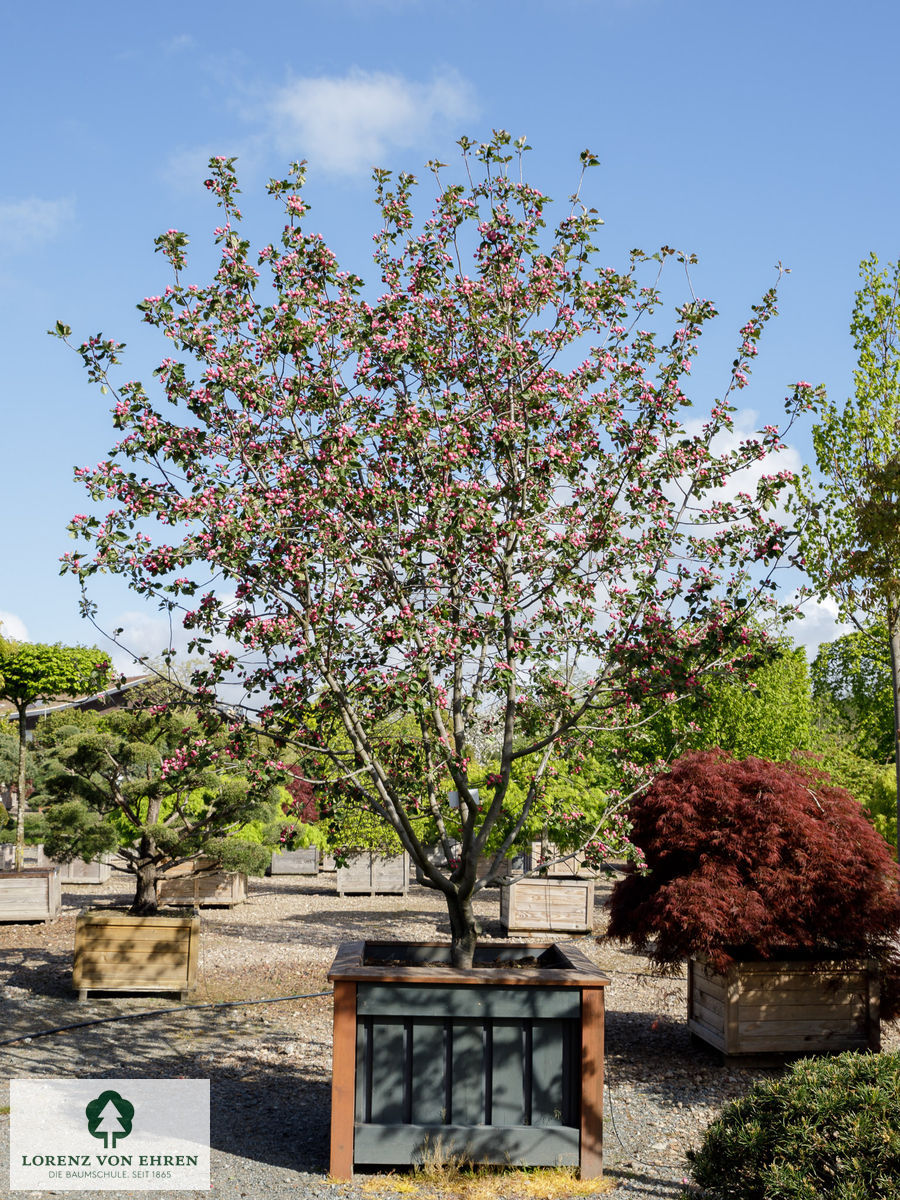


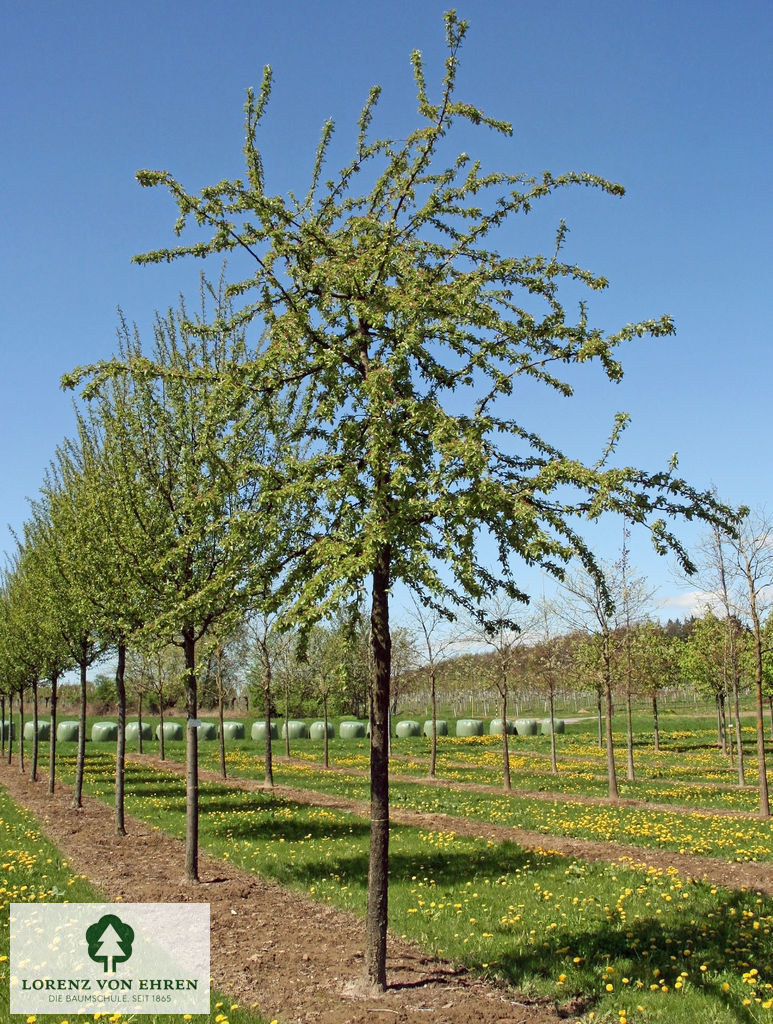
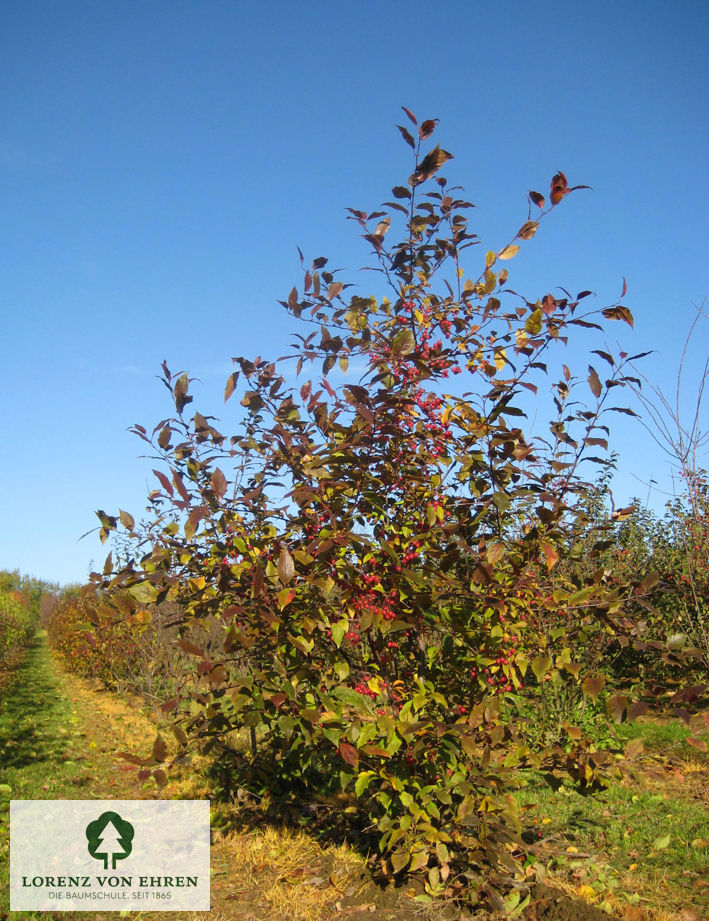
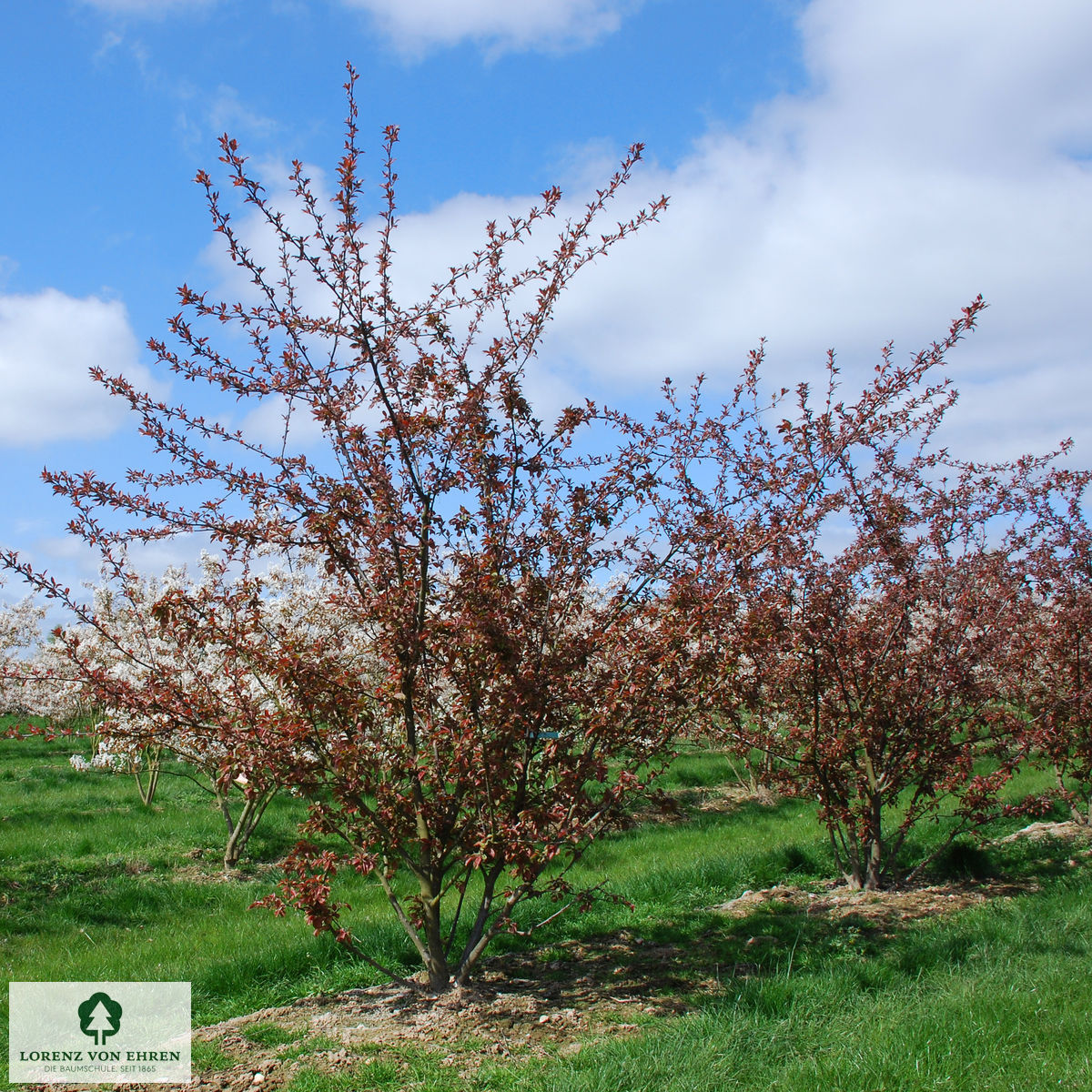
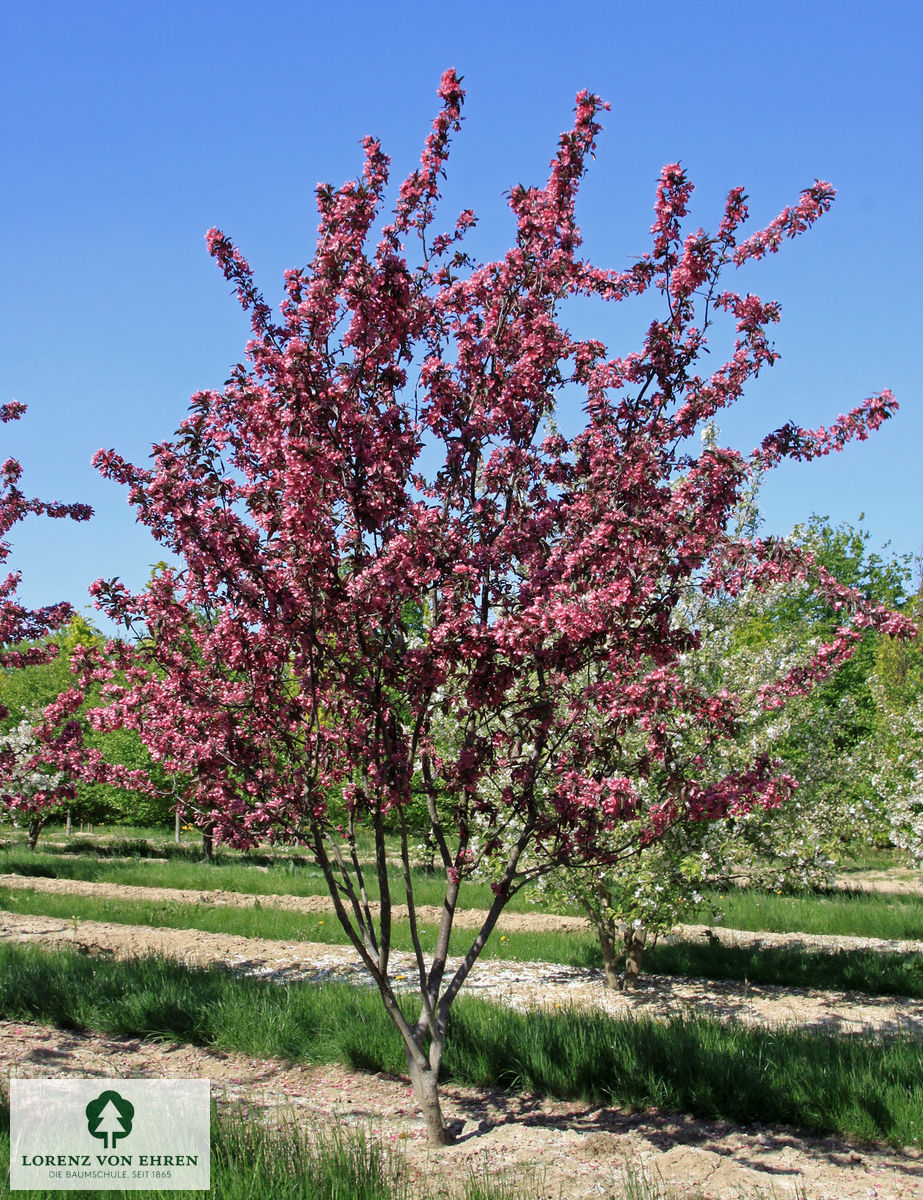
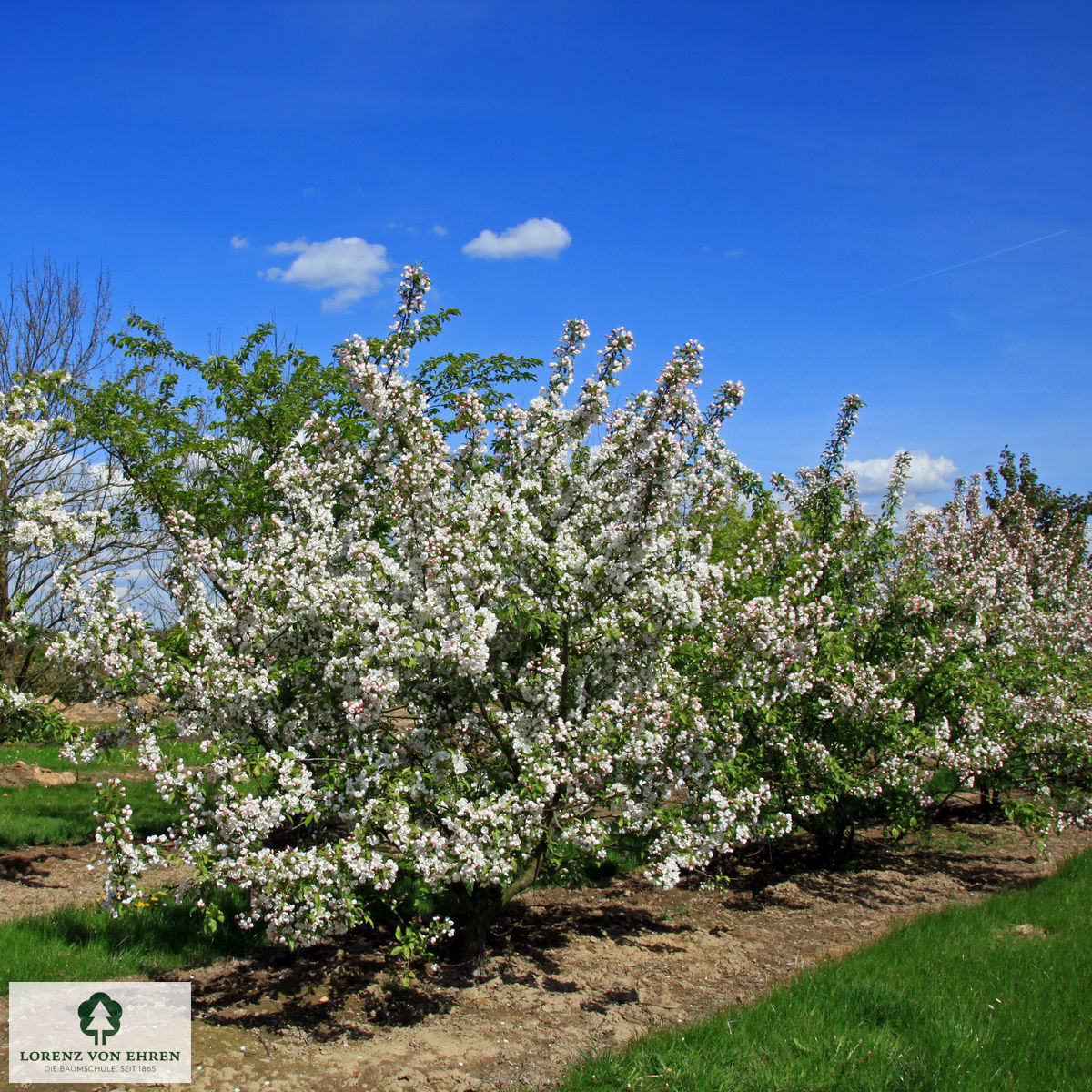
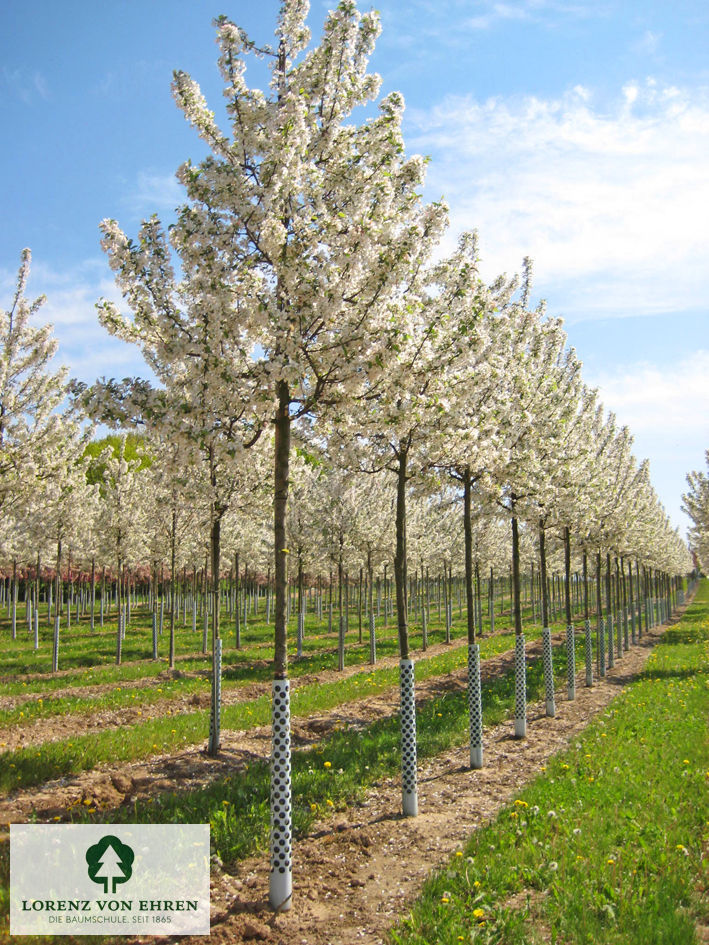

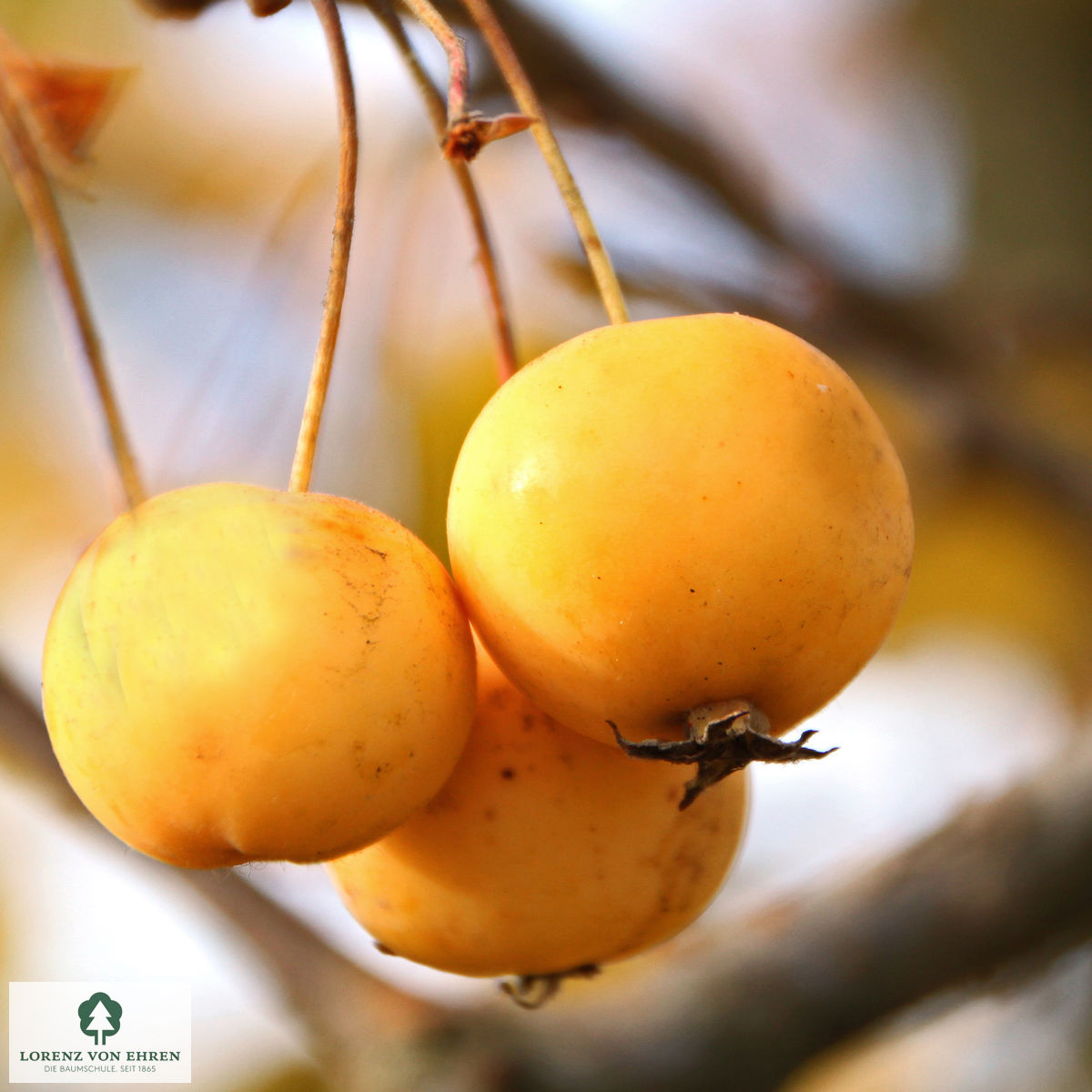
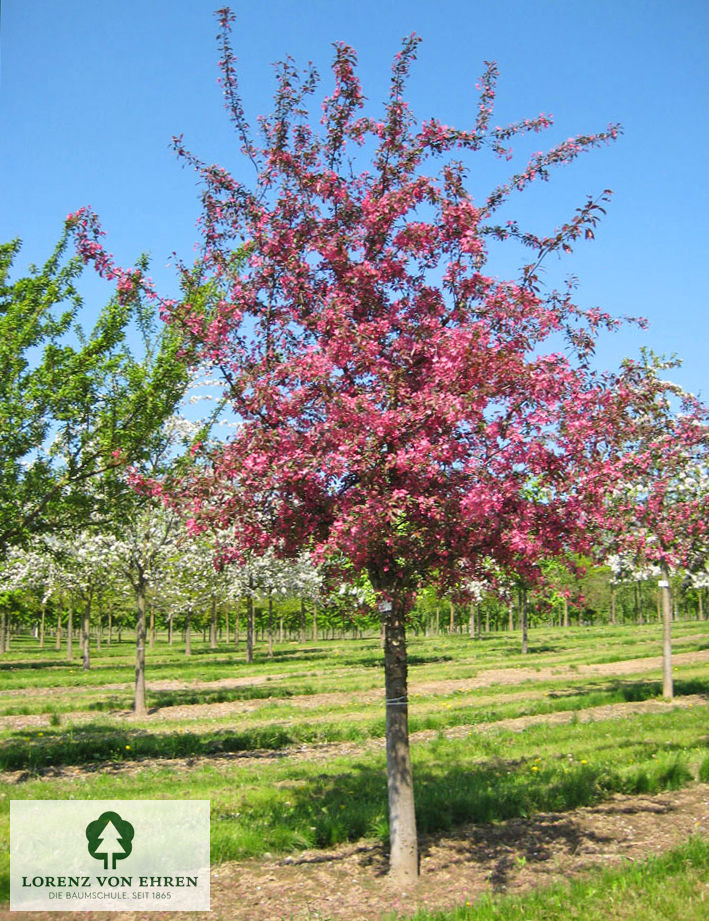
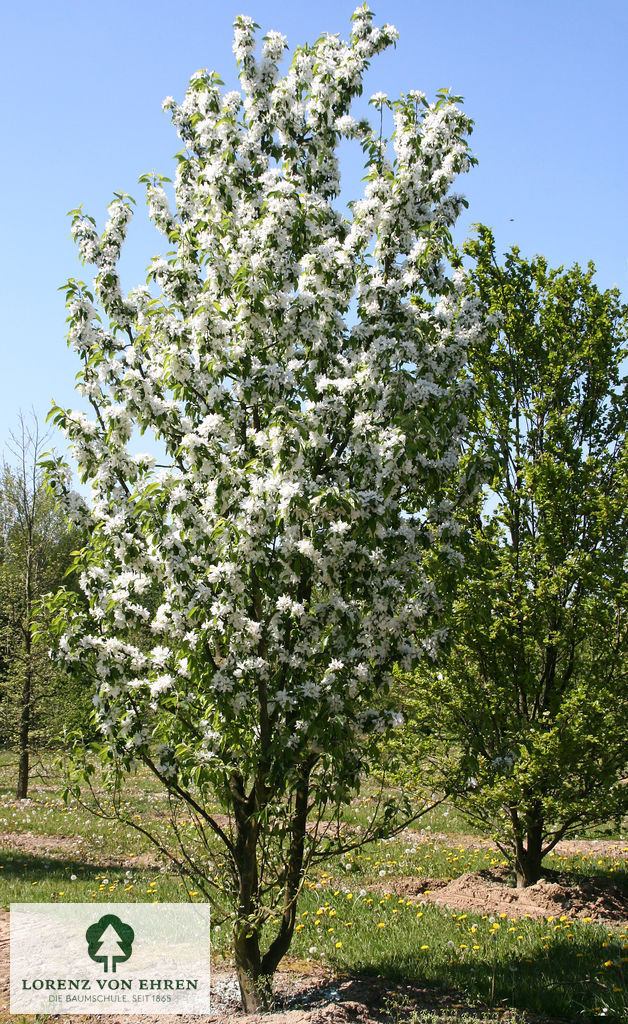
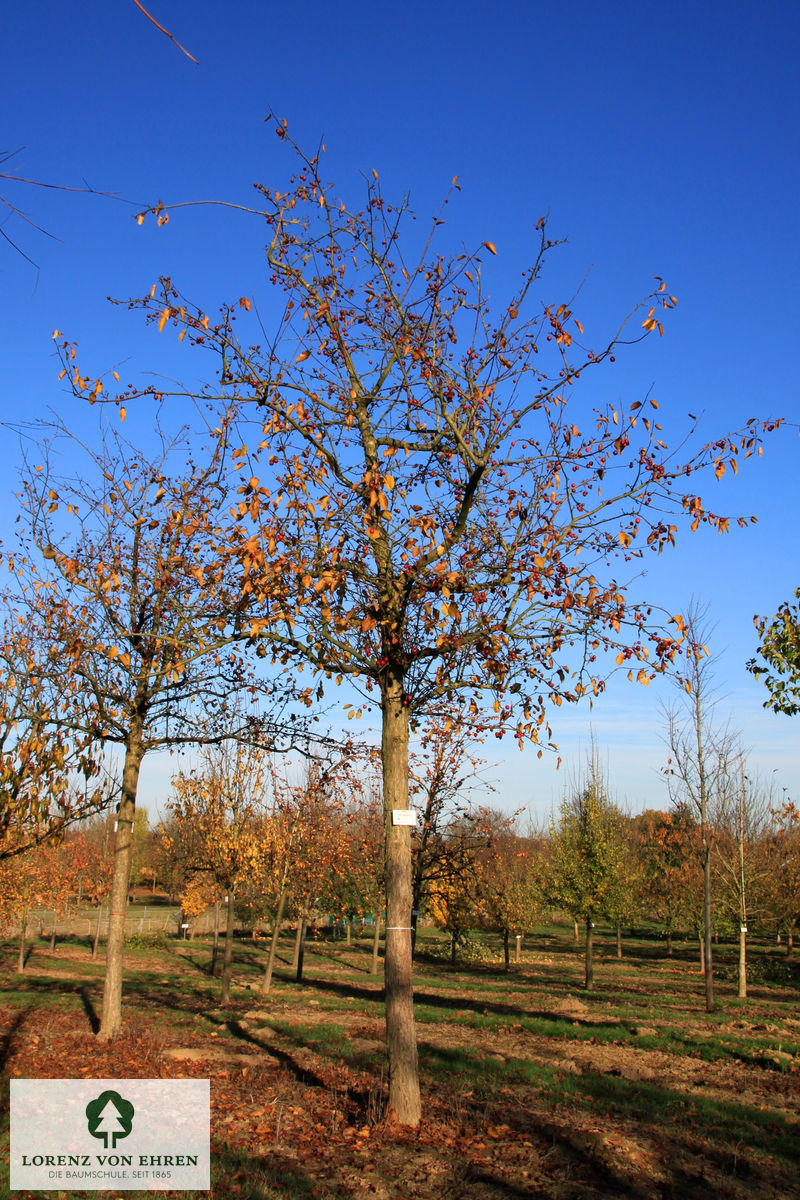

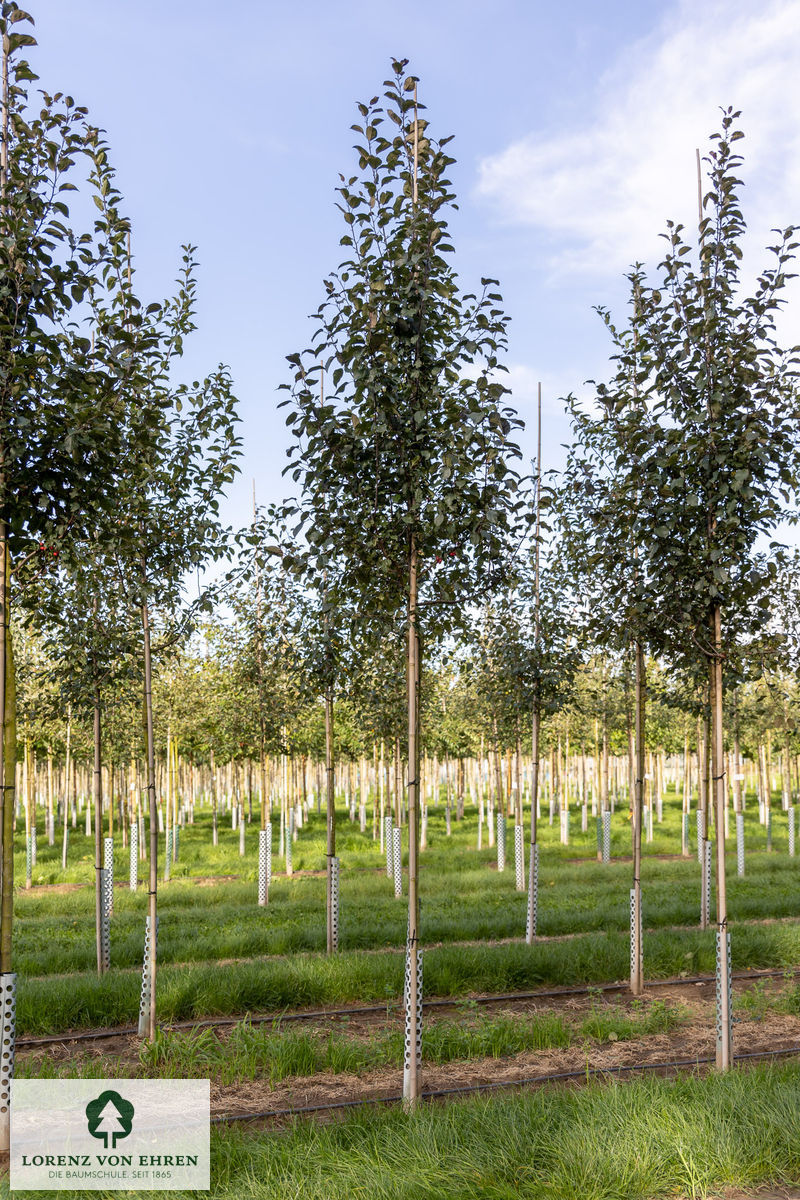
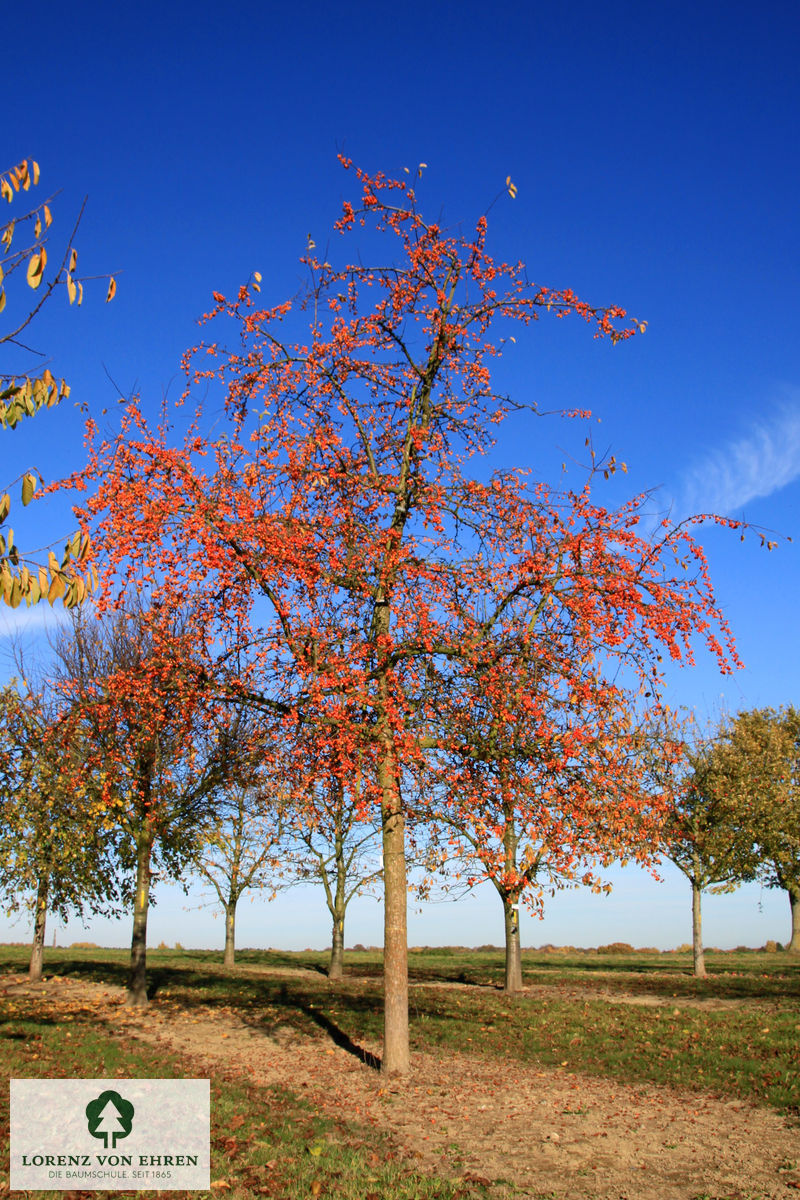
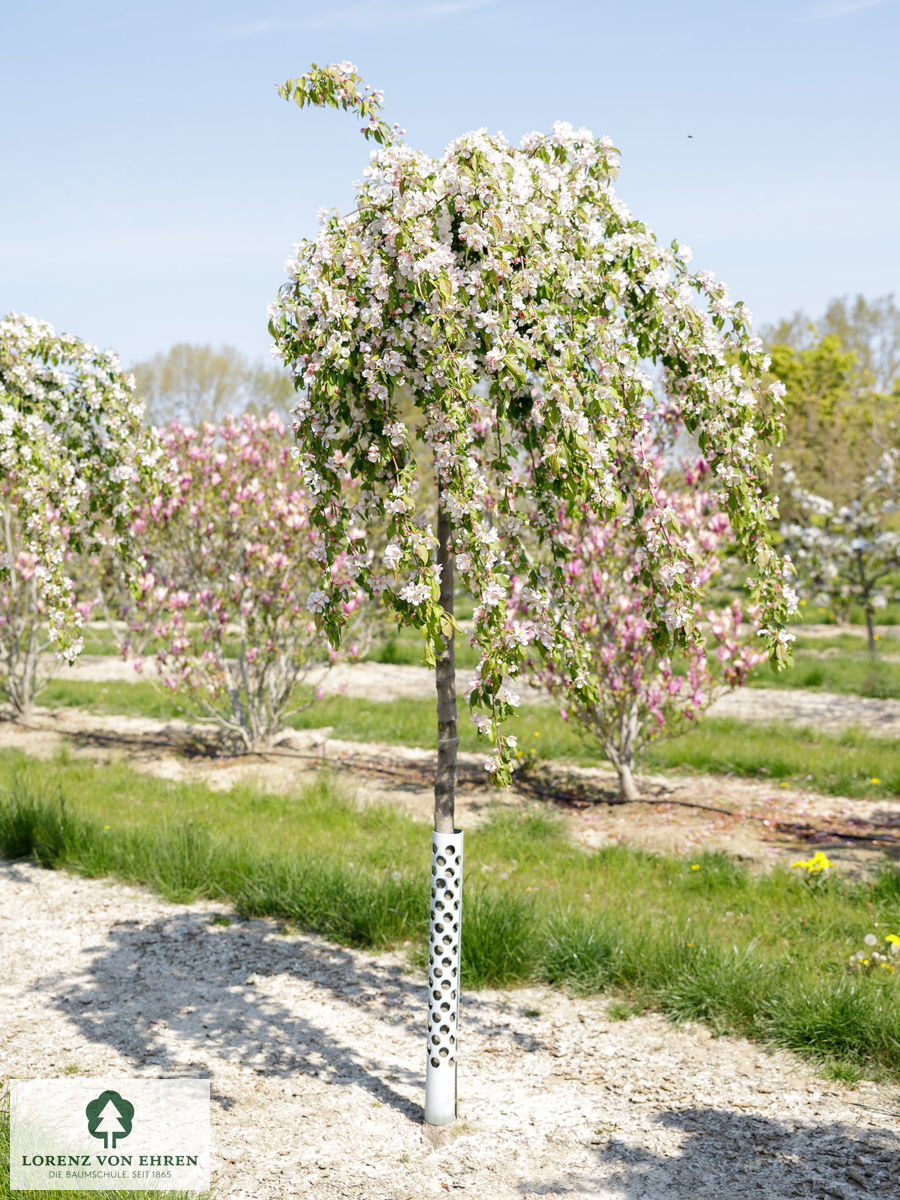
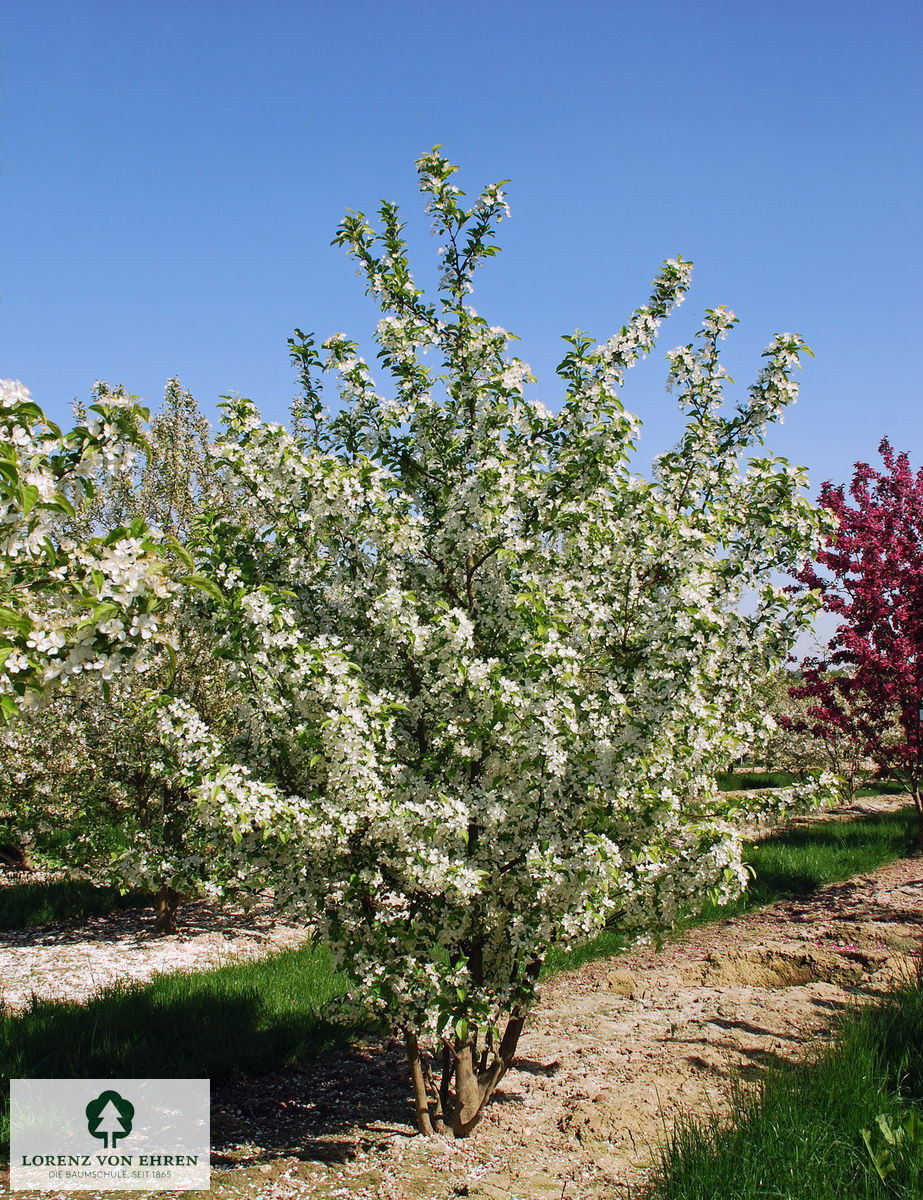
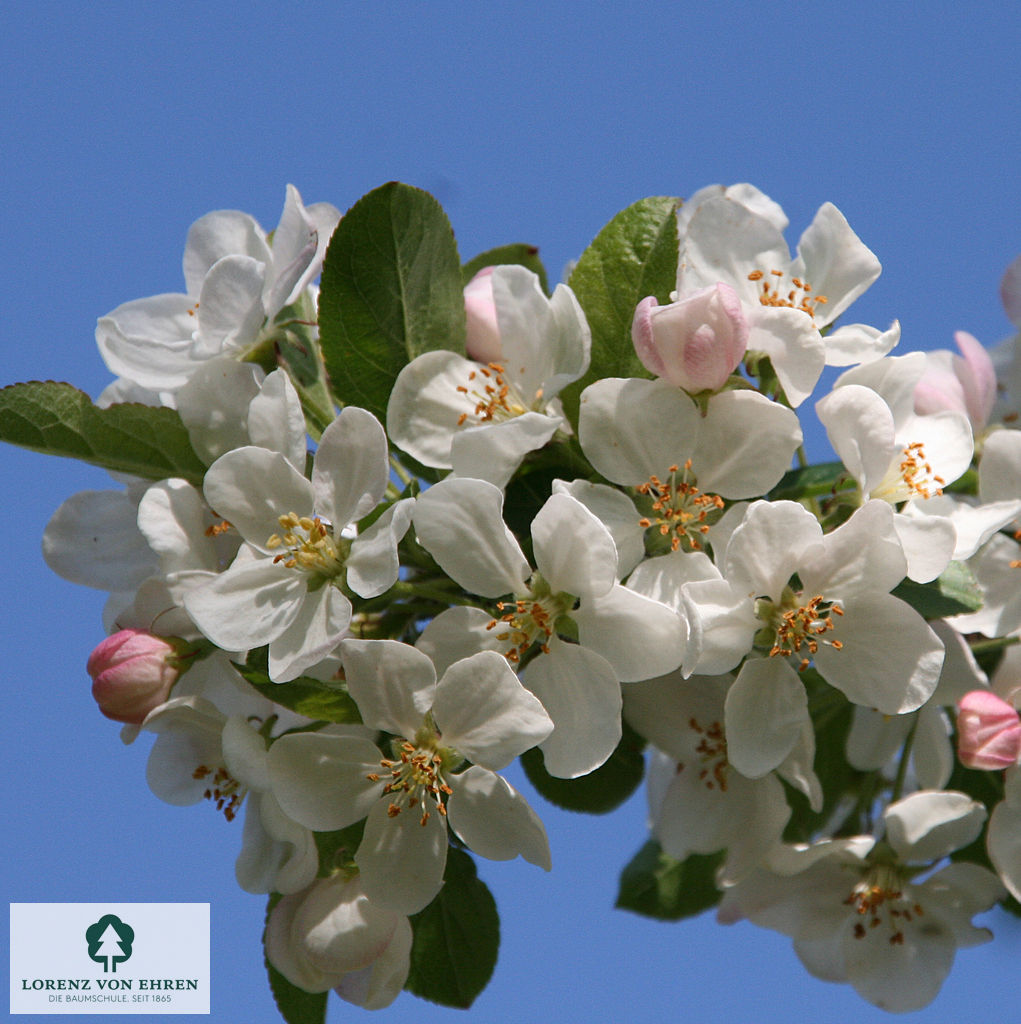
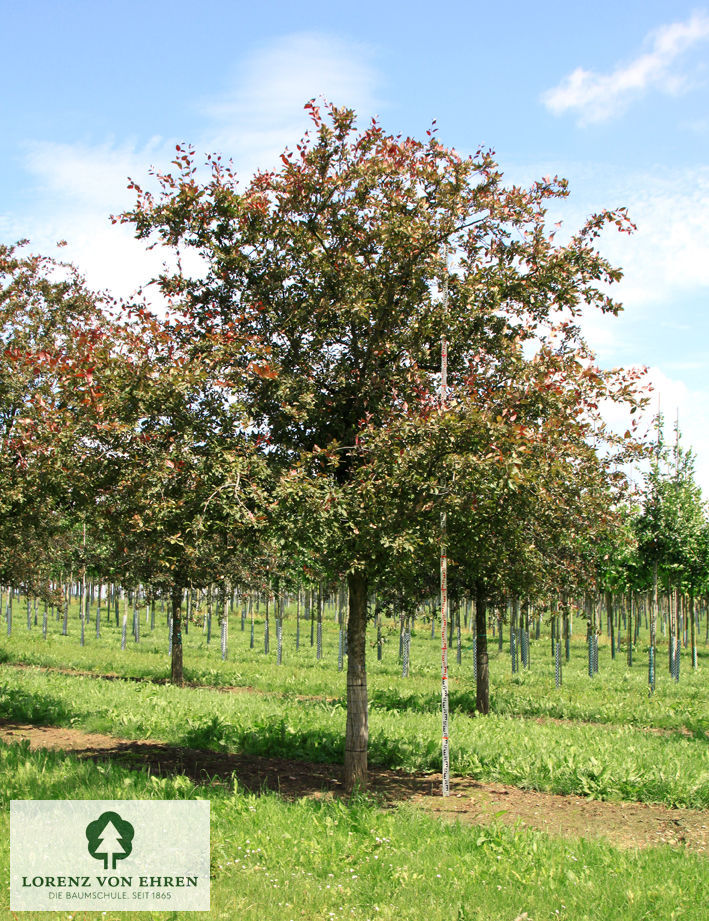
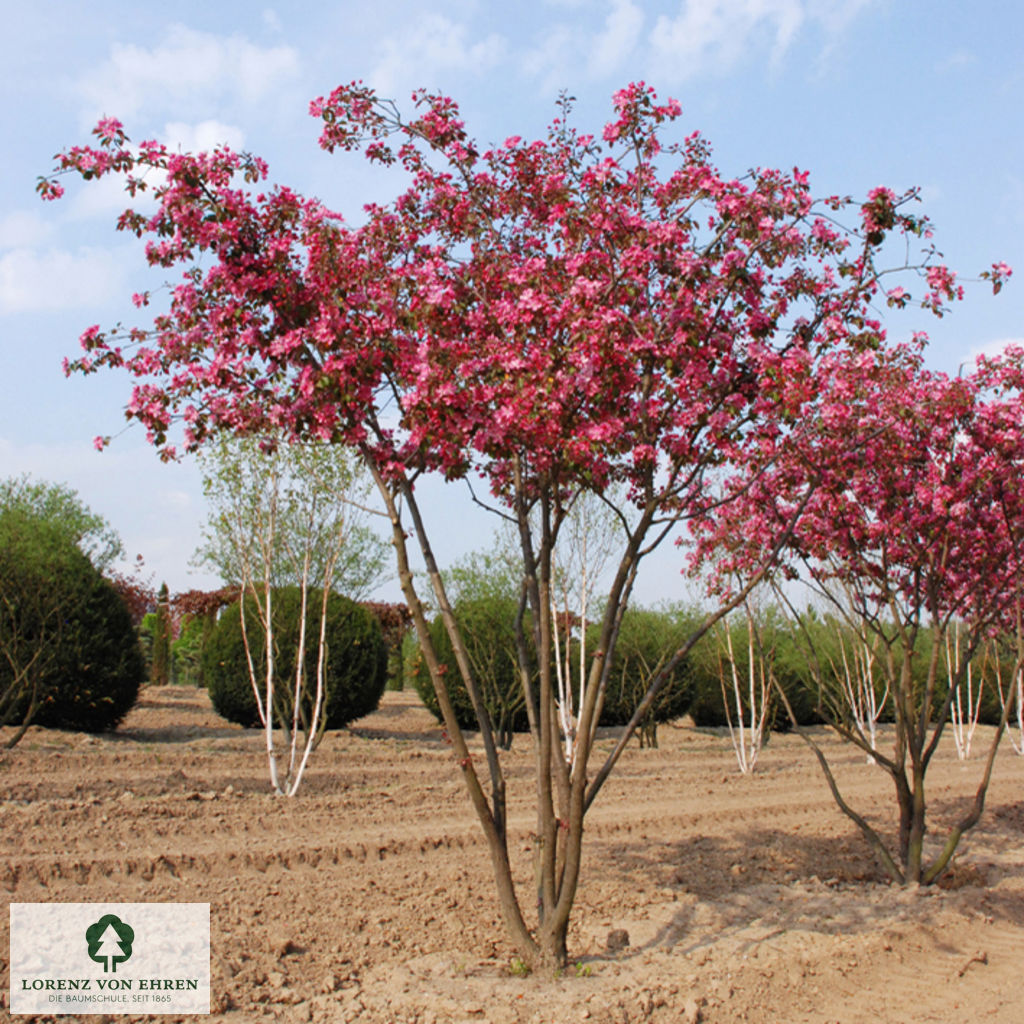
Our Malus hybrids
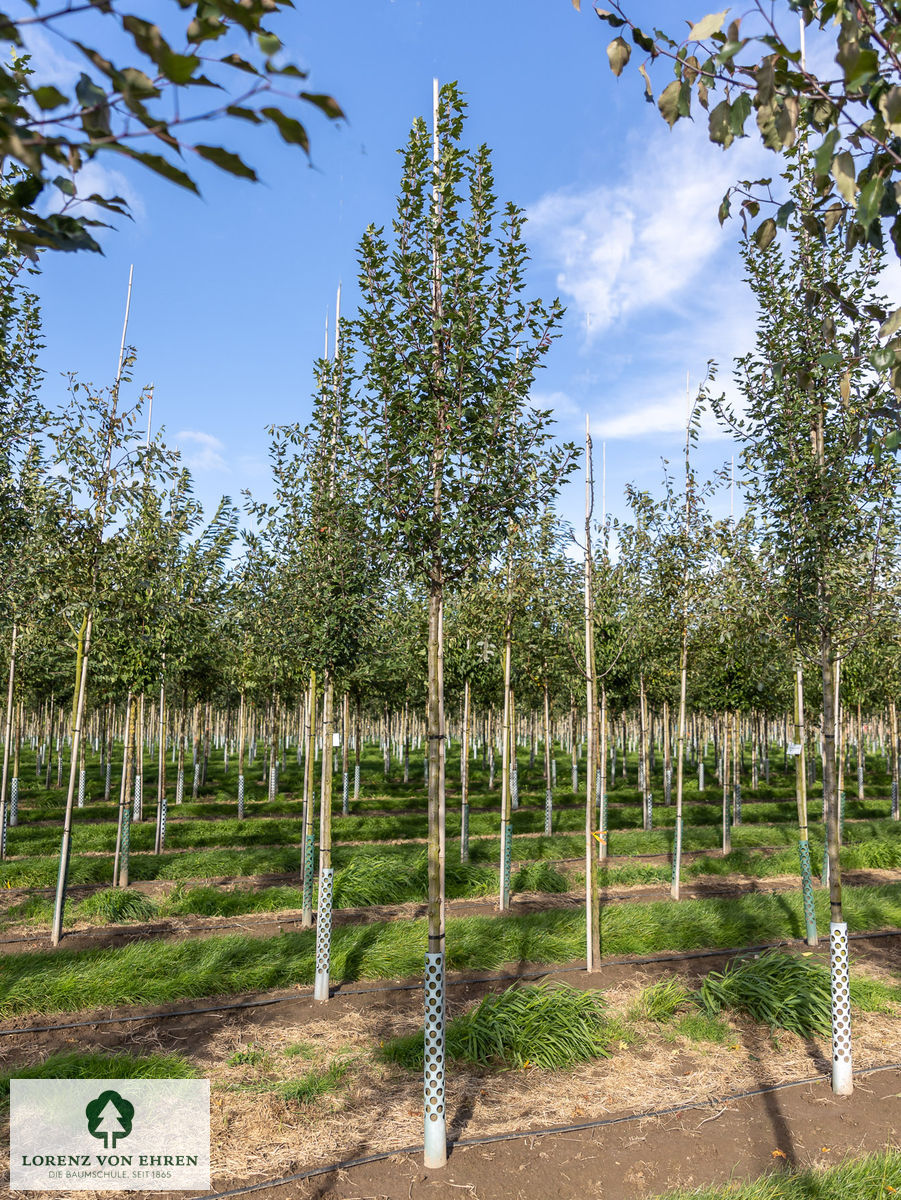
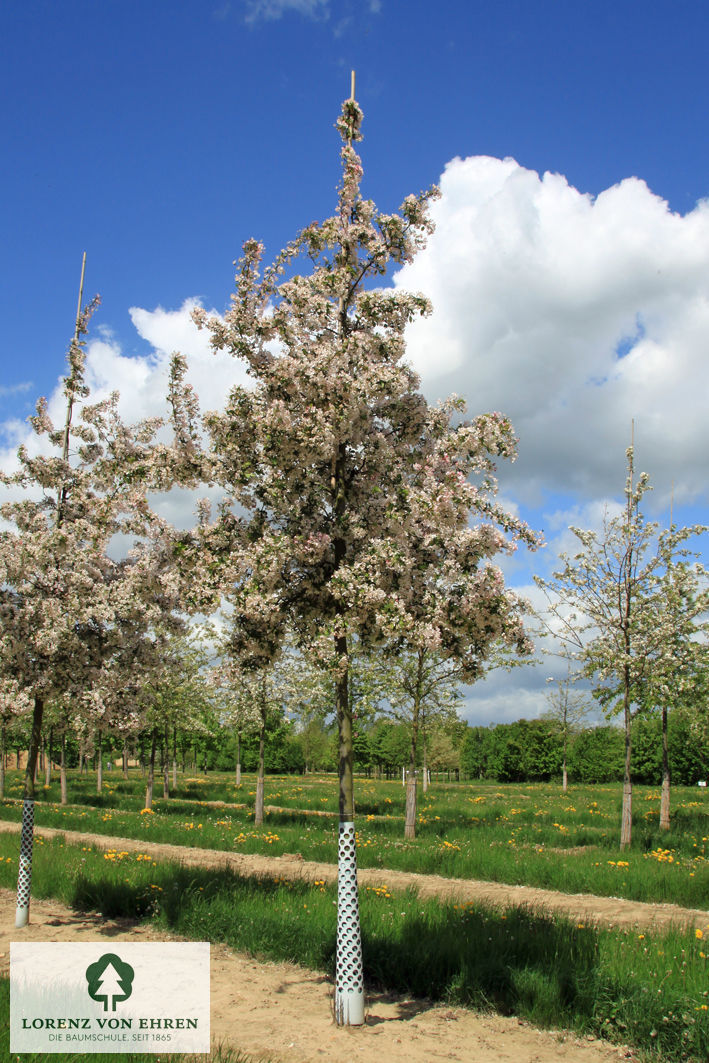
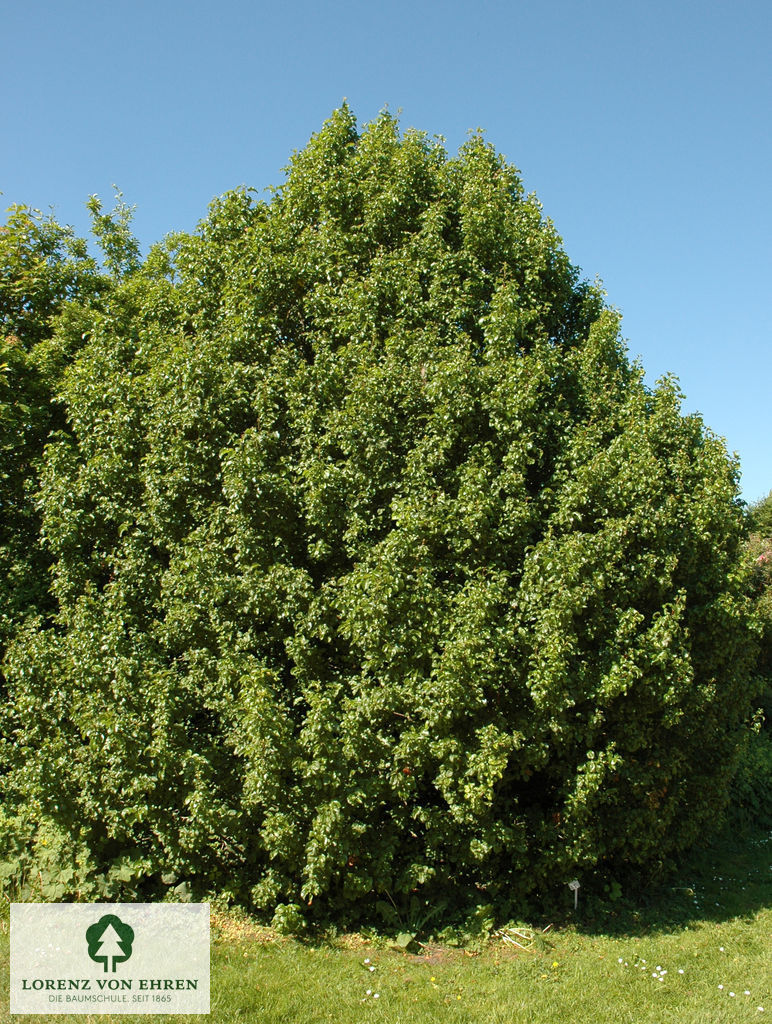

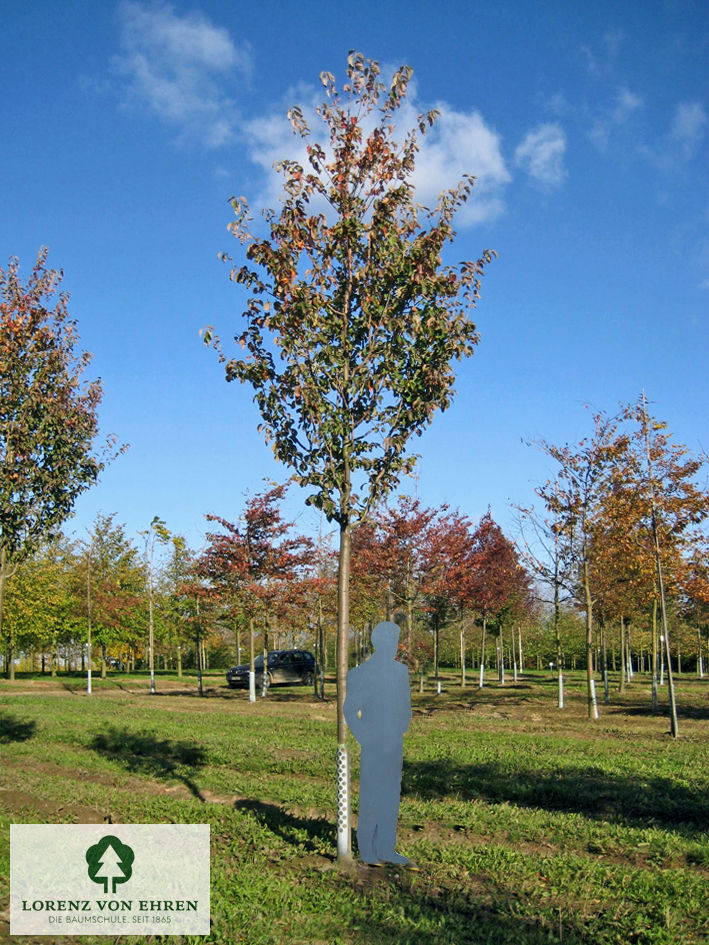
Impressions
FAQ - Frequently asked questions
What are Malus hybrids?
Malus hybrids are cultivated forms of ornamental apple trees that have been developed from various apple species. Unlike traditional fruit apple trees, their main characteristics are their ornamental value, robustness and diversity. They are characterised by abundant blossoms, different flower colours and colourful fruits that often remain on the tree for a long time.
Are crab apples reliable trees with high design value?
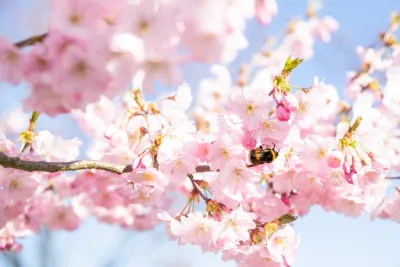
Crab apples impress with their reliable development and clear, variety-specific growth habit. The intense spring blossom in shades of white, pink and red creates a strong visual impact in parks, streets and prestigious grounds. Many varieties also have decorative foliage, which further enhances their design quality.
Are ornamental apples suitable for sustainable and ecological concepts?
Ecological aspects play a central role for local authorities and planners. Ornamental apples offer:
• valuable food sources for bees and pollinators
• long-lasting fruit as bird food
• high biodiversity with low maintenance
This makes Malus ideal for ecologically oriented planting concepts, climate-adapted green spaces and natural urban greening.
How can ornamental apples be used?
Thanks to the wide variety of species and cultivars, Malus species and cultivars can be used specifically for different requirements:
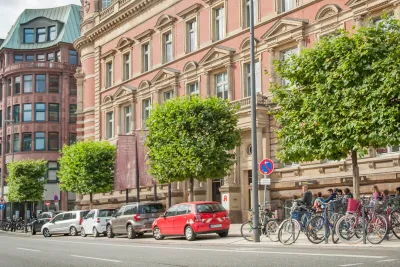
• Street and avenue trees
• Parks and green spaces
• School and nursery grounds
• Residential and neighbourhood greening
• Solitary or grouped plantings
Depending on the variety, different final heights, crown shapes and fruit colours can be achieved – ideal for differentiated planning concepts.
What advantages do Malus hybrids offer in professional use?
Thanks to the wide variety of species, Malus hybrids can be used specifically for different requirements:
• High ornamental value over several seasons
• Reliable varieties with defined growth forms
• Low care and maintenance requirements
• High ecological benefits
• Suitable for large public and private projects
Malus hybrids (ornamental apples) are a reliable, economical and high-quality solution for professional use in landscaping, landscape architecture and municipal green spaces.