









_400x400.webp "Gehölztrends 2025: Kaiser-Linde, Vogelkirsche, Hainbuche und mehr")




 Contact
Prunus - Ornamental Cherry
Experience the magic of ornamental cherries right on your doorstep. From the majestic clove cherry to the space-saving columnar ornamental cherry – we show you how you can bring incredible floral artistry to any outdoor space.
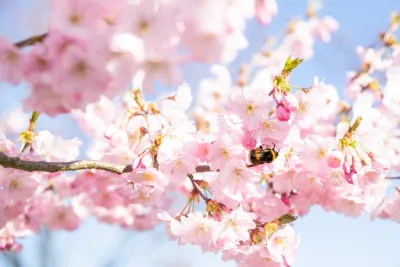
The ornamental cherry (Prunus) is much more than just a tree. It marks the festive beginning of spring. While other plants are still hibernating, ornamental cherries explode in a cloud of white and pink.
Your advantages at a glance:
- Breathtaking blossoms: Unsurpassed aesthetics in April and May.
- Easy to care for: Once established, ornamental cherry trees require little support. Diversity: Perfect varieties for large parks or small front gardens.
- Ecological value: Important primary food source for bees and insects.
Specifications:
Prunus - Ornamental cherries
Domestic ornamental cherries
Southern European ornamental cherries
East Asian ornamental cherries
- Prunus 'Accolade'
- Prunus sargentii
- Prunus serrulata in Sorten
- Prunus serrulata 'Amanogawa'
- Prunus serrulata 'Kanzan'
- Prunus serrulata 'Kiku-shidare-zakura'
- Prunus serrulata 'Pink Perfection'
- Prunus serrulata 'Shimidsu'
- Prunus serrulata 'Shirofugen'
- Prunus serrulata 'Shirotae'
- Prunus subhirtella in Sorten
- Prunus subhirtella 'Autumnalis'
- Prunus subhirtella 'Autumnalis Rosea'
- Prunus subhirtella 'Fukubana'
- Prunus subhirtella 'Pendula'
- Prunus triloba
- Prunus yedoensis
Red-leaved ornamental cherries
Professional tips
To ensure that your ornamental cherry tree thrives, you should understand its root system. As heart-rooted trees, they need loose, nutrient-rich soil without waterlogging.
- Do not plant ornamental cherry trees too close to paved paths. The roots close to the surface can lift slabs over time – give the tree at least 2-3 metres of space from paved areas.
- The ideal location: Light: full sun (the more sun, the more flowers).
- Soil: well-drained and calcareous. Time: The best time to plant is autumn or early spring.
Tabular overview
Japanese ornamental cherry tree
| Variety | Flower colour | Filling | Sprouting |
| 'Amanogawa' | Light pink to almost white | Semi-double | yellow- brown |
| 'Kazan' | deep-pink | filled | bronze- red |
| 'Kiku-shidare-zakura' | dark-pink | filled | bronze- green |
| 'Pink Perfection' | Buds karmin, then silvery pink | simple | bronze- green |
| 'Shimidsu' | Buds pink, then white | semi-filled | yellow- green |
| 'Shirofugen' | Buds pink, then white, later pink | filled | bronze- red |
| 'Shirotae' | white, large, fragrance | filled an simple | light-green |
Prunus subhirtella - Snow cherry
| Variety | Flower colour | Flowering time | Size in metres |
| 'Autumnalis' | Bud pink, open white semi-double | End of October and March/April | Height 3-5 Width 3-5 |
| 'Autumnalis Rosea' | Bud deep pink, opened light pink, semi-double | End of October and March/April | Height 3-5 Width 3-5 |
| 'Fukubana' | Bud deep pink, opened light pink, semi- to fully double | Beginning of April | Height 2-4 (6) Width2-4 |
| 'Pendula' | Buds carmine pink, open light pink | Mid April | Height 3-4 (5) Width2-3 |
| 'Okame' | Dark pink to carmine red, single, profusely flowering | March to April | Height 2-3,5 Width2-2,5 |
Our Ornamental cherries
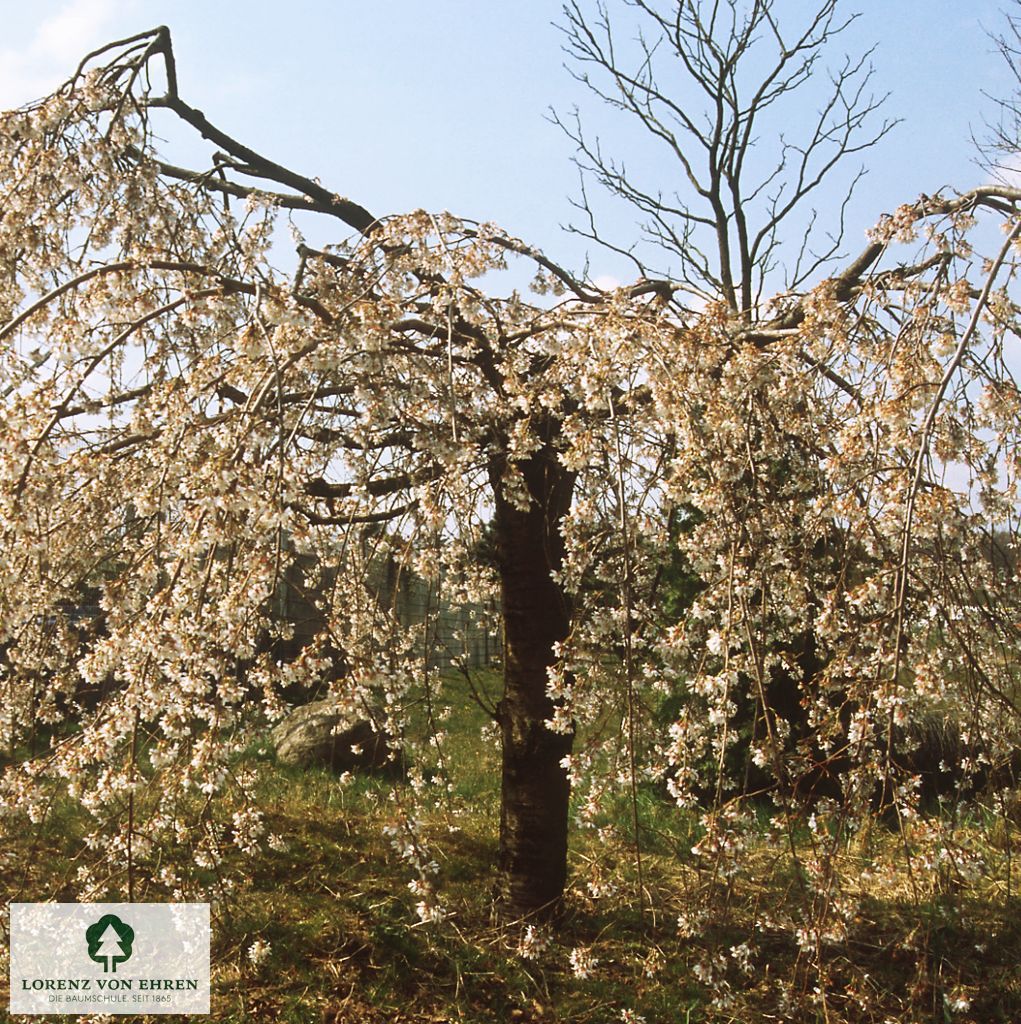


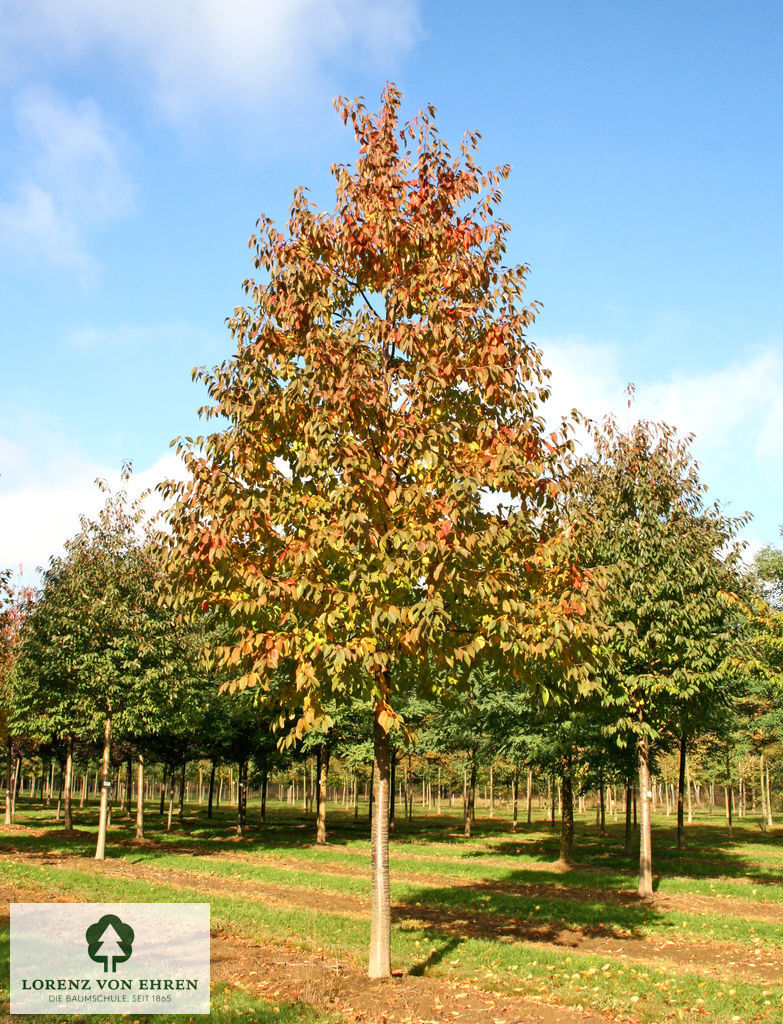


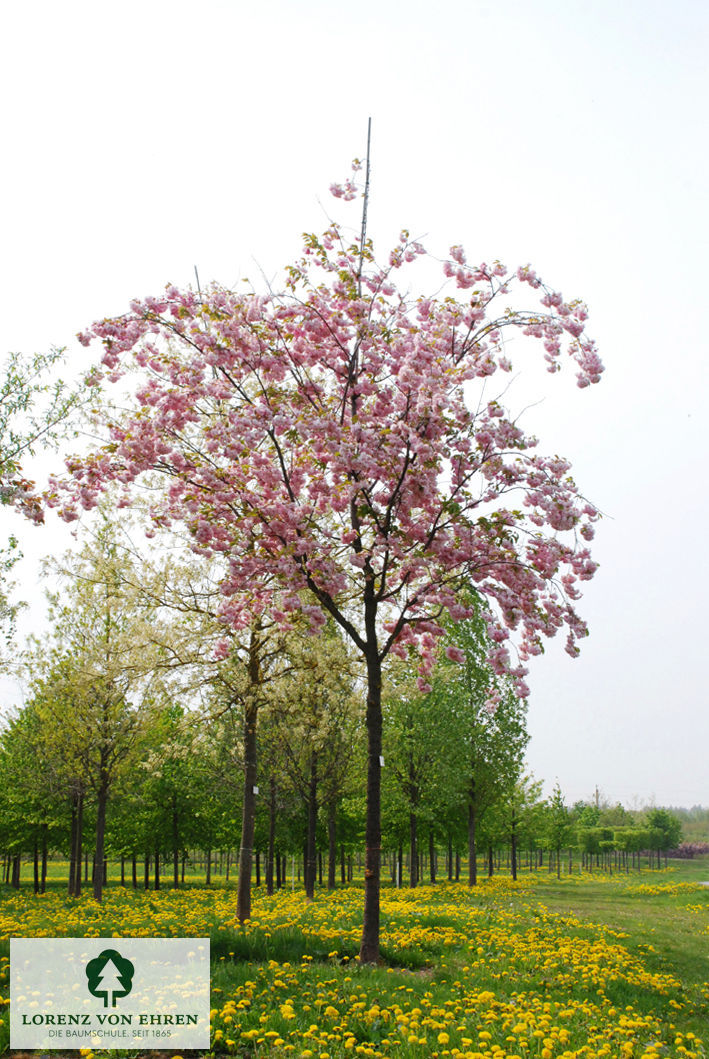

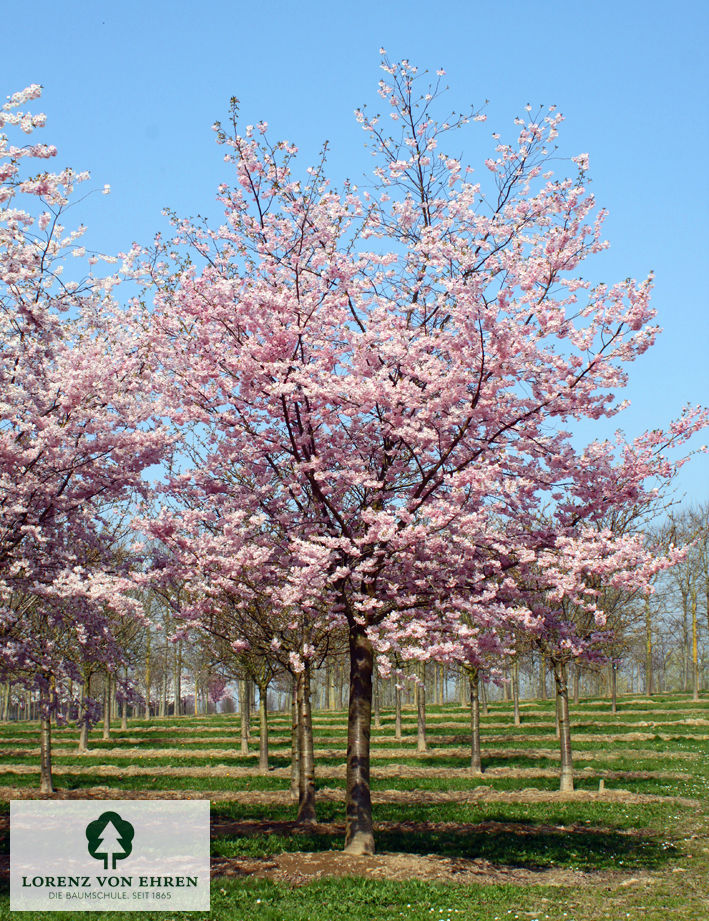
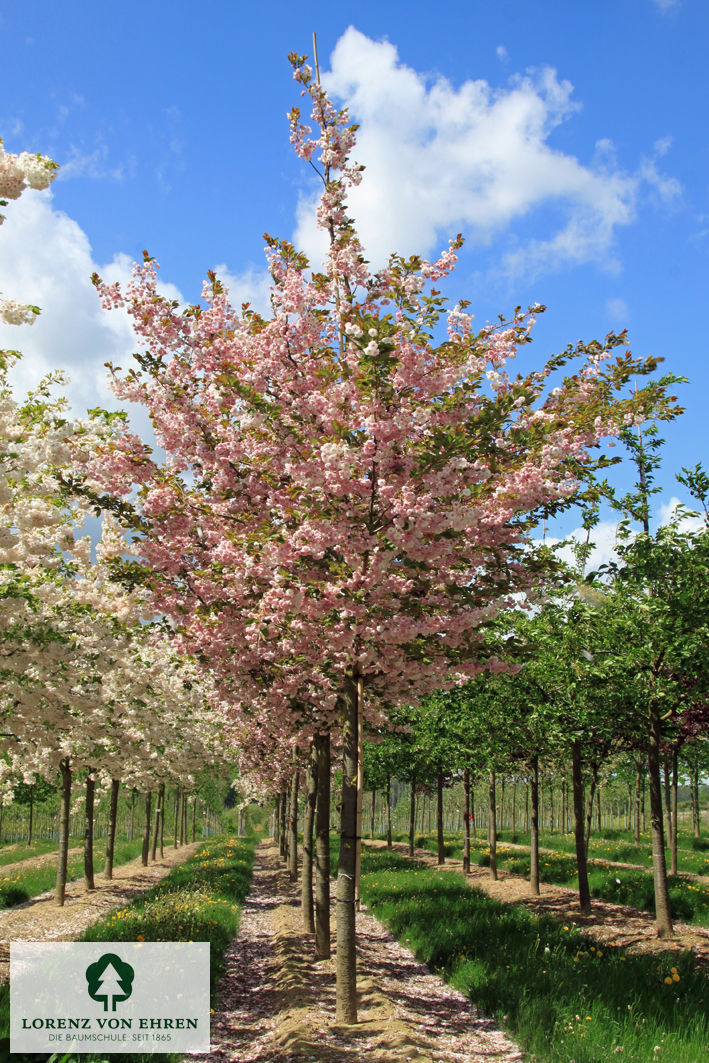
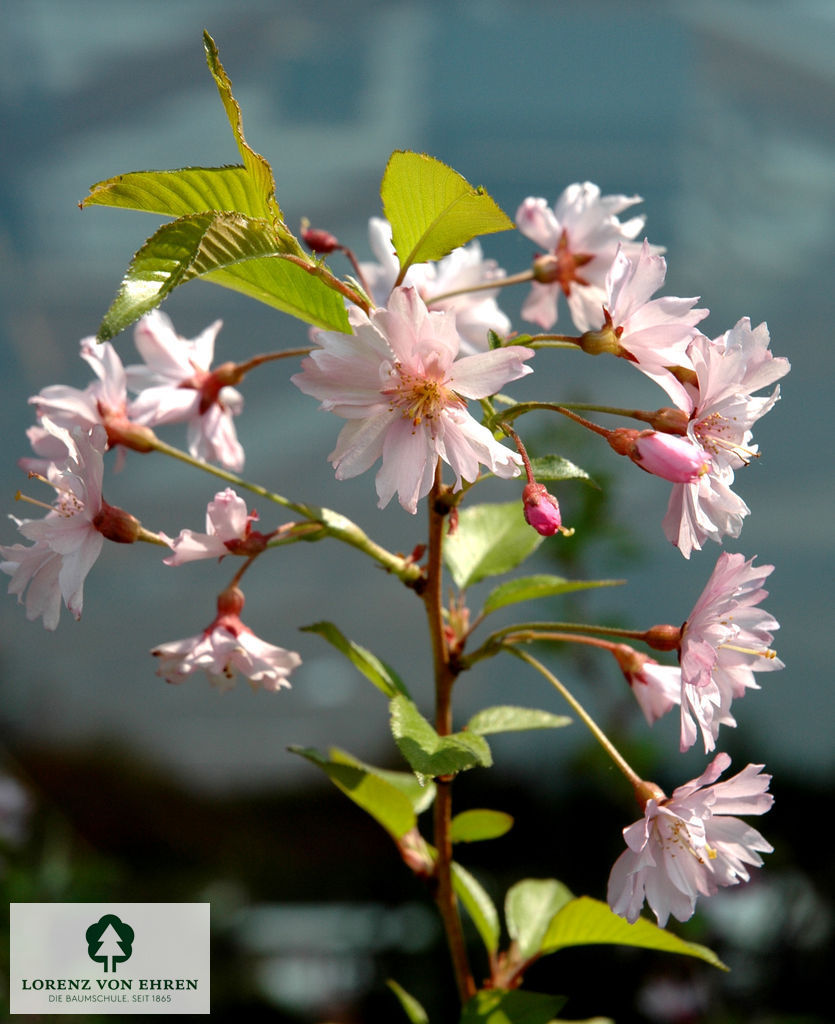
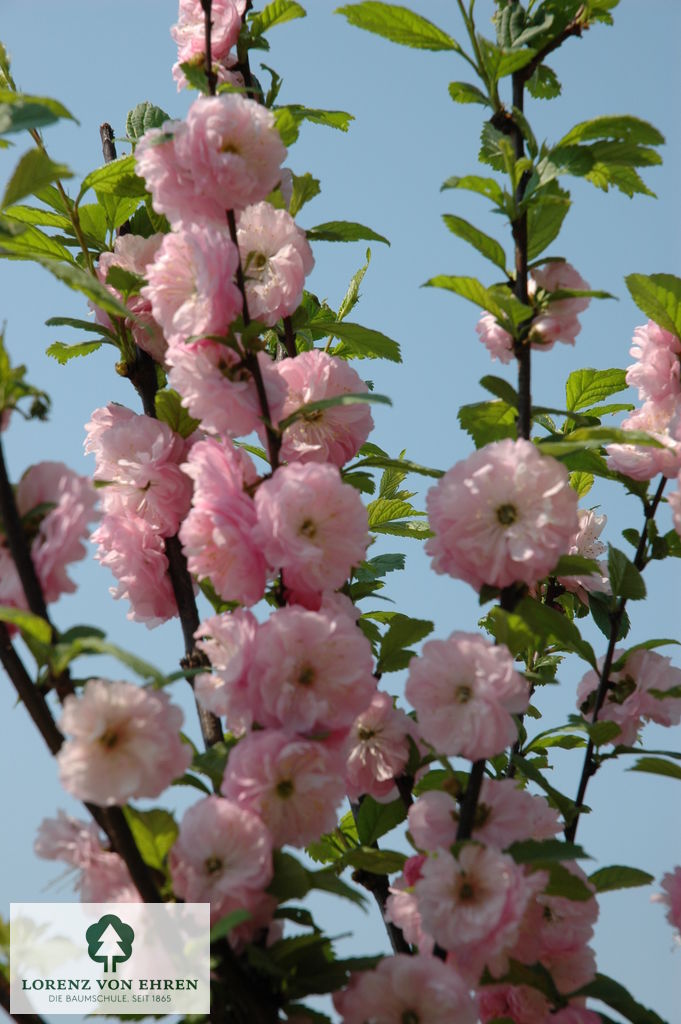
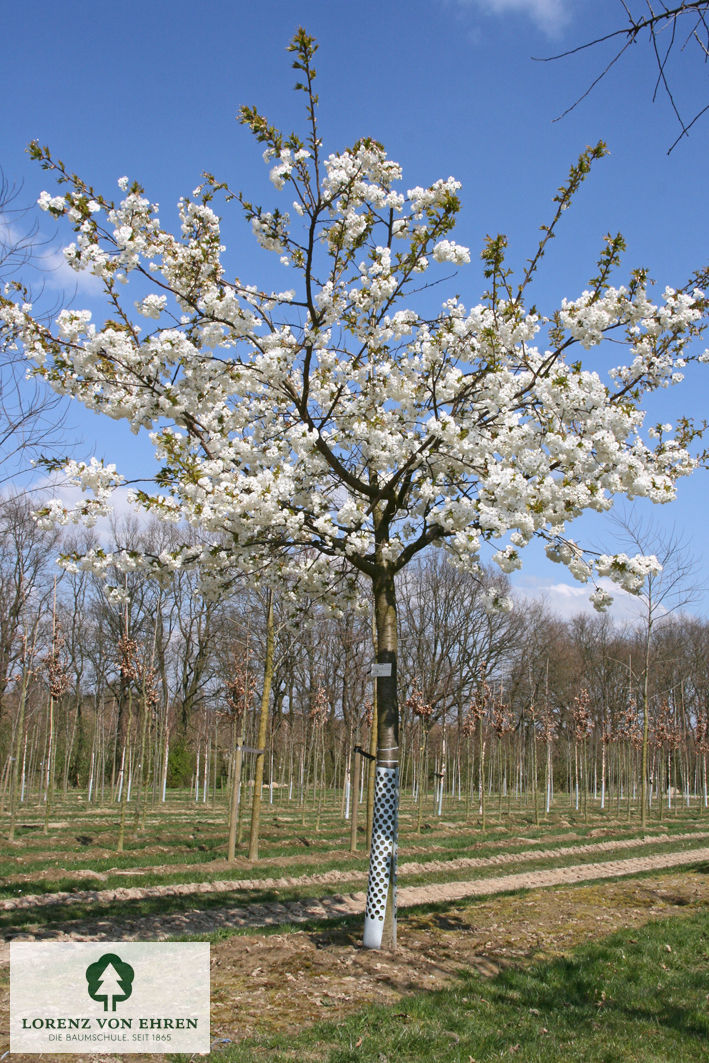
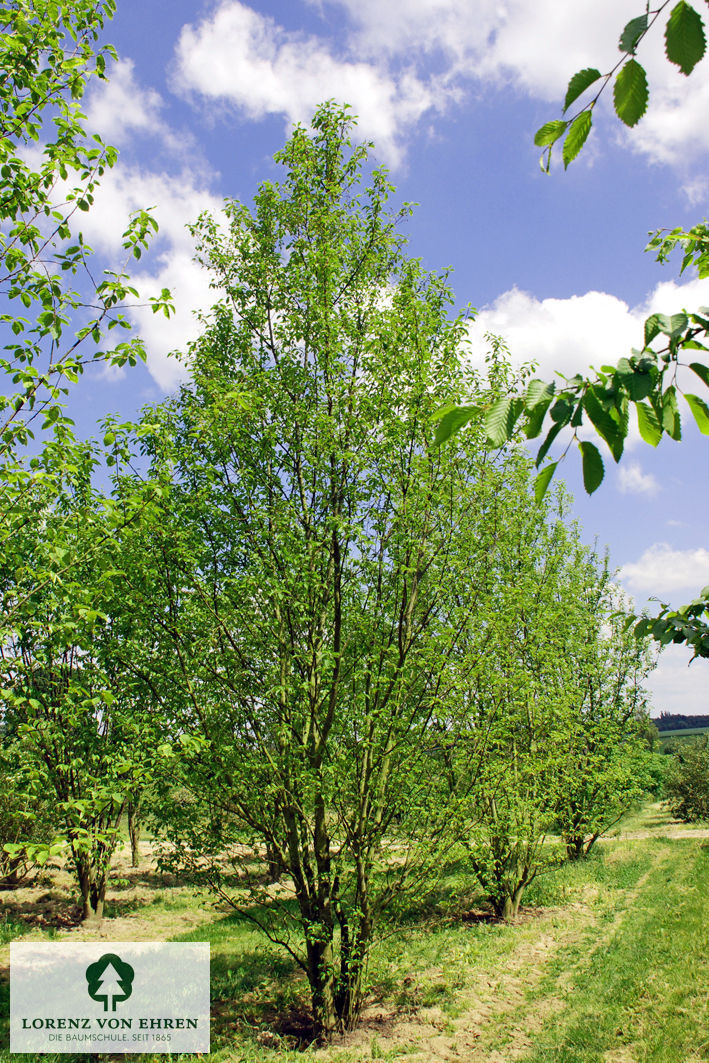

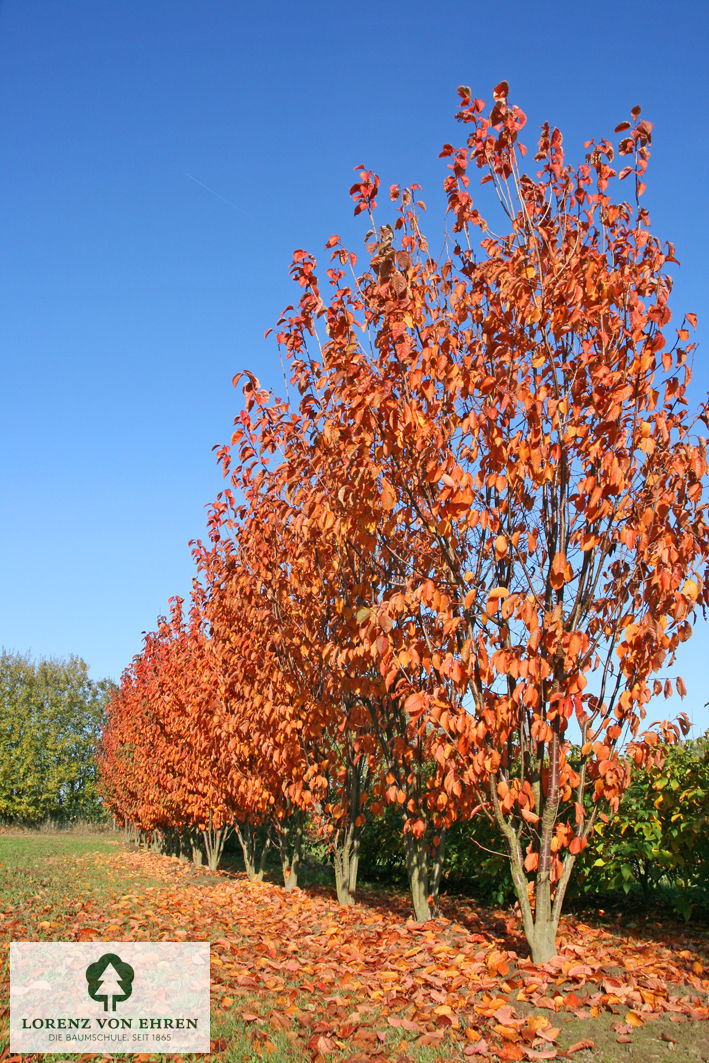
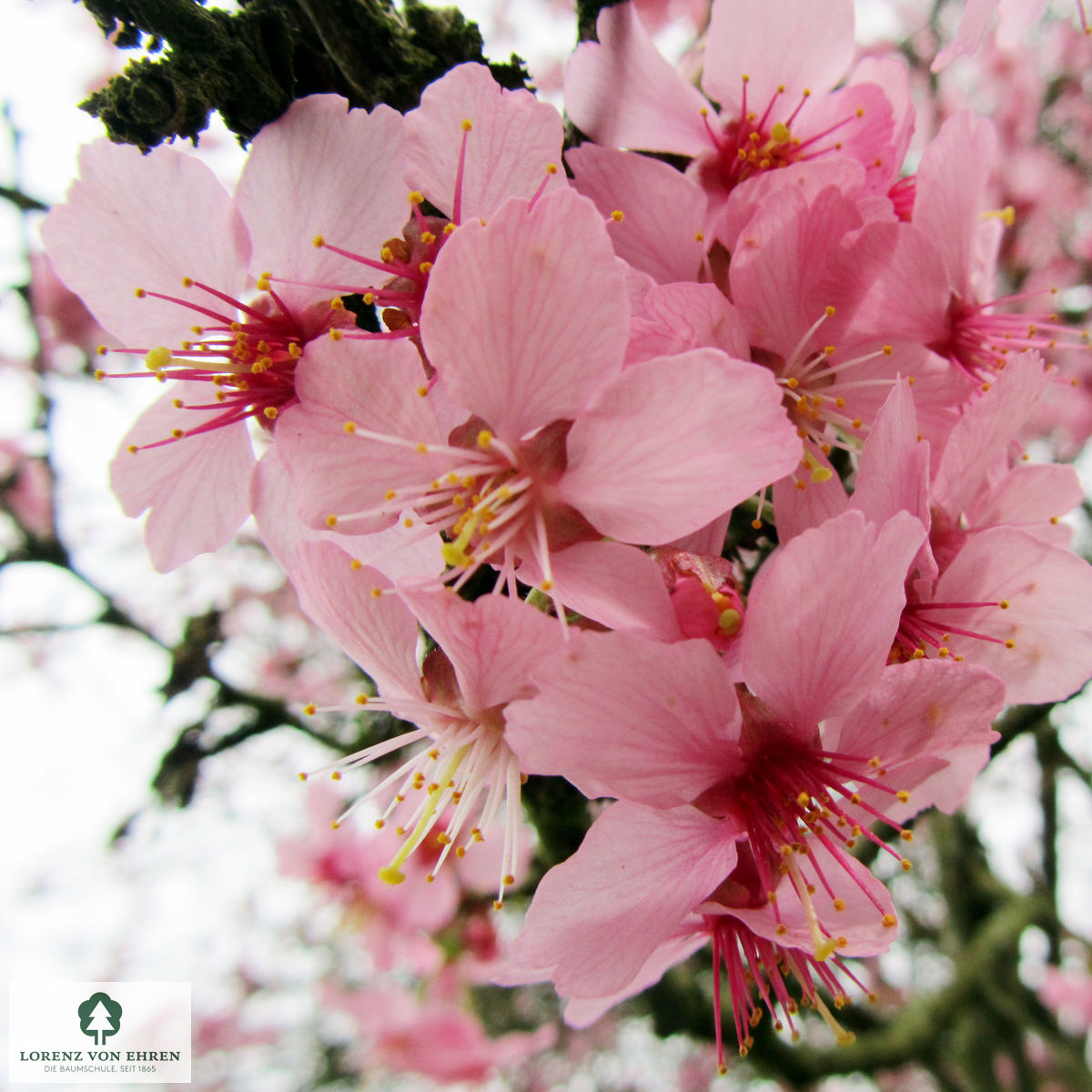
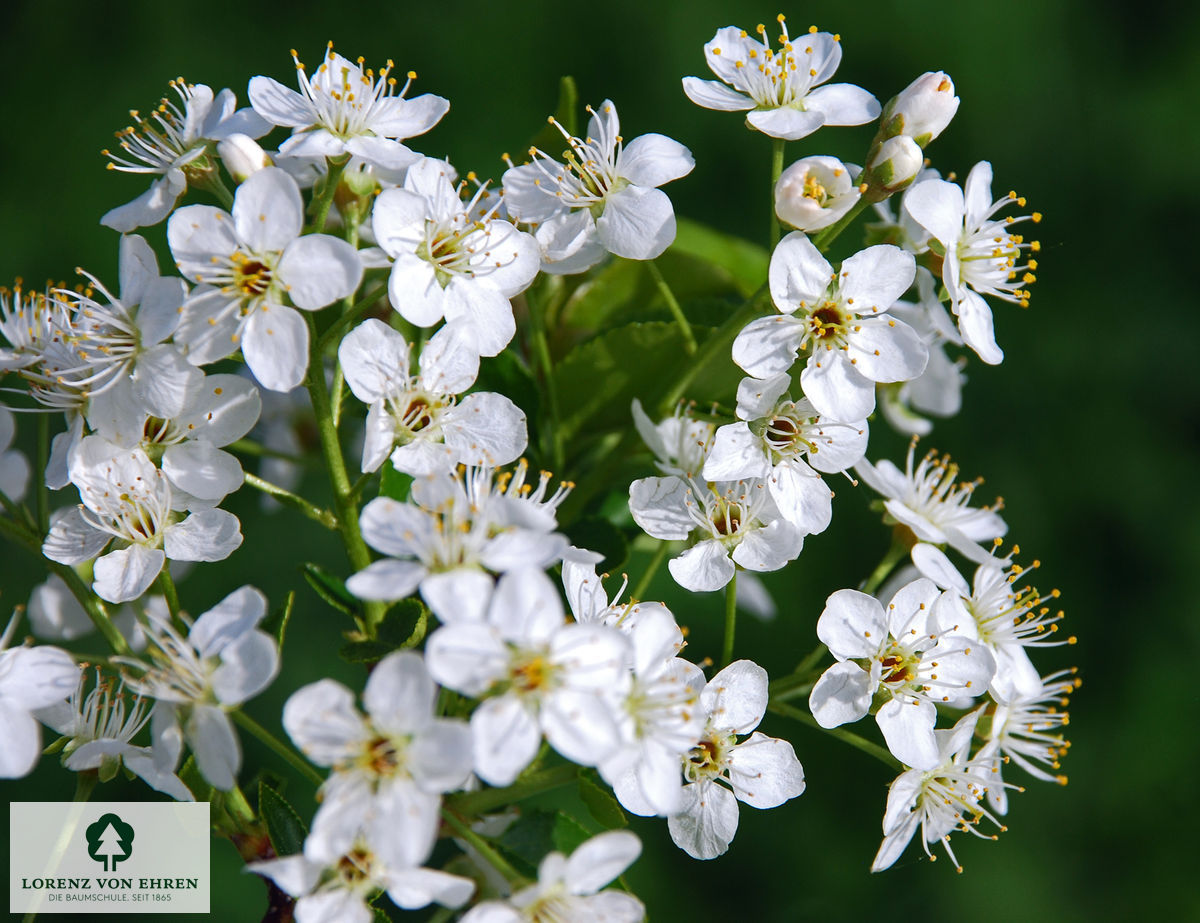
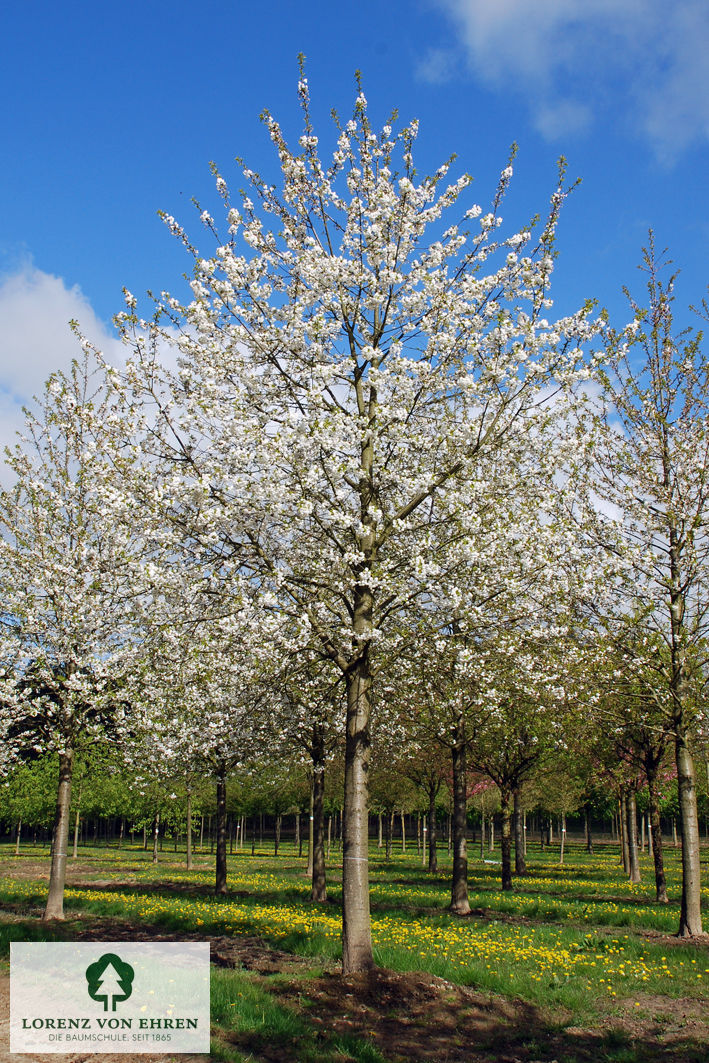
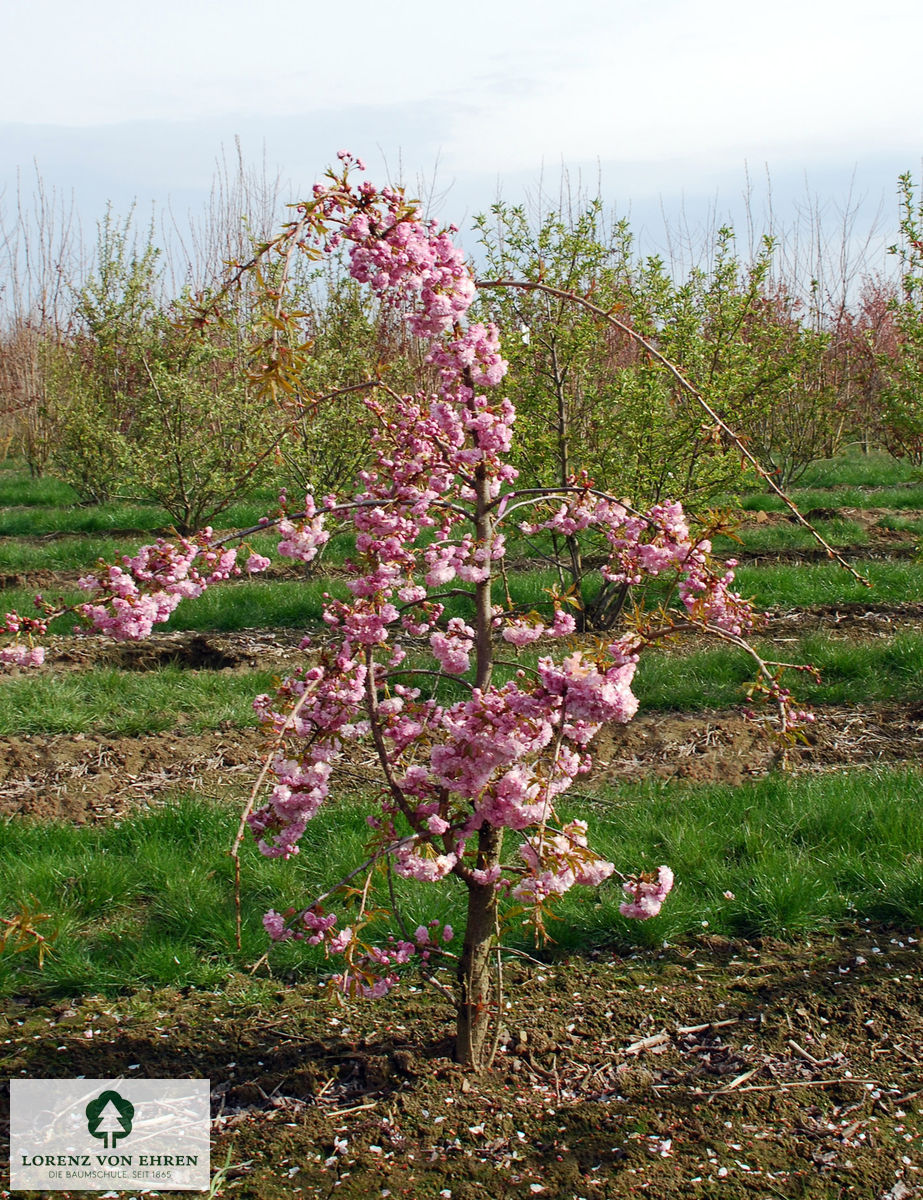
Impressions
FAQ - Frequently asked questions
When is the best time to plant?
The ideal time to plant an ornamental cherry tree is in autumn (October/November) or early spring. This gives the tree enough time to take root before the heat of summer or deep frost arrives.
Can you eat the fruit of the ornamental cherry tree?
Most ornamental cherries produce only very small, stony fruits.
Taste: They are often sour or bitter and have hardly any flesh.
Toxicity: They are not poisonous, but simply not enjoyable to eat. Birds, however, love them!
How long does an ornamental cherry tree bloom?
Unfortunately, the window of opportunity is short but intense. Depending on the variety and weather conditions, they bloom for around 10 to 14 days. In cool weather, their splendour lasts longer; if it suddenly becomes very hot, they fade more quickly.
Unfortunately, the window of opportunity is short but intense. Depending on the variety and weather conditions, they bloom for about 10 to 14 days. In cool weather, their splendour lasts longer; if it suddenly becomes very hot, they fade more quickly.
Do I need to prune my ornamental cherry tree?
Ornamental cherries require little pruning. They naturally grow into a beautiful shape. Important: Heavy pruning into old wood is often poorly tolerated. Tip: If you need to prune, do so immediately after flowering. Only remove dead wood or branches that grow inwards.
Can ornamental cherries be grown in pots?
Yes, it is possible, but not with every variety.
Since ornamental cherries actually grow into stately trees, you will need to look specifically for dwarf varieties (e.g. Prunus kurilensis “Brilliant” or Prunus incisa “Kojo-no-mai”).
The pot: It should hold at least 40–50 litres and have good drainage.
Care: The soil dries out much faster in a pot than in the garden. So you need to water regularly, even on frost-free days in winter.
Fertilising: Feed with liquid fertiliser every two weeks from March to August to prevent the tree from running out of steam in a limited space.